
Haut.AI Launches SkinFM, Its Skin Foundation Model, as New SkinBench Benchmark Exposes AI Skin Analysis Flaws
Source: PR Newswire
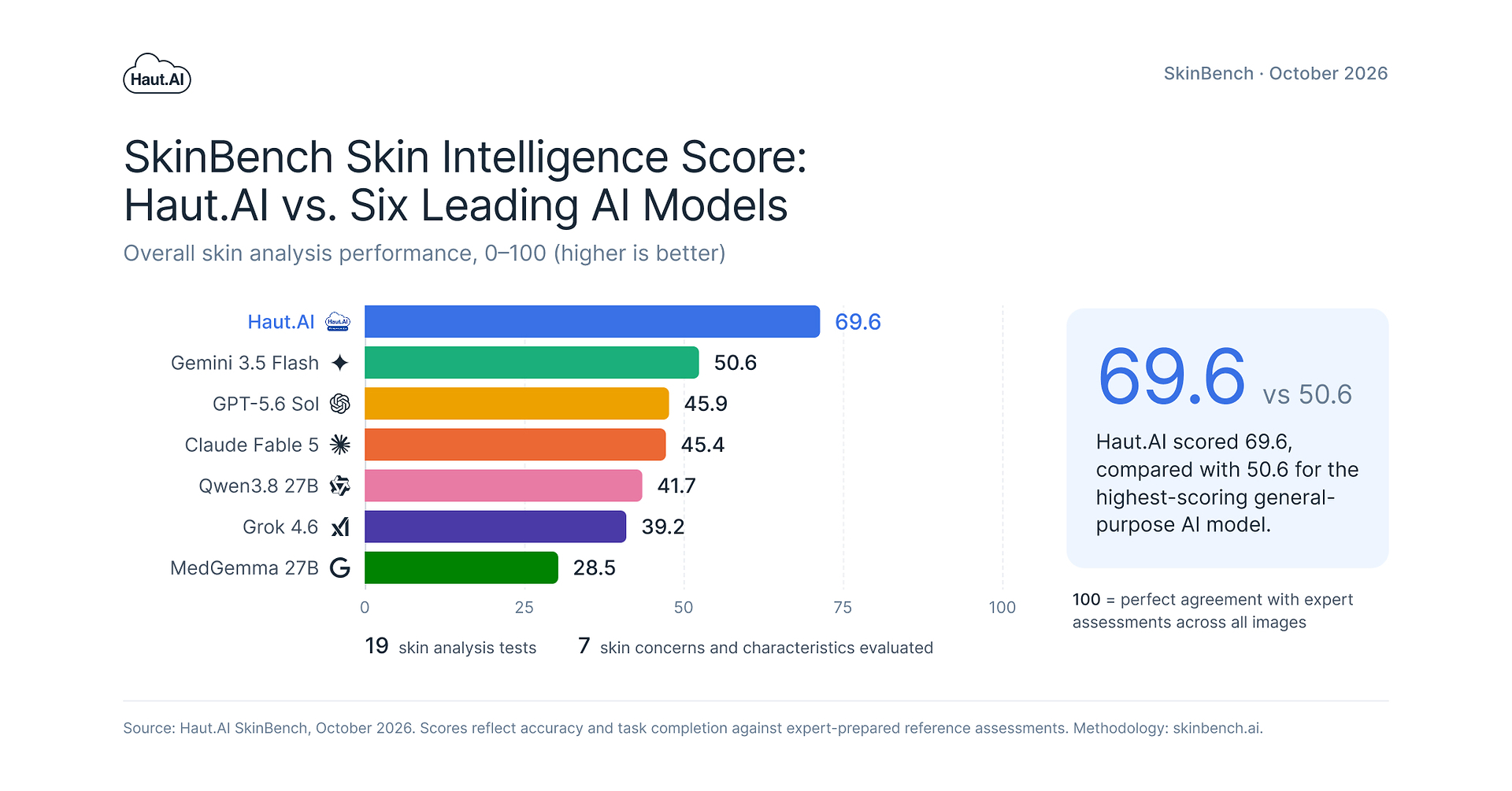
Haut.AI launched SkinFM, trained on more than 4 million real skin images, and released SkinBench, which found that six leading AI models incorrectly detected eye puffiness in approximately 95%–100% of images where it was absent. Haut.AI scored 69.6/100 overall versus 50.6 for the highest-scoring general-purpose model, though Gemini performed better on some individual tests. The company says the benchmark is intended to help beauty brands assess AI accuracy as consumer use of AI skincare advice grows.
Analysis
The investable signal is not that general-purpose models are unusable; it is that high-stakes, visually granular product recommendations may require task-specific validation. That modestly strengthens the case for specialist vendors, but Haut.AI’s benchmark is also its own product marketing: the results need independent replication on real-world images and evidence that accuracy improves conversion, retention, or product outcomes before they support a material valuation thesis. Synthetic-face testing and uneven task-level results limit extrapolation.
For Ulta Beauty and Beiersdorf, the second-order exposure cuts both ways: better personalization could lift engagement and product matching, while false positives could erode trust and create a costly remediation burden. Ulta’s strategic investment in Haut.AI is an alignment, not proof of meaningful consolidated earnings exposure. Alphabet and Alibaba face little evident near-term financial risk from one narrow benchmark; the more relevant competitive response is whether model providers add domain-specific tools or let partners supply them. Near term, expect limited fundamental impact. Over 1–3 months, watch for independent benchmark replication and named commercial deployments; over 6–18 months, adoption depends on measurable retailer/brand ROI and performance across real, diverse images. The thesis weakens if independent tests do not reproduce the gap or brands fail to convert personalization into better economics.
AllMind Terminal
AI-powered research, real-time alerts, and portfolio analytics for institutional investors.
Request TrialMarket Sentiment
Overall Sentiment
mildly positive
Sentiment Score
0.35
Ticker Sentiment
Key Decisions for Investors
- No directional trade in GOOG or BABA on this release: the test is narrow, vendor-produced, and not evidence of a material change in either company’s model competitiveness or revenue outlook.
- Treat ULTA and Beiersdorf as watch items, not buys on the announcement. Verify whether deployments are live and scaled, and look for disclosed changes in digital conversion, repeat purchase, returns, or customer engagement before underwriting earnings impact.
- For a specialist-AI diligence screen, require independent tests on real-world images, repeatability across skin tones and devices, and evidence that recommendations improve outcomes without increasing complaints or returns. Track SkinBench methodology changes and external replication over the next 1–3 months.
- Falsifiers: independent testing materially narrows Haut.AI’s reported performance advantage; brand pilots do not expand or show measurable commercial benefit; or credible consumer complaints/regulatory scrutiny constrain image-based skincare recommendations.
More News
- Anthropic's IPO could be 'speculative fiction' or a 'generational moment' — investors are split
- VCs will make billions on Anthropic’s IPO, but Amazon is set to make much (much) more
- Indian investors rush to Nvidia, SpaceX, Apple as local trading apps roll out access to U.S. stocks
- AI debt fears ease ahead of Oracle, Alphabet and Amazon updates. Here's what to watch.
- The big takeaways and big questions from Anthropic’s S-1
- Oracle integrates ChatGPT, Codex into apps and expands cloud chip lineup