
MAIJIN Metal Achieves a 50% Efficiency Gain in a 600,000-Unit CNC Precision Component Program Through Process Redesign
Source: PR Newswire
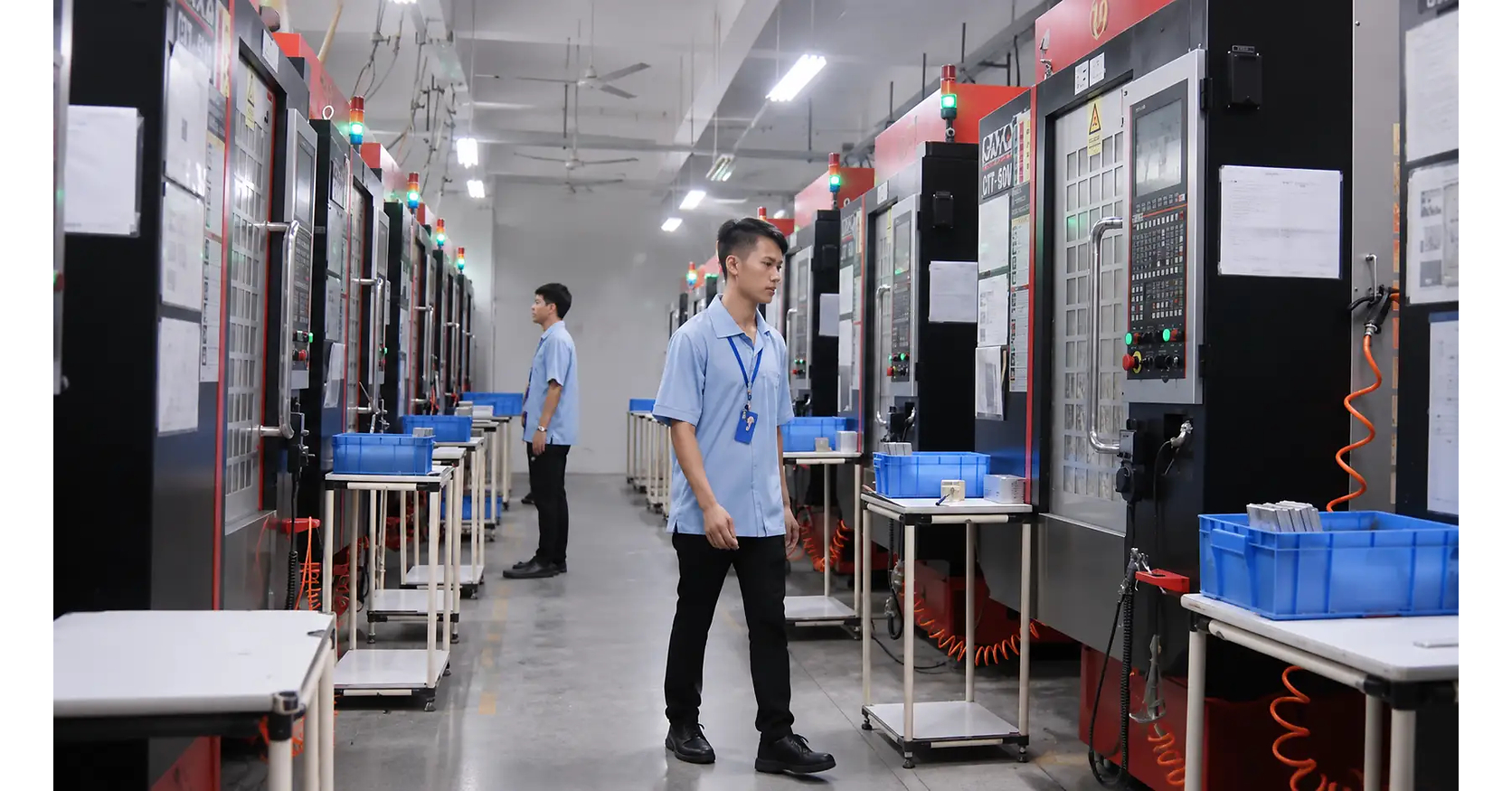
MAIJIN Metal said it raised processing efficiency by 50% for a 600,000-unit CNC precision-component order by replacing fully CNC-lathe machining with cold-heading pre-forming followed by CNC finishing. The redesign reduced an estimated requirement of more than 30,000 machine hours, cleared a production-capacity bottleneck, and enabled on-time delivery. The company also states that its DFM engineering optimization can reduce customer manufacturing costs by up to 50%, though the announcement is a company press release with limited broader market relevance.
Analysis
This is not investable issuer-specific news; it is a supplier marketing claim without disclosed customer identity, unit economics, contract value, recurring volume, or independently verified yield/scrap data. The relevant industry signal is that high-volume precision-component programs can shift economically from subtractive CNC work toward near-net-shape forming plus finishing once volumes justify dedicated tooling. That substitution reduces machine-hour intensity, potentially pressuring pure-play job shops whose earnings depend on constrained CNC capacity and premium rush-order pricing.
The principal beneficiaries over 6-18 months are scaled cold-heading/forming equipment and tooling suppliers, along with manufacturers that can combine forming, automation, and final-tolerance machining. Public proxies include AME, whose automation/metrology exposure benefits when manufacturers redesign processes around throughput and quality control, and KMTUY, where broader industrial automation adoption is a secondary read-through. The offset is that lower component cycle times can reduce demand for incremental CNC machine purchases at the margin, although this is far too small and non-specific to alter outlooks for DMG Mori or FANUC.
The contrarian point is that a claimed 50% throughput gain need not translate into comparable gross-margin expansion: cold heading introduces tooling amortization, qualification risk, inventory commitments, and potentially higher scrap costs if material consistency is poor. The process is economically attractive only for sustained high volumes and geometries compatible with forming; it is not a broad indicator that low-volume, high-mix aerospace, medical, or complex five-axis machining demand is weakening. Near-term market impact is effectively nil absent evidence that a large OEM is standardizing this sourcing model across multiple programs.
AllMind Terminal
AI-powered research, real-time alerts, and portfolio analytics for institutional investors.
Request TrialMarket Sentiment
Overall Sentiment
mildly positive
Sentiment Score
0.38
Key Decisions for Investors
- No standalone trade: treat this as a watch item rather than a catalyst, given no public issuer, customer, financial terms, or independently verified margin impact.
- For industrial holdings, monitor 1-3 month earnings commentary from AME, FANUC and DMG Mori on order mix, automation attach rates, and customer capex shifting toward forming/inspection cells; a broad increase in automation orders would support AME relative to CNC-capex exposure.
- Do not short CNC-equipment proxies on this signal. The thesis is falsified as a sector concern unless multiple OEMs report lower machining-hour demand or weaker machine-tool orders attributable specifically to near-net-shape substitution.
- If a named automotive, electronics, or industrial OEM later discloses a multi-program conversion to cold-headed components, evaluate a 6-12 month pair trade: long AME versus a diversified machine-tool proxy, contingent on disclosed annual volumes, tooling spend, and verified cycle-time savings.
More News
- Tencent leases 100,000 chips from Oracle for $7 bln- FT
- California Gov. Gavin Newsom bans AI 'robo bosses' in landmark state law, reversing his earlier veto
- RAM supply set to worsen, says Micron, as CEO celebrates ‘much higher’ prices
- Why is Nidec stock plunging today?
- Why is Kioxia stock rallying today?
- Nidec Corp shares slump after auditor declines to sign off on earnings