
‘We were wrong.’ Why Morgan Stanley changed its tune on the U.S. dollar — and what it expects now.
Source: MarketWatch
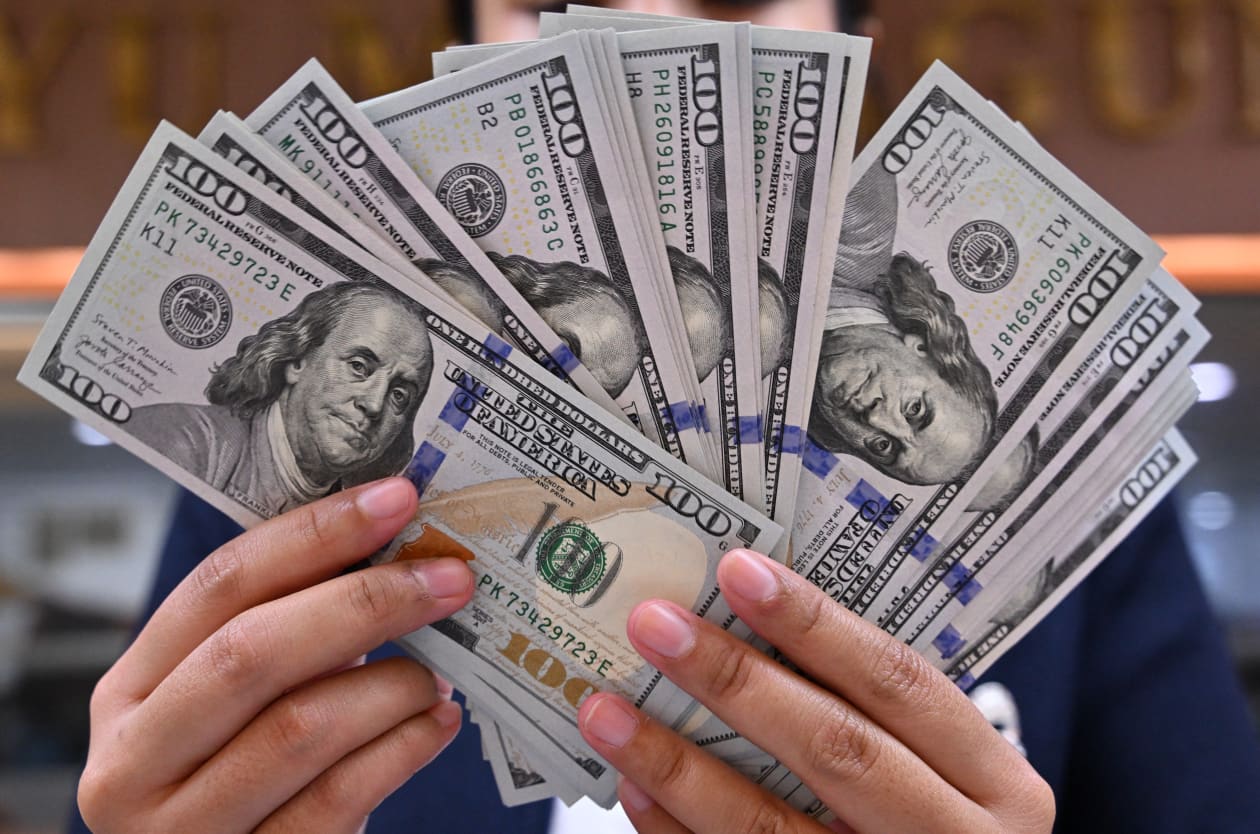
Morgan Stanley reversed its prior U.S. dollar view after rising Treasury yields and expectations for further Federal Reserve rate hikes strengthened the greenback. The dollar index reached an eight-week high near 101.40, with higher U.S. yields supporting dollar demand in foreign-exchange markets.
Analysis
The actionable signal is not Morgan Stanley's revised view itself, but the growing risk that crowded dollar-short positioning is being forced to reprice as the U.S. term premium rises. A sustained DXY move above 102 would tighten global financial conditions, pressure dollar-funded EM borrowers, and create an earnings translation headwind for large U.S. multinationals; the first-order beneficiaries are domestic revenue/cost businesses and rate-sensitive financials with limited foreign exposure.
Over the next 1-3 months, long-duration equities and highly levered growth names remain most exposed if real yields continue higher: their valuation compression can exceed any benefit from a stronger domestic demand backdrop. Conversely, European exporters and Japanese industrials may partially offset local weak demand through currency translation, making long EWJ or selected Japanese exporters a cleaner expression than chasing DXY after an eight-week high.
The contrarian risk is that the dollar's yield-driven strength becomes self-limiting. A rapid dollar advance tightens conditions sufficiently to pull forward a growth scare, compress Treasury yields, and unwind the dollar rally; this is especially likely if upcoming payrolls, CPI, or retail-sales prints disappoint. For MS, a stronger dollar is not inherently supportive: FX volatility can help trading revenue, but higher-for-longer rates raise capital-markets activity and credit-quality risks, leaving the net equity implication modestly negative rather than a direct dollar bullish trade.
Six to eighteen months out, persistent dollar strength would widen balance-sheet stress across EM sovereigns and corporates with unhedged USD liabilities, while reducing overseas earnings for S&P 500 firms. Watch DXY 102-103 and the 10-year real yield: a reversal below those levels after softer U.S. data would invalidate the near-term dollar-strength thesis faster than a modest change in Fed rhetoric.
AllMind Terminal
AI-powered research, real-time alerts, and portfolio analytics for institutional investors.
Request TrialMarket Sentiment
Overall Sentiment
mildly positive
Sentiment Score
0.30
Ticker Sentiment
Key Decisions for Investors
- Use a 1-3 month long UUP position or long DXY futures only on a confirmed DXY close above 102; target 104-105, with a stop below 100.5. The trade offers roughly 2:1 reward/risk but should be sized modestly because positioning can reverse sharply on weak U.S. macro data.
- Pair long KRE against short ARKK for the next 1-3 months: regional banks retain materially lower duration sensitivity than unprofitable long-duration growth, while rising real yields continue to compress distant-cash-flow multiples. Exit if the 10-year real yield declines by more than 30bp from entry or if credit spreads widen materially.
- Hedge multinational earnings exposure through a tactical long U.S.-domestic tilt versus global exporters: favor IWM over ACWX for 1-3 months, contingent on DXY holding above 101. A stronger dollar is a translation headwind for overseas revenue, but abandon the trade if U.S. growth data roll over and risk aversion drives broad small-cap underperformance.
- Do not short MS solely on the FX view. Instead, monitor quarterly investment-banking fees, credit-loss provisions, and FICC revenue; a material deterioration in capital-markets activity or a guidance reset would create a more defensible short catalyst than dollar appreciation alone.
More News
- Nasdaq 100: Futures Lead the Stock Market Rebound as Bond Yields Stay High
- Stock futures are little changed as Dow heads for fourth straight losing week: Live updates
- CRH stock hits 52-week low at 83.65 USD
- Costco just reported strong earnings. Goldman Sachs sees a sharp move higher for the stock
- Meta nears first new high in a year as Muse success showcases winning AI strategy
- What must happen for Boeing stock to get unstuck. The company needs, at least, to do its part
From AllMind Research
- Anthropic IPO Preview: Valuation, Timing, and What to Watch
- Shein After the IPO: Venue, Valuation, and What Must Be Proved
- What AI Research Tools Should a Small Hedge Fund Buy First?
- Weekly Update: Options, Earnings Call Transcripts, AI Chat, Bookmarks & More
- AI Tools for Family Offices: A Stack by Decision Type