
Intersignal Braid Demonstrates Cross-Device Context Sharing for Local AI, Introduces Channels
Source: PR Newswire
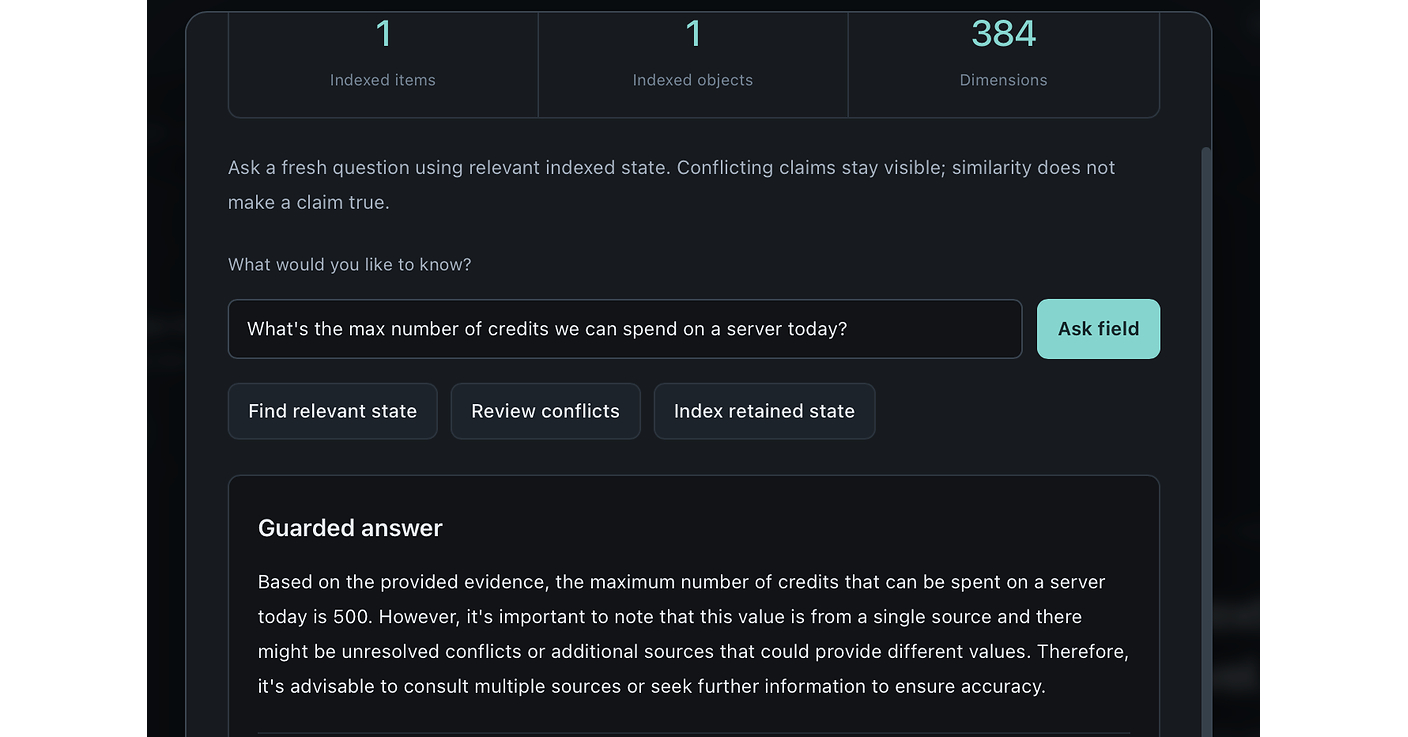
Intersignal demonstrated its Braid protocol sharing a 500-credit spending limit across local devices, with a MacBook Air-hosted LLM incorporating the transferred constraint into its response. The company also introduced topic-based Braid Channels to organize context sharing among independently operated local AI models. The release advances local AI interoperability and user-controlled, non-cloud-mediated workflows, but provides no financial metrics or commercial adoption figures.
Analysis
This is not yet an investable protocol-level catalyst: absent disclosed adoption, enterprise contracts, benchmarked performance, or monetization, the announcement does not alter revenue estimates for public AI infrastructure or software vendors. The near-term implication is thematic only—local inference interoperability marginally improves the usability of heterogeneous edge-model deployments, but it remains far below the integration, security, auditability, and fleet-management requirements that drive enterprise purchasing.
Over 6-18 months, credible local context-sharing standards could pressure cloud-centric seat-based AI applications at the low end of the market, particularly for privacy-sensitive workflows where data residency matters more than frontier-model quality. The more probable public-market beneficiaries would be edge silicon and device vendors—AAPL, QCOM, AMD, INTC—if local multi-model workflows become a genuine replacement for cloud API usage; however, this demonstration provides no evidence of the usage scale needed to affect unit demand or inference mix.
The non-obvious risk is security rather than model capability: cross-device context propagation creates a new prompt-injection, permissions, and data-exfiltration surface. If local-agent interoperability gains traction, endpoint-security and identity/control-plane vendors such as CRWD, PANW, OKTA and MSFT could benefit from enterprise demand for policy enforcement, logging, and device trust. Conversely, a high-profile compromise involving shared agent context would slow adoption and reinforce centralized platforms with mature governance.
Consensus AI positioning may overvalue decentralized-local narratives relative to distribution. Proprietary protocols without broad framework support, developer ecosystem adoption, and durable governance tend to be features absorbed by larger platforms rather than standalone value pools. Watch for independently verifiable GitHub activity, integrations with major local-model runtimes, and commercial deployments before assigning investable significance.
AllMind Terminal
AI-powered research, real-time alerts, and portfolio analytics for institutional investors.
Request TrialMarket Sentiment
Overall Sentiment
mildly positive
Sentiment Score
0.35
Key Decisions for Investors
- No standalone trade: maintain this as a technology watch item until usage metrics, enterprise pilots, or integrations with major local-AI runtimes are disclosed.
- For a 6-18 month local-AI adoption basket, prefer a diversified long in QCOM and AMD over speculative protocol exposure; reassess if PC/edge AI shipment guidance fails to translate into rising on-device inference utilization.
- Monitor CRWD and PANW for evidence that agent-to-agent and endpoint-context governance is entering customer budgets; initiate only after management cites AI-agent security demand or billings acceleration, rather than on protocol announcements.
- Avoid using this development as a bearish catalyst for MSFT, GOOGL, or cloud inference vendors: enterprise governance, distribution, and frontier-model performance remain the decisive constraints, and the claim is not independently validated.
More News
- Next week brings major risks for the stock market, just as the AI trade keeps faltering
- AI Doubts Spread Cracks in Equities, Credit Markets: Evening Briefing Americas
- Stocks Fall as Oil Rally Keeps a Lid on Treasuries
- Looters hit 3,000 French businesses. Within hours, the haul was trending on Vinted under the riot’s date
- Kinder Morgan, Energy Transfer and Williams could benefit from cheap natural gas
- CrowdStrike CEO's alarming prediction — plus, the sell-off spreads beyond tech