
Chinese Exchange May List Lithium Hydroxide Futures This Year
Source: Bloomberg
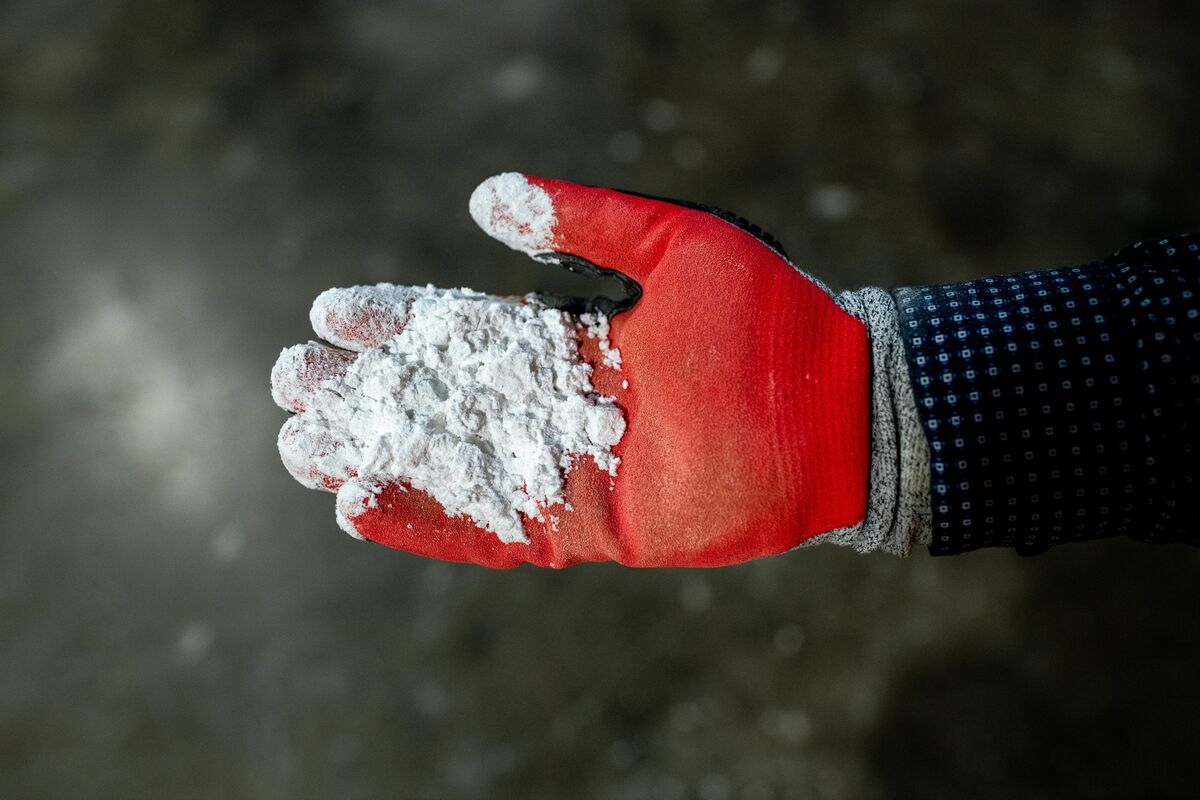
China's Guangzhou Futures Exchange is preparing to list physically settled lithium hydroxide futures as soon as this year. The contracts would provide pricing transparency and a hedging instrument for lithium hydroxide, a key electric-vehicle battery input, potentially improving risk management across the battery-materials supply chain.
Analysis
A physically settled Chinese lithium-hydroxide contract would shift the market from opaque bilateral pricing toward a visible marginal price, likely raising short-term volatility before improving procurement discipline. The key second-order effect is on converters and cathode producers with mismatched inventory: producers holding hydroxide may gain a hedge and financing collateral, while high-cost converters lose the ability to mask weak realized pricing through long-duration contracts. Battery makers should eventually benefit from lower basis uncertainty, but only after contract liquidity and deliverable-grade specifications are trusted.
The more important competitive issue is chemistry segmentation. Hydroxide is disproportionately linked to high-nickel cathodes, whereas LFP demand relies more on lithium carbonate; a successful hydroxide benchmark could make the relative hydroxide/carbonate spread a tradable signal for NMC versus LFP adoption. Sustained hydroxide weakness relative to carbonate would reinforce LFP economics and pressure nickel-rich supply chains, including nickel producers and high-nickel cathode capacity. Conversely, a tightening hydroxide spread could signal renewed premium-EV demand before it appears in vehicle deliveries.
Near term, this is not an outright directional lithium signal: a futures launch can expose excess physical inventory and initially accelerate price discovery lower. Over 1-3 months, monitor exchange-approved warehouse locations, eligible material specifications, open interest, and the futures-versus-spot basis; thin liquidity or restrictive delivery rules would limit benchmark credibility. Over 6-18 months, a credible contract may compress merchant converter margins and advantage integrated lithium producers with low-cost spodumene or brine supply. The thesis is falsified if meaningful producer, cathode-maker, and battery-maker participation does not emerge, leaving the contract a speculative venue rather than a physical benchmark.
AllMind Terminal
AI-powered research, real-time alerts, and portfolio analytics for institutional investors.
Request TrialMarket Sentiment
Overall Sentiment
mildly positive
Sentiment Score
0.20
Key Decisions for Investors
- No immediate directional commodity trade until contract specifications, warehouse rules, and market-maker commitments are published; set an alert for open interest and physical-delivery volumes during the first 60 trading days.
- Watch Albemarle (ALB), SQM (SQM), and Arcadium Lithium (ALTM) for a relative-value opportunity: favor low-cost integrated producers over merchant converters if the new benchmark drives hydroxide price transparency lower and exposes conversion-margin pressure over the next 6-12 months.
- Use the lithium-hydroxide/lithium-carbonate spread as a chemistry-demand indicator rather than a standalone price bet. A sustained hydroxide premium expansion alongside improving EV mix data would support high-nickel cathode exposure; a contracting spread favors LFP-linked supply chains and argues against premium-EV volume assumptions.
- For EV equities, treat a sharp post-launch hydroxide selloff as a potential 1-3 month margin tailwind for battery-intensive OEMs, but require evidence that lower input prices are not simply signaling weaker global EV demand before adding exposure.
More News
- Trump-Xi meeting: Why China's self-sufficiency changes the calculus
- Iran floats conditions for Hormuz reopening as Trump says deal could come after midterms
- Zelenskyy says Ukraine ready for ‘energy ceasefire’, calls for trilateral meeting with Putin, Trump
- China maintains reduced oil imports despite Iran war pressures
- CFTC says prediction markets' 'mentions' contracts present a higher risk of manipulation
- Inside Fortescue’s billion-dollar bet to decarbonize mining—and help rebuild Ukraine
From AllMind Research
- Anthropic IPO Preview: Valuation, Timing, and What to Watch
- Shein After the IPO: Venue, Valuation, and What Must Be Proved
- What AI Research Tools Should a Small Hedge Fund Buy First?
- Best AI Stock Research Tools for Professional Investors
- Weekly Update: Adding Live MBO Level 3 Data - Liquidity Heatmap, OFI Charts, and More