
Luma Expands AI-Powered Patient Outreach, Giving Health Systems More Ways to Close Care Gaps and Fill Schedules
Source: PR Newswire
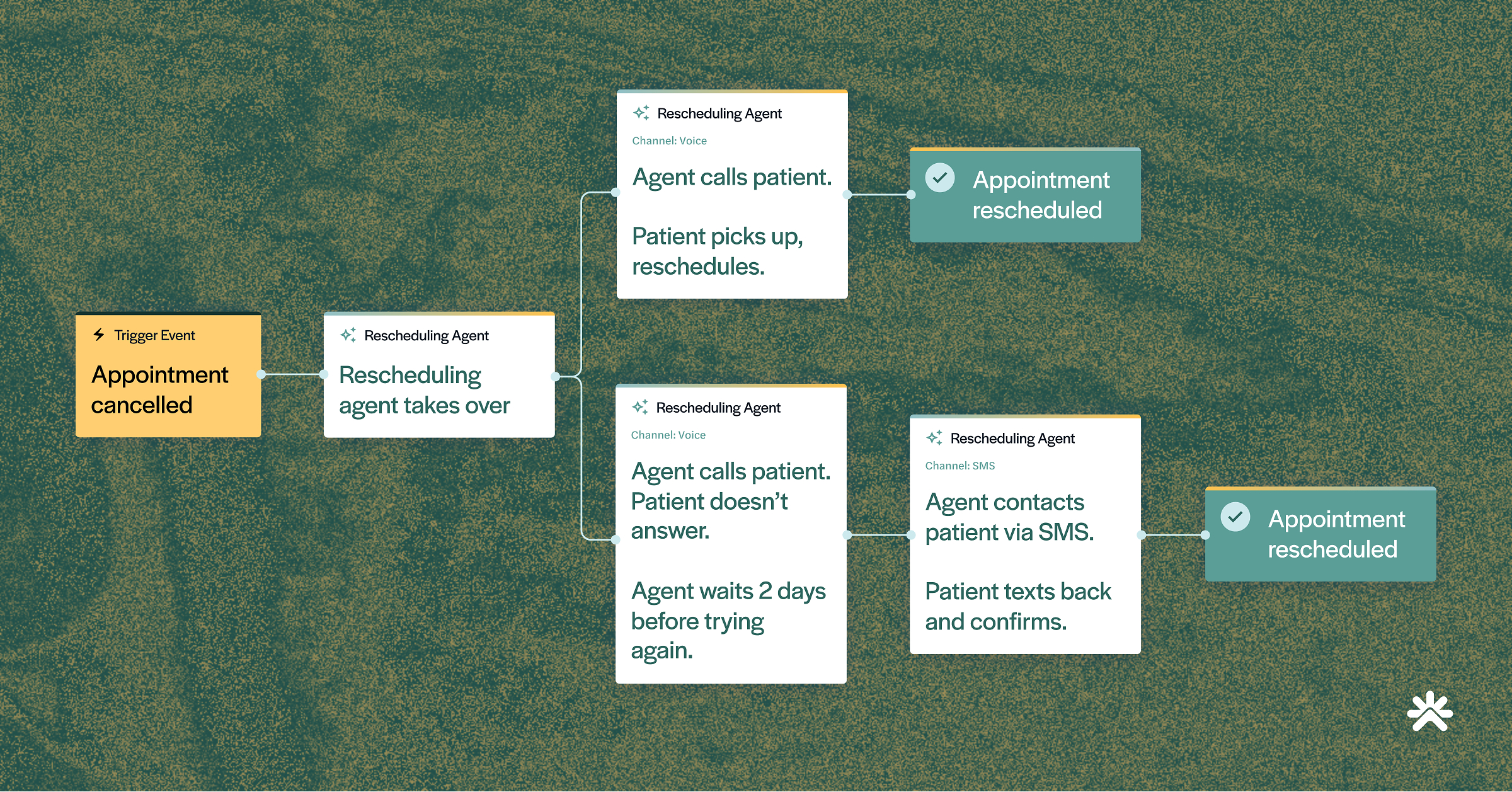
Luma Health launched agentic voice and SMS outreach workflows that automatically follow up on missed visits, care gaps and, soon, referrals, scheduling appointments directly in health-system EHRs. Early customer results include 2.3x more canceled appointments rescheduled than standard SMS reminders at CLS Health, a 28% pediatric-checkup booking rate at SJ Health, and 4x more rescheduled cancellations at SVCHS versus the comparable 2025 period. Luma said Navigator has saved customers more than 130,000 staff hours in 2026 and plans to add longer-running workflows for surgical preparation and post-discharge recovery this fall.
Analysis
This is directionally supportive of healthcare workflow automation, but the disclosed outcomes are vendor-selected and do not establish durable pricing power or material public-equity revenue exposure. The economic value proposition is strongest where health systems have excess appointment capacity: recovered visits convert directly into incremental revenue with minimal fixed-cost growth. Conversely, systems constrained by clinician supply may simply shift scheduling queues rather than generate incremental encounters, limiting willingness to pay beyond labor-cost savings.
MSFT is a modest second-order beneficiary through Copilot/Azure integration, but this release is too small to alter its healthcare AI revenue trajectory. The more relevant competitive read-through is for patient-engagement and revenue-cycle platforms—Phreesia (PHR), Health Catalyst (HCAT), and privately held EHR vendors—where agentic scheduling can move from a feature to a procurement requirement over the next 6-18 months. Incumbents with embedded scheduling data and EHR integrations should defend share; point solutions without workflow ownership face multiple compression if AI reduces standalone seat-based pricing.
For CYH, the thesis is operational rather than software-driven: better no-show recovery could improve same-facility volumes and labor productivity, but only if the company has available provider capacity and can retain net revenue after payer mix. There is no evidence here of adoption by CYH, making any direct read-through premature. Near term, expect limited market reaction; the investable catalyst is Q3/Q4 provider commentary quantifying AI-enabled access gains, lower call-center expense, or reduced no-show rates rather than another product announcement.
Contrarian view: AI outreach may initially increase administrative burden through consent management, contact-preference compliance, EHR integration failures, and patient escalation to live staff. The first serious downside catalyst would be a patient-safety, TCPA/privacy, or hallucinated-scheduling incident, which could slow enterprise deployments and favor established EHR-integrated vendors over newer automation layers.
AllMind Terminal
AI-powered research, real-time alerts, and portfolio analytics for institutional investors.
Request TrialMarket Sentiment
Overall Sentiment
moderately positive
Sentiment Score
0.58
Ticker Sentiment
Key Decisions for Investors
- No standalone trade on Luma-related news; treat as a 6-18 month competitive watch item rather than a near-term catalyst given low disclosed public-market revenue linkage.
- Maintain MSFT as the liquid large-cap healthcare-AI exposure, but do not add solely on this development. Reassess if Azure/Copilot healthcare bookings or partner-driven consumption are separately quantified in the next two earnings cycles.
- Build a watchlist pair: long MSFT versus short a higher-multiple, workflow-point-solution healthcare software name if quarterly results show AI features commoditizing patient-engagement pricing. Require evidence of declining net retention or increased sales-cycle friction before initiating.
- For CYH, monitor same-facility admissions, outpatient visits, no-show commentary, and labor cost per adjusted admission over the next 1-3 quarters. A measurable volume lift without incremental labor would support a tactical long; absent capacity utilization data, avoid attributing benefits to AI scheduling.
- Set a regulatory/compliance alert around automated patient outreach rules and reported privacy incidents. Any material enforcement action would be a negative read-through for patient-engagement software valuations and could create a short catalyst in PHR or HCAT.
More News
- Factbox-How AI leaders and world governments react to ’AI doom’ fears
- Is Amazon Stock a Buy After Its Best Quarter in Years?
- Wall St futures slip as rising oil, Treasury yields compound AI anxiety
- New York proposes $1 million per megawatt community investment for data centers
- Trump calls AI fears a 'hoax', Treasury yields surge, Moynihan's warning and more in Morning Squawk
- US data centers could consume more natural gas than Germany and Japan combined by 2035
From AllMind Research
- Anthropic IPO Preview: Valuation, Timing, and What to Watch
- Shein After the IPO: Venue, Valuation, and What Must Be Proved
- What AI Research Tools Should a Small Hedge Fund Buy First?
- Index and ETF Holdings Data for AI Research
- Capital Intensity as Gravity: The AI Trade Enters Its Industrial Era (Looking at Q3 2025 Earnings in Tech)