
War In the Middle East Crisis is Making Clothes More Expensive
Source: Bloomberg
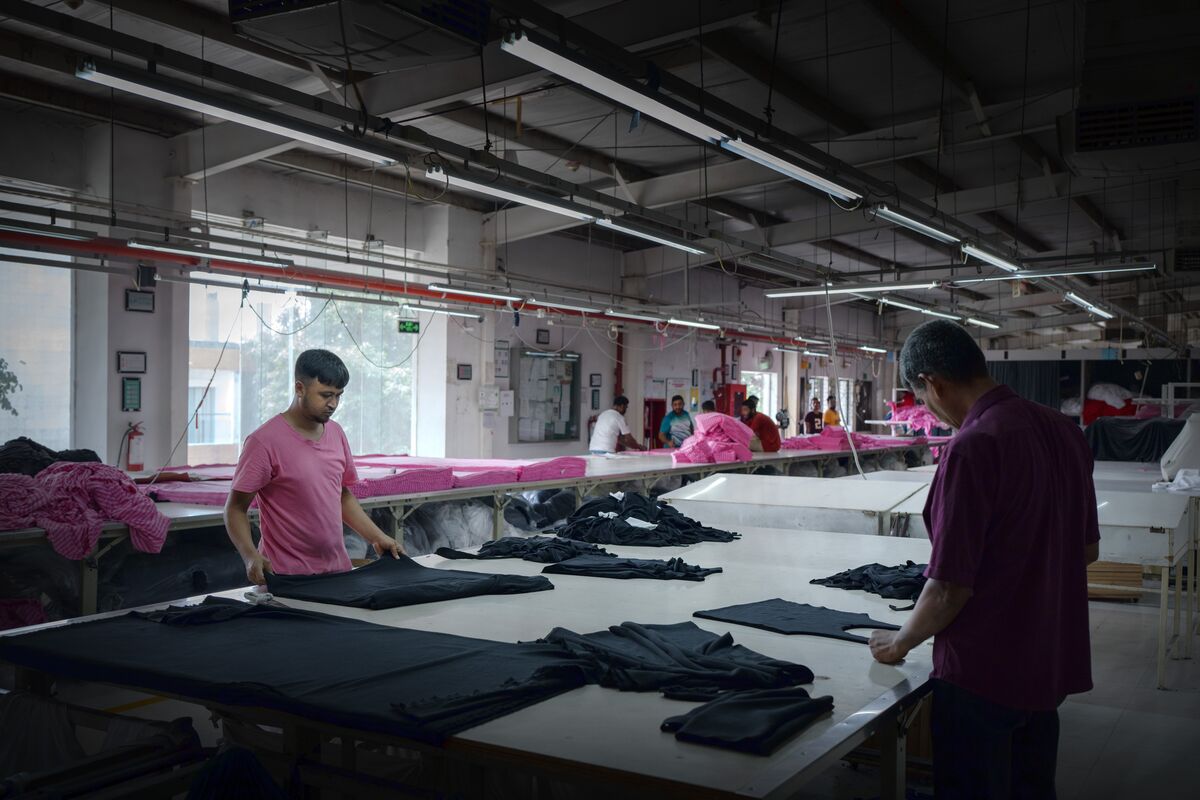
Conflict involving Iran is raising energy, shipping and material costs for the apparel supply chain, increasing the likelihood of higher clothing prices for consumers. El Niño-related weather disruption is compounding cost pressures, while idle production capacity at Bangladesh garment supplier Plummy Fashions underscores operational strain in a key manufacturing hub.
Analysis
The near-term equity risk is not simply higher input costs; it is a mismatch between fast-moving freight/energy surcharges and seasonal wholesale pricing fixed months in advance. European value-fashion operators with short replenishment cycles—Inditex (ITX.MC) and H&M (HM-B.ST)—can reprice and shift sourcing more readily than branded wholesalers such as PVH and VF Corp. (VFC), whose margin recovery depends on retailer acceptance and promotional intensity. The greater vulnerability is at the low-end consumer: price increases can preserve gross-margin dollars but reduce unit velocity, raising markdown risk in 1-3 quarters.
Second-order beneficiaries could be nearshore and diversified sourcing platforms rather than apparel retailers themselves. Turkey, Morocco, Central America and Mexico gain relative attractiveness if transit-time volatility persists, supporting Mexican industrial/logistics demand and potentially the iShares MSCI Mexico ETF (EWW), though wage and capacity constraints limit immediate substitution. Cotton-price pressure would be more damaging for basics-heavy assortments than synthetic-heavy activewear; watch cotton futures alongside diesel and Asia-Europe container rates as the operational transmission variables.
Consensus may overestimate the ability of retailers to pass through a broad cost shock after several years of consumer trade-down. A sustained freight/energy spike is more likely to widen the competitive gap: scale players can absorb temporary margin pressure to take share, while leveraged or inventory-heavy brands face both gross-margin compression and working-capital stress. The thesis is falsified if shipping routes normalize quickly, cotton retreats, and weekly apparel sell-through remains strong enough to support full-price conversion through the holiday buying cycle.
AllMind Terminal
AI-powered research, real-time alerts, and portfolio analytics for institutional investors.
Request TrialMarket Sentiment
Overall Sentiment
moderately negative
Sentiment Score
-0.45
Key Decisions for Investors
- Favor a 3-6 month relative-value position long Inditex (ITX.MC) / short VF Corp. (VFC): Inditex's faster inventory turns and sourcing flexibility should support share gains if cost inflation persists. Reassess if VFC delivers a material gross-margin recovery without incremental promotions or if freight indices normalize for 4-6 consecutive weeks.
- Avoid adding broad exposure to low-margin apparel retail through XRT over the next 1-3 months; use any freight-led sector rally to reduce exposure. The unfavorable setup is margin pressure followed by demand elasticity, rather than a clean inflation pass-through.
- Establish a monitoring trigger—not a standalone trade—for ICE cotton and Asia-Europe container rates: a sustained 15-20% move higher from current levels would justify increasing the ITX.MC/VFC spread or adding a short in promotional, basics-heavy apparel names after checking inventory-to-sales data.
- For a 6-18 month supply-chain diversification expression, accumulate EWW selectively on weakness rather than chase an immediate geopolitical move. The upside depends on durable order migration and industrial-capacity investment; it is invalidated if buyers treat route disruption as temporary and Asian sourcing lead times normalize.
More News
- New Strait of Hormuz ship attack raises oil supply fears as Iran war widens
- Iraq seizes drone-launching platform used for targeting Saudi oil pipeline
- ECB’s Lagarde says Eurozone inflation shock will last longer
- Bahrain says it will not participate in Iran’s proposed Hormuz meeting
- Christine Lagarde: Interview with Ouest-France
- Oil's roundtrip back to $100. Why China could determine what happens next