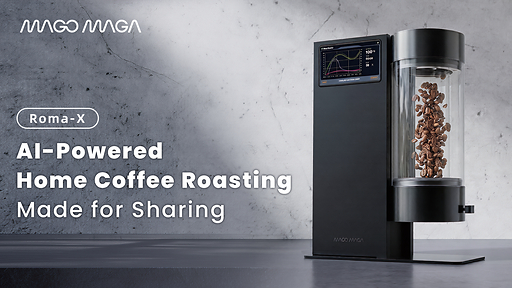
Mago Maga will launch its Roma-X third-generation AI home coffee roaster on Kickstarter on July 23, with a planned US$1,598 retail price and early-bird discounts exceeding 50%. The redesigned unit targets up to 300g green coffee per batch and pairs a 5-inch touchscreen plus iOS/Android app control with OTA updates and AI/cloud-based roasting optimization. A smoke filtration system claims up to 90% reduction in smoke/airborne particles, with shipping expected in fall 2026.
This reads more like a category-creation test than a monetization event. The market mechanism is not direct revenue to the named tickers; it is whether affluent hobbyist spend is still elastic enough to support premium kitchen hardware at very high ASPs. If the campaign converts, the second-order winner is the broader “prosumer appliance” ecosystem—retailers and marketplaces that monetize accessory attach rates, replacement parts, and community-driven repeat purchases—while the loser is the low-end bean-to-cup segment that competes on convenience rather than control.
For public equities, the most relevant read-through is to consumer premiumization, not AI. The AI layer here is a retention and pricing tool: software, profiles, and OTA updates extend product life and can shift the business from one-time hardware sale toward a recurring ecosystem. That model matters if copied by bigger appliance brands, but today it is still too small to move Google, the underlying platform names, or any broad consumer ETF in a measurable way.
The contrarian view is that Kickstarter enthusiasm often overstates durable demand. The real falsifier is not launch-day signups; it is whether paid conversions, refund rates, and repeat-use data hold through the first 2-3 months after shipping. If this becomes a successful niche, competitors with distribution muscle could fast-follow within 6-18 months and compress margins before the category is proven.
Bottom line: this is an interesting consumer signal, but not a tradable public-market catalyst yet. The only actionable angle is to watch for evidence that premium home-appliance buyers are willing to pay for software-defined hardware; until then, any equity exposure should be avoided or kept as a watchlist item.
AI-powered research, real-time alerts, and portfolio analytics for institutional investors.
Request TrialOverall Sentiment
mildly positive
Sentiment Score
0.20
Ticker Sentiment
