
ArcelorMittal: Regionalization Is Creating A Structurally Better Steel Company
Source: seekingalpha.com
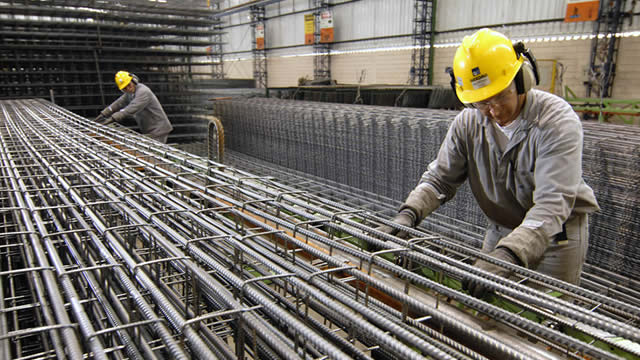
ArcelorMittal is repositioning as regionally protected steel franchises, using local production and integrated mining to benefit from trade-policy shifts. The article highlights structurally higher earnings quality—higher EBITDA per tonne and strong operational leverage in Europe—supported by India and Liberia expansion and off-balance-sheet growth via AM/NS India. With ongoing share buybacks and discounted valuation metrics, MT is positioned for per-share earnings growth even without a global steel boom.
Analysis
The setup favors the few incumbents with local production, captive raw materials, and political shielding; MT’s earnings should behave less like a pure commodity beta and more like a quasi-regulated industrial with optionality on policy. That matters because every incremental tonne sold in a protected region should carry better margin durability than seaborne steel, so the market should start valuing MT on FCF yield and buyback capacity rather than spot steel pricing.
The second-order loser is not just imported steel, but downstream users that cannot fully pass through costs: European autos, appliances, and construction supply chains face slower margin recovery if regional protection keeps domestic steel pricing sticky. In parallel, the integrated mining leg reduces cost volatility, which should make MT relatively defensive versus peers that are long finished steel but short raw materials. If India and Liberia keep compounding, the earnings mix gets higher quality and less tied to the global steel cycle, supporting multiple expansion over 6–18 months.
The near-term risk is that the market is already extrapolating policy durability while ignoring the cyclicality of regional demand. A global manufacturing slowdown would still hit volumes, and if import restrictions loosen or Chinese export pressure forces price competition, the “protected franchise” thesis can de-rate quickly. The key falsifier is not headlines, but sustained deterioration in regional steel spreads, EBITDA/tonne, or a pause in buybacks caused by weaker cash conversion.
Consensus may be underestimating that the equity story is becoming per-share compounding rather than top-line growth. If buybacks continue at discounted valuation levels, MT can create EPS growth even in a flat steel market; if not, the rerating case weakens materially. The move looks constructive but not yet crowded enough to fade aggressively; the better expression is to own MT against more globally exposed steel names or downstream users that cannot pass through input inflation.
AllMind Terminal
AI-powered research, real-time alerts, and portfolio analytics for institutional investors.
Request TrialMarket Sentiment
Overall Sentiment
mildly positive
Sentiment Score
0.35
Ticker Sentiment
Key Decisions for Investors
- Go long MT on pullbacks over the next 1–3 months; thesis is 12–18 month multiple re-rating as the market prices in lower earnings volatility and sustained buybacks. Falsify if EBITDA/tonne or free cash flow conversion rolls over for two consecutive quarters.
- Pair trade: long MT / short a more trade-exposed European steel proxy such as SSAB or TKA for 3–6 months. The spread should favor MT if regional protection persists and if mining integration keeps costs anchored.
- If you want a cleaner hedge, pair long MT against a basket of European autos (BMW, VOW3, STLA) over 1–3 months; the trade benefits if sticky steel pricing compresses downstream margins faster than OEMs can reprice vehicles.
- Monitor EU import quota/tariff headlines and Chinese export pricing as event-risk catalysts; if policy protection weakens or import volumes surge, trim MT quickly because the rerating thesis depends on franchise durability, not spot steel strength.
- Watch share count and capital-return cadence closely. If buybacks accelerate while steel spreads hold, add on dips; if repurchases slow despite stable cash flow, treat that as an early warning that management sees cycle risk.
More News
- Musk says Terrafab chip factory could outperform rivals despite challenges
- Will Warner Bros. kill Skydance — or will David Ellison kill Warner Bros?
- How Supreme Court justices are leaning in major 401(k) case over private funds and underperformance
- Putin relayed Iran war proposal to Trump, Kremlin says
- Nvidia GPUs are everywhere. Here are the ways companies are accessing them
- Why is US turning to Russia for diesel despite sanctions?