
Sceye wspiera SoftBank Corp. w pierwszej na świecie demonstracji śledzenia platformy HAPS z ziemi i laserowego pomiaru odległości
Source: PR Newswire
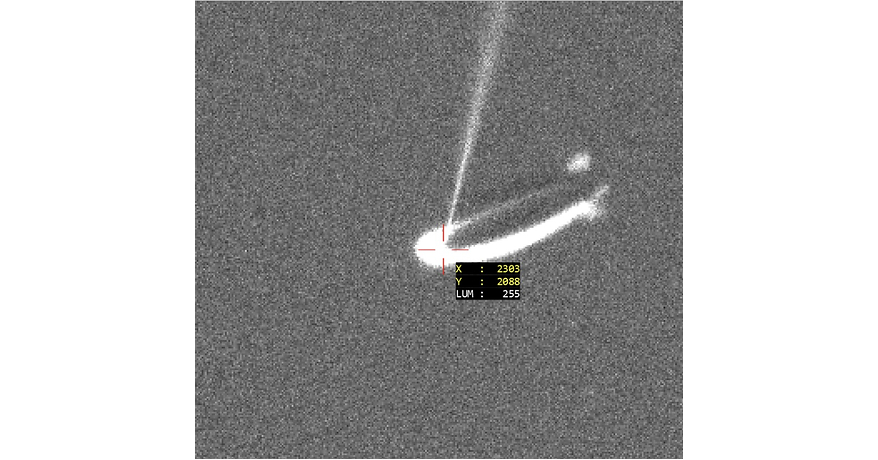
Sceye and SoftBank completed what they describe as the first real-time ground-based laser tracking and ranging demonstration of a stratospheric HAPS platform, supporting development of free-space optical links between ground, stratosphere and space. The test was conducted during Sceye's 30-day ST1 mission, which covered nearly 30,000 km and operated over Japan for more than seven days. The partners also validated direct connectivity to standard devices through SoftBank's core network, including texts, voice, internet and video streaming, while collecting atmospheric optical-link performance data.
Analysis
This is a technical de-risking event rather than a near-term earnings catalyst: a passive-reflector tracking test does not establish the pointing, acquisition, atmospheric-availability, throughput, or terminal-cost economics required for a commercial optical backhaul network. The relevant constraint is likely weather diversity and ground-station redundancy, which can materially erode the nominal capex advantage of HAPS versus terrestrial fiber or LEO satellite connectivity. Treat company assertions of a broad service platform as unverified until sustained payload power, availability and cost-per-delivered-Gb metrics are disclosed.
The most exposed public competitive set is not conventional telecom equipment but high-latency or difficult-to-deploy connectivity: ASTS, GSAT, IRDM and, indirectly, satellite-network suppliers such as MDA and RKLB. HAPS can be complementary to LEO—providing regional aggregation, disaster recovery and edge compute—but it could pressure the premium valuation assigned to direct-to-device architectures if operators demonstrate that standard handsets can be served economically from stratospheric assets. Conversely, durable commercial demand would benefit optical-terminal vendors and defense communications primes, including LMT, NOC and RTX, where resilient airborne mesh networking has clearer procurement paths than consumer broadband.
Near term, there is no liquid pure-play and no reason to trade SoftBank Group (9984 JP / SFTBY) on this alone; its valuation is dominated by ARM and portfolio marks. Over 1-3 months, watch for a paid pilot, spectrum/regulatory filing, disclosed payload throughput and availability across adverse weather, or a carrier commitment with minimum-revenue terms. Over 6-18 months, the key falsifier is whether HAPS achieves multi-month station-keeping with commercially useful payload capacity at a lower all-in cost than LEO capacity plus gateways; failure to demonstrate this would keep the technology in the demonstration cycle.
AllMind Terminal
AI-powered research, real-time alerts, and portfolio analytics for institutional investors.
Request TrialMarket Sentiment
Overall Sentiment
moderately positive
Sentiment Score
0.62
Key Decisions for Investors
- No directional position in SFTBY/9984 JP on the announcement; revisit only if a carrier contract quantifies committed revenue, payload capacity and deployment capex. A technical milestone alone is unlikely to move NAV materially.
- Establish an event watchlist on ASTS and GSAT for any Japanese carrier HAPS commercial pilot or spectrum action over the next 3-6 months. Do not short solely on this signal: HAPS is more likely a complementary backhaul layer initially, and direct-to-device economics remain unproven.
- For defense-communications exposure, monitor LMT, NOC and RTX contract announcements tied to optical crosslinks, resilient airborne networking or stratospheric ISR over 6-18 months; initiate only on procurement evidence rather than commercial-telecom demonstrations.
- Require four diligence datapoints before underwriting HAPS-related revenue: sustained availability through cloud cover, bidirectional optical throughput, terminal/payload power draw, and all-in cost per delivered Gb versus LEO and fiber. Missing any of these keeps the opportunity in venture-stage optionality rather than public-equity earnings relevance.
More News
- America’s Asian allies want a Trump-Xi truce — but not at their expense
- Chinese authorities reportedly in possession of F-35 components in Hong Kong
- Meta announces new lightweight virtual reality glasses to one-up Apple’s Vision Pro
- How Meta took the lead in the race for the post-smartphone world
- Mark Zuckerberg debuts $1,299 Meta VR Glasses and Muse Charm pendant amid AI agent push
- Meta's standoff with Amazon over Muse could be a sign of things to come