
Spolupráce Huawei + partneři se zaměřuje na zákazníky s cílem rozšířit AI napříč odvětvími
Source: PR Newswire
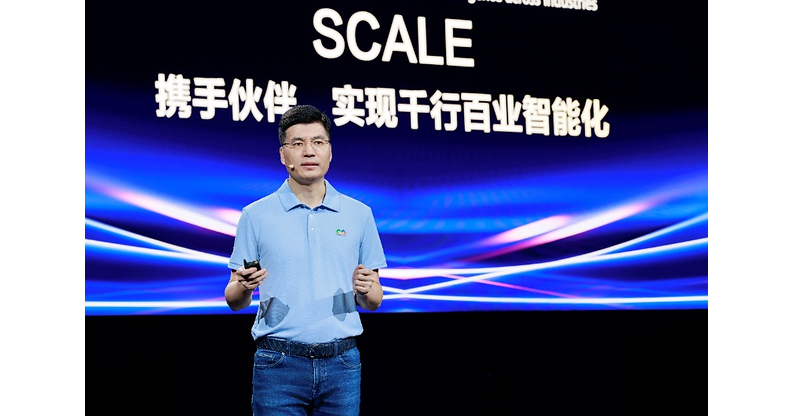
Huawei launched its SCALE partner-support system at HUAWEI CONNECT 2026 to accelerate enterprise AI deployments from pilot projects to scaled implementations. The company cited more than 100 AI scenario solutions across eight industries, 48 reference architectures, and over 130 global customer demonstration projects developed with partners. Huawei has also trained more than 50,000 AI specialists over the past three years, reinforcing its partner-led go-to-market and service infrastructure.
Analysis
This is strategically more relevant to China-exposed enterprise AI infrastructure than to global AI demand. A partner-led deployment model can lower customer acquisition and implementation friction, potentially improving utilization of Huawei’s domestic compute stack where U.S. export controls constrain access to leading Nvidia hardware. The investable implication is substitution: Chinese enterprises seeking compliant, locally serviced AI deployments may shift incremental spend from imported accelerator-led architectures toward domestic servers, networking, storage, and systems integrators.
The near-term signal is weak because there is no disclosed bookings, capex, pricing, or partner economics; this is a channel-program announcement rather than independently verifiable demand. Over 1-3 months, the key read-through is whether Chinese listed ecosystem vendors report AI-server backlog conversion, higher utilization, or accelerating enterprise orders. Over 6-18 months, successful standardization would favor local hardware/software stacks, but could also pressure gross margins if Huawei uses partner incentives and bundled products to secure share.
Consensus may overstate the direct threat to Nvidia: Huawei’s advantage is strongest in regulated domestic workloads and turnkey deployments, not necessarily frontier-model training where software maturity, interconnect performance, and developer tooling remain decisive. The more immediate risk is to lower-end foreign enterprise infrastructure vendors with China revenue, while domestic component suppliers face a volume-versus-margin trade-off. A meaningful policy relaxation on advanced U.S. accelerator exports, or evidence that deployments remain pilots rather than recurring production workloads, would weaken the substitution thesis.
AllMind Terminal
AI-powered research, real-time alerts, and portfolio analytics for institutional investors.
Request TrialMarket Sentiment
Overall Sentiment
mildly positive
Sentiment Score
0.38
Key Decisions for Investors
- No immediate directional trade on the announcement alone; set an earnings-alert basket for Chinese AI-infrastructure proxies including Inspur Electronic Information (000977.SZ), Hygon Information (688041.SS), Sugon (603019.SS), and ZTE (0763.HK). Upgrade only if order backlog, AI-server revenue, or management guidance shows sequential acceleration over the next 1-2 reporting cycles.
- Monitor a relative-value China-substitution basket: long 000977.SZ/688041.SS versus short a broad China technology ETF proxy only after confirmation of domestic enterprise AI capex. Target a 3-6 month horizon; invalidate if domestic vendors guide to margin compression without revenue growth or if U.S. export restrictions materially ease.
- For global semiconductors, treat this as a watch item rather than a short-NVDA catalyst. Reassess China-demand risk if Huawei-linked deployments produce evidence of sustained domestic accelerator substitution; absent that evidence, frontier AI demand outside China remains the dominant earnings driver.
- Watch ZTE (0763.HK) for network and enterprise-system spillover, but require disclosed AI-related revenue contribution or order wins before initiating. The risk/reward is unfavorable if the market prices a Huawei ecosystem benefit without proof of incremental profitability.
More News
- Wall Street’s Nasdaq hits all-time high as AI frenzy gathers pace
- Data-Center Bet Makes ESDS One of India’s Best New Listings
- Asia stocks ride tech wave higher, oil stays subdued
- South Korean solar stocks jump as curbs on Chinese sector expected to remain in place
- U.S. regulators rush to write crypto rulebook after Clarity Act stalls in Senate
- How Kevin Warsh’s rate hike exposed a 2-speed U.S. economy, with AI and housing at the poles