
SpaceX’s Starship is finally set for orbit. A lot is riding on its success.
Source: MarketWatch
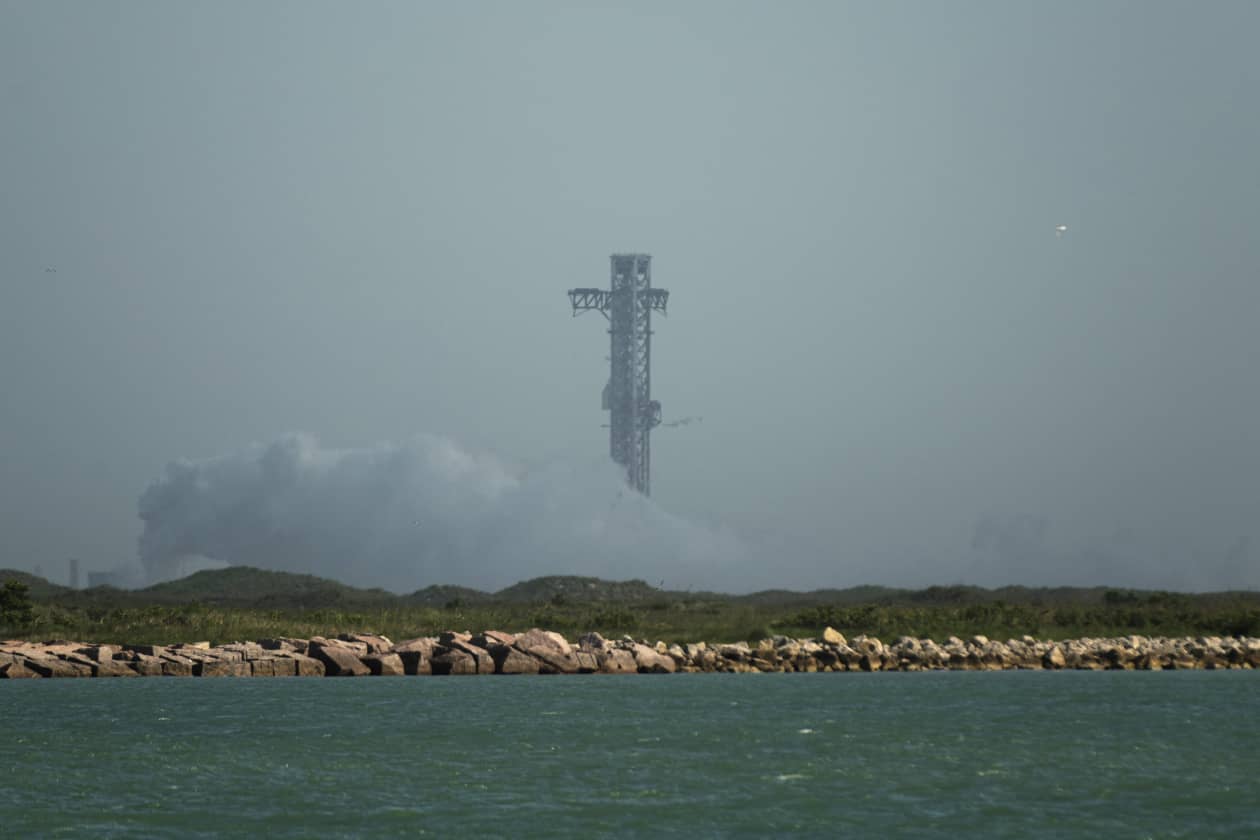
SpaceX plans to launch Starship on a nearly 10-hour test flight next week, targeting six Earth orbits with its 407-foot-tall megarocket. Achieving orbit would mark a significant advancement from prior passively safe suborbital tests and would move the company closer to major objectives dependent on Starship's operational development.
Analysis
A successful orbital-duration test would reduce the probability-weighted development discount embedded in SpaceX's long-dated businesses, but it is unlikely to be independently price-discoverable until the next private financing or a secondary-market repricing. The key economic read-through is not the orbit itself; it is whether post-flight data demonstrates heat-shield integrity, engine reliability, and controlled reentry sufficient to shorten the cadence to reuse. Reusability, rather than launch capability, determines whether Starship becomes margin-accretive versus a capital-intensive R&D program.
The nearer public-market beneficiaries are likely defense and satellite connectivity suppliers only if the program validates materially lower cost-to-orbit over the next 12-24 months. Lower launch costs expand the addressable market for direct-to-device and Earth-observation constellations, favoring AST SpaceMobile (ASTS), Globalstar (GSAT), Iridium (IRDM), and Planet Labs (PL), but they also reduce scarcity value for incumbent satellite operators and may intensify capacity-driven pricing pressure. Rocket Lab (RKLB) faces a mixed setup: Starship lowers industry launch economics but makes its differentiated responsive-launch and space-systems businesses more important than its launch multiple.
Consensus may overreact to a nominal orbital success. A single mission can validate a milestone while leaving the commercially decisive constraints—rapid turnaround, payload deployment, propellant transfer, and regulatory approval for high launch cadence—unresolved. Near-term downside is asymmetric if the test produces a visible failure or extended investigation, but even success should not be extrapolated into near-term revenue or a public-equity valuation reset without evidence of repeatable operations.
Over 1-3 months, monitor secondary-market SpaceX indications, FAA closure duration, and disclosed vehicle condition after reentry rather than headline completion. The thesis is falsified if the company requires a prolonged stand-down or subsequent flights fail to demonstrate faster launch cadence; conversely, two or more rapid, successful flights would justify upgrading the probability of meaningful 2027-28 cost-to-orbit disruption.
AllMind Terminal
AI-powered research, real-time alerts, and portfolio analytics for institutional investors.
Request TrialMarket Sentiment
Overall Sentiment
mildly positive
Sentiment Score
0.35
Ticker Sentiment
Key Decisions for Investors
- No directional trade in SPCX based solely on this test; use any observable post-test secondary-market pricing dislocation as an information signal, not a catalyst trade, because operational success is not directly monetizable in public markets.
- Maintain RKLB as a relative-value watch: consider long RKLB / short a broad satellite-operator basket (IRDM, GSAT) only after evidence of repeatable Starship flights, not a single success. Horizon: 6-18 months; thesis requires lower launch cost to stimulate space-systems demand faster than it compresses launch economics.
- For a failed test or FAA-driven stand-down, look for a tactical long ASTS and GSAT only if they sell off in sympathy. Their nearer-term valuation drivers are spectrum, funding, and deployment execution; a delay to future ultra-low-cost launches can preserve incumbent launch-capacity scarcity, but require confirmation that financing needs remain covered.
- Set an alert for rapid repeat-flight evidence within 90-180 days. If demonstrated, reassess long PL and ASTS as lower launch costs could improve constellation replenishment economics; avoid initiating until management quantifies launch-cost assumptions and capex implications.
More News
- Factbox-How AI leaders and world governments react to ’AI doom’ fears
- Two camps have emerged in the debate over AI safety and regulation
- Push for AI regulation mounts as talk of AI’s ‘existential’ risks go mainstream. But Trump resists calls for a slowdown
- SpaceX will try to put Starship in orbit for the first time on September 22
- Musk urges top AI labs, Chinese companies to test each other's models amid calls for slowdown
- Nvidia Just Reshuffled Its $99 Billion Portfolio, and 1 Stock Moved Up the Ranks