
POWERCHINA Advances Wind Power and Energy Storage Development to Support Egypt's Sustainable Energy Transition
Source: PR Newswire
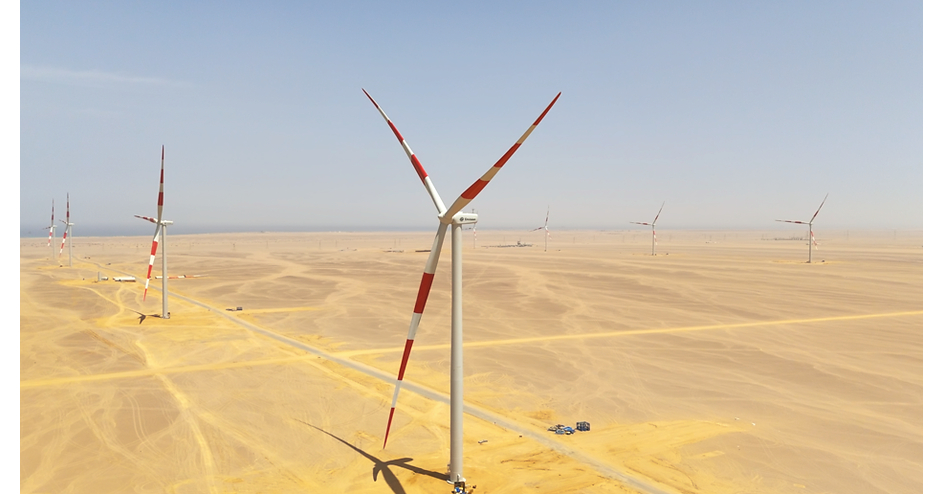
POWERCHINA is expanding its Egypt renewable footprint with a wind portfolio totaling 1.8GW+ plus new energy storage development, including construction of Sungrow’s battery energy storage manufacturing facility in Ain Sokhna (50,000 sq. m.) starting Aug. 2026. The company cites completed/on-track delivery across Egypt’s Gulf of Suez and Ras Ghareb sites, including a 500MW Amunet Gulf of Suez project and two under-construction wind projects (1.1GW and 202.5MW). The news is supportive from an execution and ecosystem-building standpoint (jobs, local suppliers, and industrial capacity), but does not provide financial figures or direct market-price catalysts.
Analysis
This reads more like a pipeline-validation signal than a broad equity catalyst. The real economic value sits with the equipment and financing ecosystem, not the EPC press release: localizing storage manufacturing in Egypt can shorten delivery times, reduce FX/logistics leakage, and improve bid competitiveness in future MENA tenders. That is modestly supportive for storage OEMs with exportable product and for contractors with embedded local execution, but it is not yet evidence of a durable earnings step-up.
The second-order winner is the regional clean-power supply chain in Egypt: civil works, electrical balance-of-plant, transport, and later O&M. The likely loser is any importer-only competitor that lacks local content or service depth, because manufacturing localization tends to shift procurement away from standalone module/inverter shipments toward integrated, lower-margin turnkey relationships. For public comps, this is more relevant as a signal on market access than on near-term revenue.
The main risk is execution slippage, not demand. In emerging-market renewables, the gap between headline capacity and monetizable cash flow is usually grid interconnection, FX convertibility, and offtake discipline; if any of those tighten, the project list becomes backlog noise rather than earnings. Time horizon matters: near-term price reaction should be muted; the 6-18 month upside only matters if Egypt converts this into repeat awards and localized procurement volumes.
Contrarian view: the market may overrate the strategic value of "ecosystem" language here. Unless there is independent evidence of improved margins, faster cash conversion, or higher renewal rates on follow-on contracts, this is likely incremental, not transformative. Watch for whether Sungrow’s local footprint actually expands wallet share versus simply absorbing capex and working capital.
AllMind Terminal
AI-powered research, real-time alerts, and portfolio analytics for institutional investors.
Request TrialMarket Sentiment
Overall Sentiment
mildly positive
Sentiment Score
0.15
Key Decisions for Investors
- No immediate equity trade in CETY or PGPGF; treat this as a watch item until there is verifiable backlog, margin, or cash-flow impact.
- Alert on Sungrow-related supply chain proxies and MENA renewables baskets for 1-3 month follow-through, but only if additional local manufacturing contracts appear; otherwise fade any overshoot.
- If you want a relative-value expression, prefer long MENA grid/storage beneficiaries versus short import-dependent equipment names that lack local content advantages over the next 6-18 months.
- Falsifier: any delay in Egyptian grid connection, offtake, or FX settlement should reset the thesis and argue against adding exposure to regional renewable contractors.
More News
- Iran’s economy faces another blockade: Red tape and gridlock are clogging up land routes that bypass the U.S. Navy’s Hormuz stranglehold
- Fed's Kashkari reportedly says inflation is still too high across the U.S. economy
- The economy has undergone a structural transformation that ended the low-cost era. ‘The regime change in inflation and interest rates is the outcome’
- Nvidia CEO Jensen Huang emerges as Trump's top ally in AI safety debate
- Jefferies stays bullish on S&P 500, sees 9,000 by end-2027
- Qatar PM describes fallout of US-Israel war on Iran as ‘earthquake’