
Trump’s Broken Coalition Upends Republicans’ 2028 Plans
Source: Bloomberg
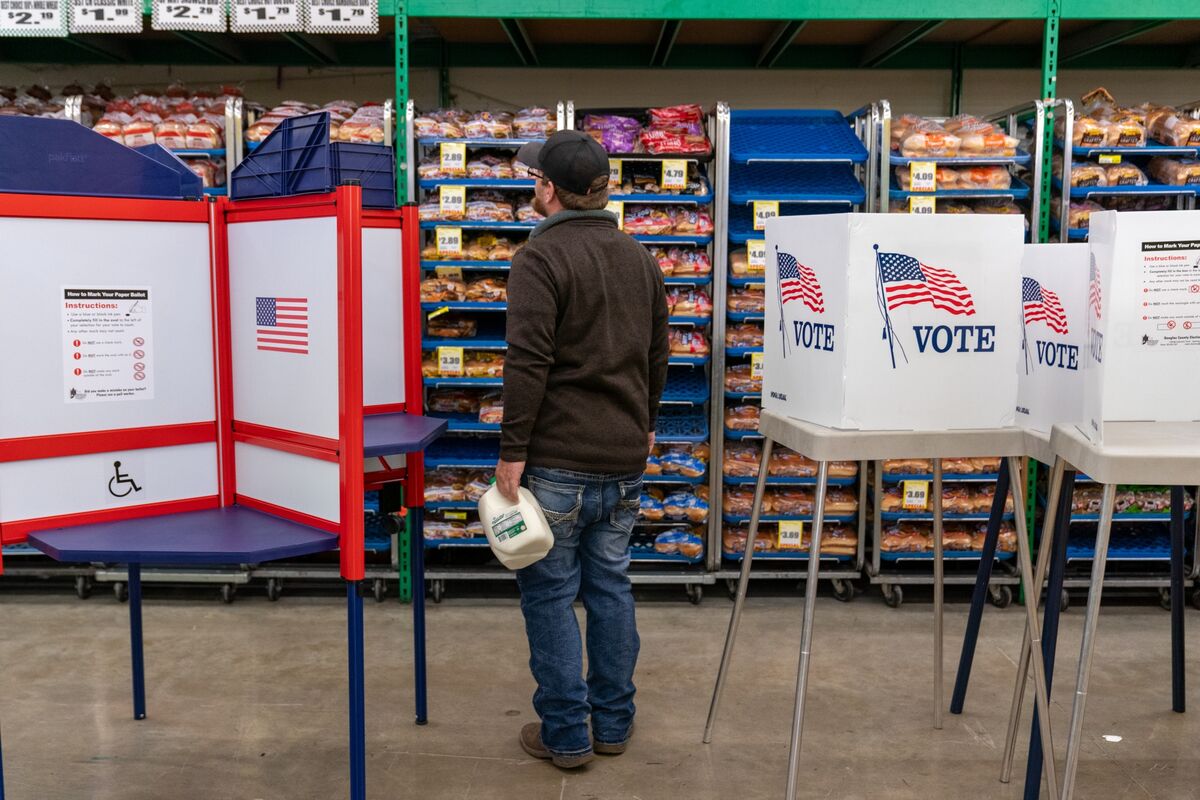
The article says Republicans’ assumed 2024 coalition realignment—among independent, Hispanic and Black voters alongside working-class White voters—has been unsettled, complicating the party’s 2028 plans. It is unclear whether reversing President Trump’s agenda would bring those voters back; the provided excerpt gives no polling figures or market reaction.
Analysis
This is a signal about policy durability, not near-term earnings. If the Republican coalition proves less cohesive than assumed, markets may discount the probability that a future unified mandate can sustain or extend the current agenda. That raises the value of flexibility in policy-sensitive sectors—especially clean energy, healthcare, immigration-exposed labor, defense and traditional energy—but does not establish a directional winner: reversal risk and legislative gridlock can both slow investment decisions. The second-order effect is wider dispersion between firms whose economics depend on federal policy and those driven mainly by private demand.
Over the next 1–3 months, polling and evidence of candidate alignment matter more than the narrative itself; midterm outcomes would be the nearer test of governing capacity. Over 6–18 months, enacted legislation, agency actions and corporate guidance are the evidence that should move sector assumptions. A fragmented Congress could limit both policy expansion and rollback, making a broad market trade premature. The thesis weakens if polling shows a durable coalition and election results deliver aligned control, or if policy-dependent companies report stable investment plans despite political uncertainty.
AllMind Terminal
AI-powered research, real-time alerts, and portfolio analytics for institutional investors.
Request TrialMarket Sentiment
Overall Sentiment
neutral
Sentiment Score
-0.10
Key Decisions for Investors
- No broad equity or sector position on this article alone. Treat it as a watch item for policy-sensitive exposure rather than a measurable change in earnings expectations.
- Review concentration in businesses whose valuations rely on durable federal subsidies, regulation or procurement; favor diversified exposure over a one-way bet on either policy continuation or reversal until legislative probabilities become clearer.
- Over the next 1–3 months, track polling, candidate alignment and fundraising as indicators of governing capacity; over 6–18 months, require enacted policy or company guidance changes before adding directional sector risk.
- Falsify the policy-fragility thesis if electoral evidence shows a cohesive mandate or if relevant companies maintain investment plans and guidance through the uncertainty; reassess if polling or election outcomes materially shift expectations of congressional control.
More News
- What Wall Street billionaires are saying about Democrats' midterm sweep
- NextDC shares surge 43% after Goodman, Digital Realty stake purchases
- Voters rebuff data centers in every ballot measure except one during the 2026 midterms
- Oil and data centre stocks sink after US midterms
- After the midterms, a bigger clash over data centers could be coming
- ‘Seismic’ blue wave triggers the sinking of oil prices, energy stocks, and the chances of power permitting reform