
Aonic Launches Aonic Club, Designed to Drastically Lower the Cost of Everyday Goods, Enabled by Vertical Integration, AI-Powered Operations and Community-Driven Growth
Source: PR Newswire
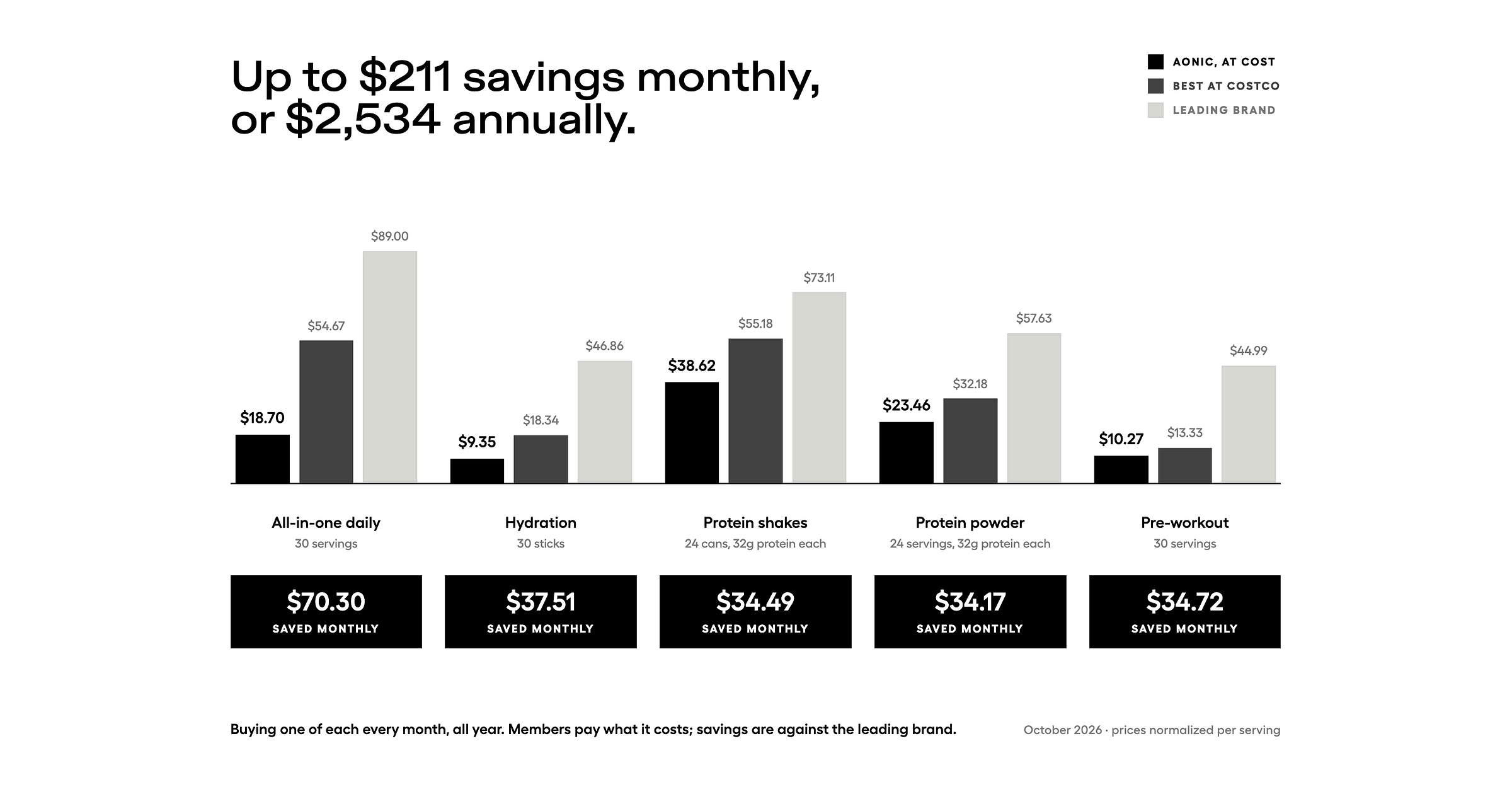
Aonic launched Aonic Club, initially selling protein and supplement products to members at cost, with membership fees as its stated sole source of profit. Membership is priced at $99 for the first year and $149 thereafter; founding members can join for $49 for year one. The company says it aims to price new products at least 15% below Costco and 40% below leading brands, and plans to expand into additional consumer categories by 2027.
Analysis
The investable question is not whether Aonic can advertise lower prices, but whether membership revenue can cover customer acquisition, fulfillment, returns, and service while products are sold at the company’s stated cost. Vertical integration and an existing creator audience could reduce sourcing and marketing friction; neither establishes durable unit economics. “At cost” also needs a comparable definition: verify whether the promised prices include delivery and other consumer-facing charges, and whether product comparisons are like-for-like on size, formulation, and quality.
Near term (days to 1–3 months), this is a private-company launch, not a direct public-equity catalyst. The first useful signals are member conversion from the waitlist, repeat orders, and realized price gaps versus comparable Costco items—not headline reach. Aonic’s claimed expansion into broad essentials by 2027 raises the execution bar: grocery and household categories bring different logistics and working-capital demands than supplements.
Costco is the clearest named competitive reference, but Aonic’s launch is too small and unproven to infer material earnings pressure or justify a short. If the model gains traction, the second-order risk is greater for branded consumer-product incumbents and intermediary economics than for a scaled retailer with membership infrastructure. The contrarian point: consumers may value trust, availability, and convenience over nominal cost-plus pricing; influencer reach does not guarantee conversion or retention. No trade is warranted until independent pricing and cohort economics validate the proposition.
AllMind Terminal
AI-powered research, real-time alerts, and portfolio analytics for institutional investors.
Request TrialMarket Sentiment
Overall Sentiment
mildly positive
Sentiment Score
0.25
Ticker Sentiment
Key Decisions for Investors
- No immediate position in COST: treat Aonic as a watch item, not a demonstrated threat. Reassess only if comparable-basket evidence and sustained membership growth show meaningful customer substitution.
- Track Aonic’s launch metrics over the next 1–3 months: waitlist-to-paid conversion, repeat purchase, net prices including delivery, and member retention. Without these, its low-price claims do not establish a scalable business.
- For any future competitive thesis, compare Costco’s customer retention and comparable-item pricing against Aonic rather than shorting COST on launch publicity; falsification would be Aonic failing to show repeat buying or a durable price advantage.
- Treat the 2027 category expansion as a separate execution catalyst. Verify sourcing, fulfillment capacity, and category-level economics before extending the supplements launch thesis to grocery, pet, or household products.
More News
- How tech icon Meg Whitman is already leaving her mark on grocery giant Albertsons
- South Korean carmaker Hyundai plans 'strategic' investment of $15.5 billion in India by 2032
- Producer prices in China rise at fastest pace since June 2022, beating expectations
- Namibia battles cattle disease outbreak as EU suspends several meat imports
- Applied Materials’ $5 billion AI lab aims to cut chip development time in half—and restore Silicon Valley’s edge
- IMF says higher bond yields underscore urgency of fiscal consolidation