
Trump: AI ‘Taking Over the World
Source: youtube.com
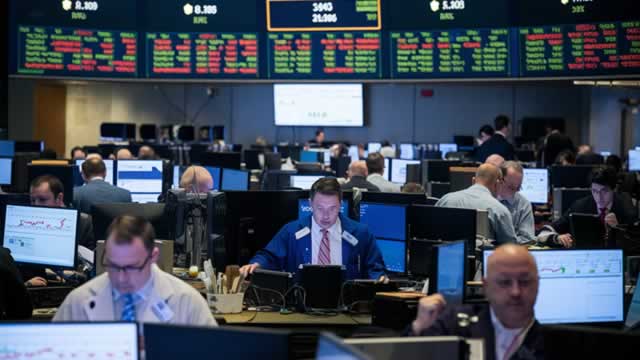
Douglas Holtz-Eakin, president of the American Action Forum and former CBO director, argued that the Federal Reserve should raise interest rates this week. He warned that leaving rates unchanged could damage the Fed's inflation-fighting credibility, with inflation still the central policy challenge.
Analysis
This is not a new policy signal; it is an outside view, so the investable question is whether front-end rates are underpricing a hawkish policy-error tail. A credibility-driven repricing would first express through 2-year Treasury yields and SOFR futures, then pressure long-duration equities and leveraged small caps. The most vulnerable exposures are QQQ and unprofitable-growth baskets, where valuation support remains disproportionately dependent on declining discount rates; KRE also faces renewed deposit-cost and credit-loss concerns if restrictive policy persists.
Over the next 1-3 months, the key catalyst is not rhetoric but inflation breadth and labor-market resilience relative to the rate path implied by OIS. If market pricing shifts toward one additional hike or materially fewer cuts, a 15-30 bp rise in the 2-year yield could produce a 3-6% drawdown in TLT and a larger relative de-rating in high-multiple software and small-cap growth. Conversely, a benign core-inflation print or material labor-market deterioration would quickly invalidate the hawkish expression and favor duration.
The contrarian point is that a surprise hike can initially be bullish for bank equities if it steepens the long end and signals economic resilience, but that benefit is likely short-lived unless deposit betas stabilize. The more durable second-order effect of higher-for-longer policy is tighter private-credit refinancing conditions, which may widen spreads in highly levered issuers before it is visible in broad equity indices. Given the low-information source and modest expected impact, this is a rates-volatility watch item rather than a standalone directional catalyst.
AllMind Terminal
AI-powered research, real-time alerts, and portfolio analytics for institutional investors.
Request TrialMarket Sentiment
Overall Sentiment
mildly negative
Sentiment Score
-0.15
Key Decisions for Investors
- Do not add directional risk solely on this commentary; monitor 2-year Treasury yield and SOFR/OIS pricing around the next inflation and employment releases. Treat a sustained 15 bp+ upward repricing in the 2-year yield as confirmation for a tactical risk-off position.
- On confirmed hawkish repricing, use a 1-3 month pair: long SHY / short TLT. Target a 3-5% relative move, with exit if the 2-year yield falls 15 bp below the entry level after a softer inflation or payroll release.
- For equity exposure, favor a 1-3 month long XLF / short IWM pair rather than outright financial longs: larger banks have more diversified earnings and liquidity than regional banks in a higher-for-longer regime. Exit if the curve bull-steepens materially on falling front-end yields, which would restore small-cap duration sensitivity.
- Maintain a downside hedge on long-duration growth via QQQ puts or a modest QQQ short only if real yields break higher alongside inflation data; without that confirmation, implied volatility can make the hedge negative carry with limited informational edge.
More News
- Budget 2026 speech
- The UK cuts energy bills, taxes banks and boosts defense in high-stakes budget
- Federal Reserve issues FOMC statement
- Asian shares fall as Alphabet earnings miss drags Wall St futures lower
- Dollar steady after Fed hold leaves rate path murky
- Alphabet Disappoints as Microsoft’s Cloud Brightens