
Corgi Insurance Appoints Daniel Hausman as Vice President of Trucking Program
Source: PR Newswire
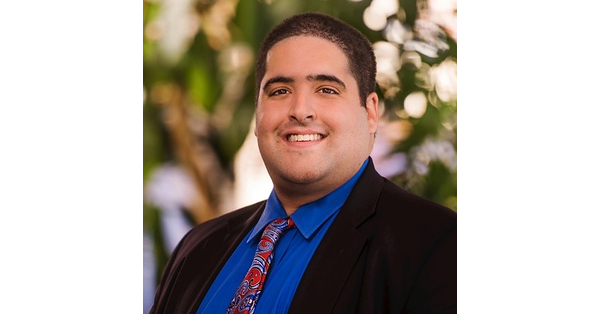
Corgi Insurance appointed Daniel Hausman as VP of its Trucking Program to expand its transportation-insurance business. Hausman previously helped scale trucking-insurance programs from zero to nearly $20 million in one year at CSMV Underwriters and from zero to $30 million at Nirvana, while contributing to 180% year-over-year profitable growth at Transportation Insurance Experts. The hire supports Corgi's strategy of using AI and modern technology to develop commercial insurance products, but the announcement provides no direct financial outlook for Corgi.
Analysis
This is not a valuation-relevant event for public insurers: a single executive hire at a likely private, early-stage carrier provides no independently verifiable evidence of written-premium growth, loss-ratio advantage, reinsurance capacity, or distribution economics. The only potential read-through is that AI-enabled entrants continue targeting commercial auto, a line where incumbent underwriting discipline—not workflow automation—is the binding constraint; adverse development, nuclear verdicts, repair-cost inflation, and fraudulent claims can overwhelm apparent acquisition-cost savings.
For listed specialty carriers, competitive risk remains limited over the next 6-18 months unless new entrants demonstrate durable capacity and loss ratios through a full claims-development cycle. Kinsale (KNSL), W. R. Berkley (WRB), Travelers (TRV), and Chubb (CB) retain advantages in capital, regulatory infrastructure, claims handling, and broker relationships. The more credible disruption risk is margin pressure in narrowly selected low-loss fleets if AI-driven quoting compresses broker friction; poorly selected non-fleet business would instead create a delayed reserve problem for the entrant, not an immediate share loss for incumbents.
Consensus can overstate the value of AI in commercial auto because faster quoting may increase premium volume while degrading risk selection. The key falsification point for the incumbent-defense thesis would be independently disclosed evidence of a scaled trucking book with favorable accident-year loss ratios, stable renewal retention, and committed multi-year reinsurance capacity; absent those data, this should be treated as industry noise rather than a catalyst.
AllMind Terminal
AI-powered research, real-time alerts, and portfolio analytics for institutional investors.
Request TrialMarket Sentiment
Overall Sentiment
mildly positive
Sentiment Score
0.28
Key Decisions for Investors
- No immediate position: do not trade TRV, CB, WRB, or KNSL on this announcement; there is no public-company earnings linkage or disclosed premium/capacity metric.
- Maintain a 6-12 month watch on KNSL and WRB as specialty-commercial-insurance proxies; reassess only if private-market disclosures show sustained trucking premium scale alongside accident-year combined ratios below established-market benchmarks.
- For existing commercial-auto exposure, monitor quarterly reserve development, commercial-auto rate trends, and reinsurance renewal pricing. Negative reserve development or rate deceleration would matter materially more to sector multiples than new AI-carrier hiring announcements.
- Use any broad insurtech-disruption selloff in profitable specialty carriers as a potential entry opportunity only after confirming no deterioration in net written premium growth, renewal retention, or prior-year reserve development.
More News
- Flames, smoke seen near Riyadh airport; Houthis claim attacks on Saudi capital
- Polish prime minister warns Russia is planning drone or rocket strikes on European countries supporting Ukraine as ‘Carpathian Eight’ meet
- Trump vows to create an ‘AI Force’ and nods to justice system after rejecting calls to slow down industry. ‘Rather, we will cherish it’
- Australia seeks big tech support for internet safety, AI regulation
- JPMorgan Sees No Clear Endgame for Oil Markets
- Higher interest rates and AI safety fears put the stock market to the test last week
From AllMind Research
- Anthropic IPO Preview: Valuation, Timing, and What to Watch
- Shein After the IPO: Venue, Valuation, and What Must Be Proved
- What AI Research Tools Should a Small Hedge Fund Buy First?
- AI for Sell-Side Models, Estimates, and Internal Data
- How to Write an Investment Memo with AI: A Decision-Record Template