
AGIBOT Introduces Worken to Measure Productive Robot Work at AGIBOT Innovation Day 2026
Source: PR Newswire
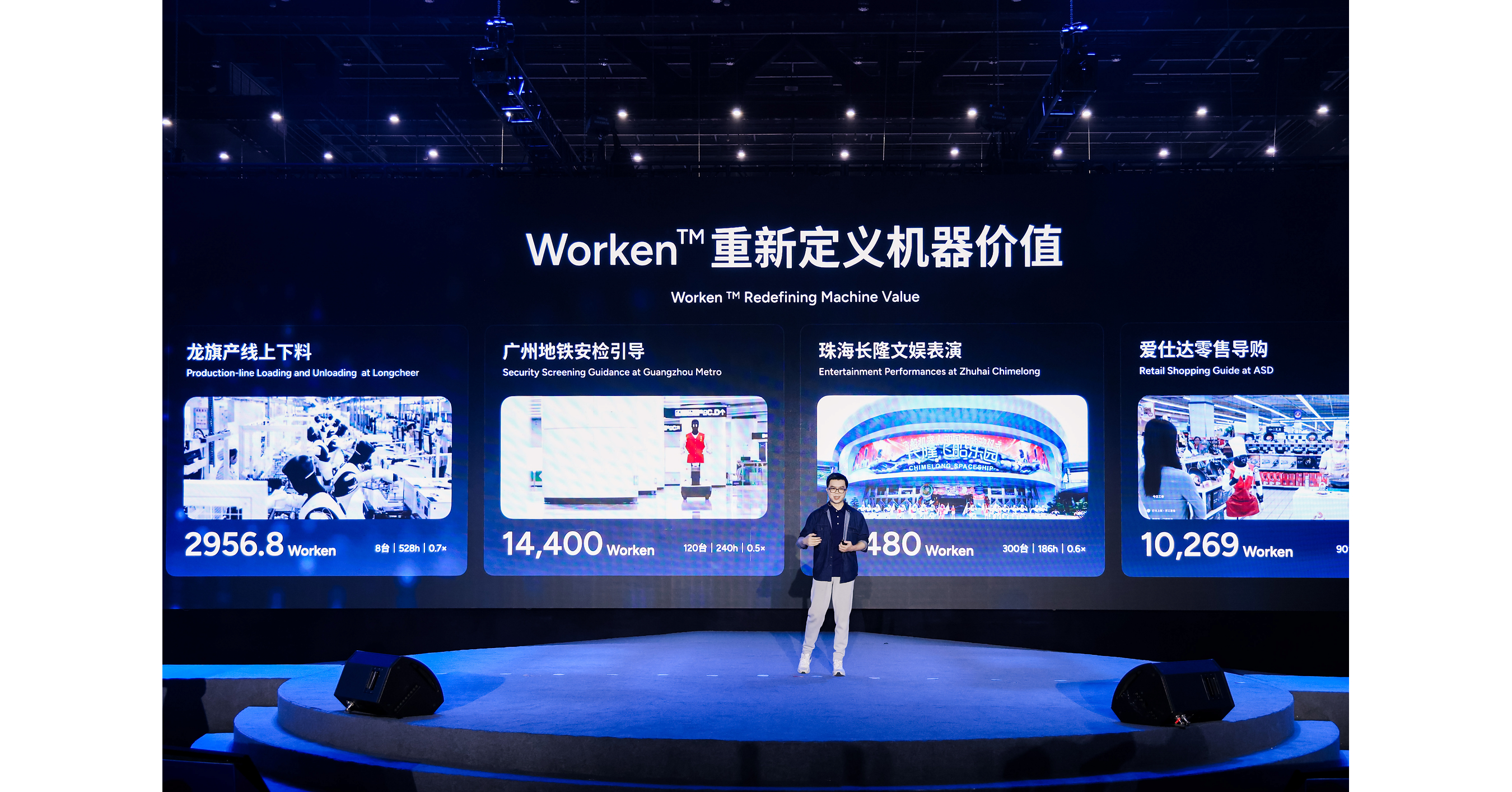
AGIBOT introduced Worken, a proposed measure of robots’ productive output based on active robots, autonomous working hours and output efficiency, alongside launches and demonstrations at Innovation Day 2026. Announcements included the AHA3 platform, GO-3 Preview, WITA-Omni, the G2 Max industrial robot with up to 40 kg dual-arm capacity, and Link-U OS 1.0, which AGIBOT plans to make fully open source by the end of 2026. The company also cited deployments across manufacturing, logistics and visitor services; the article reports no financial results or market reaction.
Analysis
The investable signal is not the product lineup; it is whether AGIBOT can convert deployments into repeatable, independently measured unit economics. Worken could shift customer procurement toward uptime, autonomous hours and acceptable task output—favoring vendors that can support integration, servicing and software updates, while exposing hardware vendors whose robots need frequent human intervention. That raises the strategic value of industrial automation incumbents such as ABB, FANUC and Yaskawa, which already sell into customer workflows, even as more capable humanoids could eventually pressure their labor-substitution narratives. The near-term risk is that Worken is a company-proposed metric with task-specific benchmarks, not yet an audited cross-vendor standard; reported benchmark rankings and deployment examples do not establish customer payback or recurring revenue.
Days: likely sentiment support for embodied-AI themes, but the release alone does not justify repricing earnings. Over 1–3 months, verify paid deployment counts, repeat orders, utilization, intervention rates and customer references. Over 6–18 months, a credible productivity data flywheel could support software value and extend robot usefulness after hardware purchase; conversely, inconsistent site performance, safety issues or poor lifecycle economics would stall adoption. No company identity or ticker is supplied for AGIBOT, limiting direct expression. The contrarian angle is that the market may overvalue robot production milestones and underweight deployment labor, integration and service costs—but this release supplies no evidence to quantify that gap.
AllMind Terminal
AI-powered research, real-time alerts, and portfolio analytics for institutional investors.
Request TrialMarket Sentiment
Overall Sentiment
mildly positive
Sentiment Score
0.35
Key Decisions for Investors
- No immediate directional trade on this announcement. Treat it as product/positioning news, not verified evidence of revenue acceleration or customer ROI.
- Set a 1–3 month diligence trigger: seek independently corroborated repeat orders and disclosed utilization, autonomous operating hours, intervention frequency and task-level output. Upgrade only if these improve alongside customer economics.
- For listed automation exposure, monitor ABB, FANUC and Yaskawa for evidence that deployment-heavy robotics raises demand for integration, controls and service—or instead creates credible substitution pressure. Avoid assuming either outcome from AGIBOT's claims alone.
- Falsify the deployment thesis if follow-up shows pilots failing to convert to repeat production use, persistent human intervention, safety-related interruptions, or customer economics that do not improve; reassess if a neutral body adopts a comparable productivity benchmark.
More News
- Stocks slump, bonds leap as AI giants’ spending spooks investors
- DoorDash offers $17 billion for Instacart: ‘the largest companies are only eating more and more of the pie’
- Alphabet Erases $500 Billion as ChatGPT, Google AI Cut into Search
- Alphabet’s stock has worst day in over 20 years, dragging the S&P 500 to first loss in four days
- The U.S. and EU could break their tariff truce over a record-breaking $3.4 billion Airbus loan and a reignited 17-year dispute between aviation giants
- Taiwan Stocks Heads for Correction as Global AI Selloff Deepens