
Huawei stellt Zielarchitektur für intelligentes WAN für Internetdienstanbieter vor
Source: PR Newswire
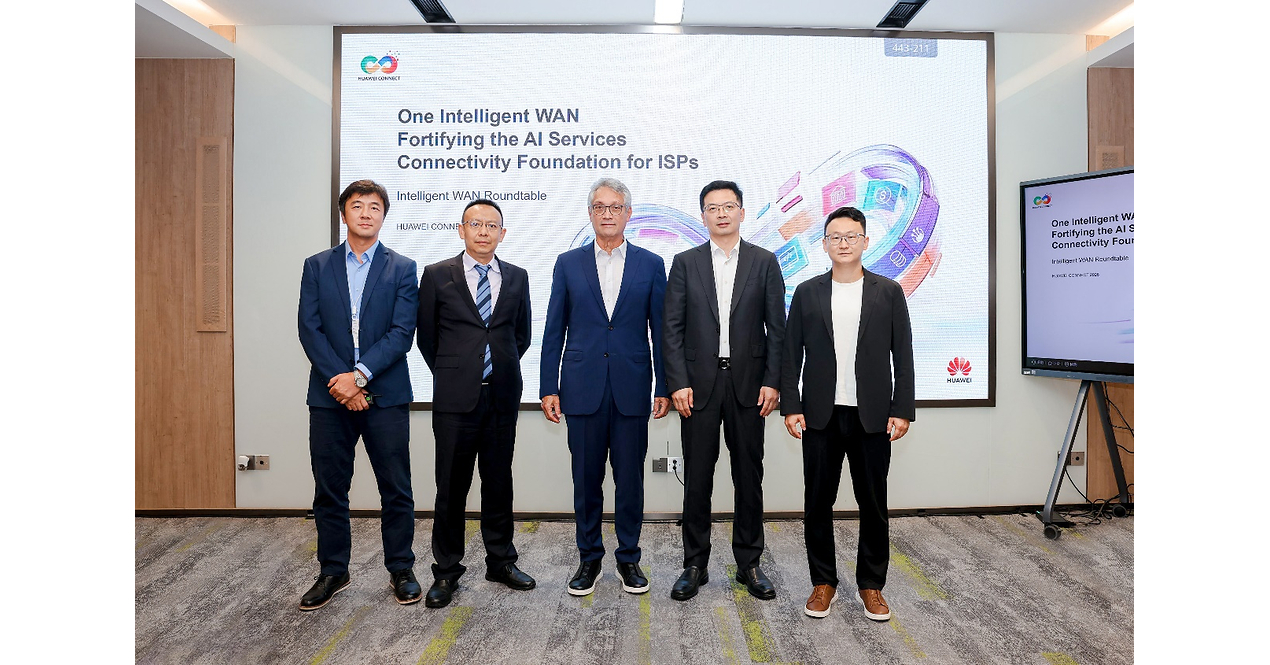
Huawei unveiled its Intelligent WAN Target Architecture at HUAWEI CONNECT 2026, positioning ISPs to shift from selling bandwidth toward delivering AI-enabled services. The architecture combines converged IP+Optical networks, end-to-end service assurance and AI-based operations tools intended to improve network resilience, accelerate AI-service deployment and reduce OPEX. The announcement is strategically supportive of Huawei's ISP networking position but provides no financial targets, customer contracts or quantified commercial impact.
Analysis
This is not an investable Huawei-specific catalyst; it is a directional read-through on whether AI networking spend broadens from hyperscale data-center fabrics into carrier edge, metro optical and service-assurance layers. The near-term revenue pool is likely modest because telecom operators monetize new network capabilities slowly, while the initial burden is capex; operators with weak balance sheets could see free-cash-flow pressure before realizing any enterprise-AI revenue. The more immediate beneficiaries would be Chinese IP/optical vendors such as ZTE (0763.HK) and FiberHome (600498.SS), while global vendors Ciena (CIEN), Nokia (NOK) and Cisco (CSCO) benefit only if carrier procurement becomes less China-centric.
The non-obvious risk is that agentic-AI traffic may increase uplink and east-west edge traffic without creating proportionate paid bandwidth demand: compression, local inference and private peering can absorb much of the volume. That would favor component and software suppliers selling mandatory capacity, automation and observability upgrades over ISPs attempting to sell premium AI connectivity. Over 6-18 months, coherent-optics suppliers and optical-component names—Lumentum (LITE), Coherent (COHR) and Fabrinet (FN)—offer cleaner operating leverage if metro/long-haul upgrade orders emerge; however, these names already discount AI-driven optical demand, making order-book evidence rather than architecture announcements the required catalyst.
Contrarian view: the market may over-attribute any carrier AI narrative to a broad telecom capex revival. Carrier capex cycles remain governed by utilization, pricing and spectrum obligations, not vendor roadmaps. The thesis is falsified if CIEN/NOK carrier order commentary and optical-component bookings fail to improve through the next two quarterly reporting cycles, or if major operators guide capex flat-to-down despite AI-service launches.
AllMind Terminal
AI-powered research, real-time alerts, and portfolio analytics for institutional investors.
Request TrialMarket Sentiment
Overall Sentiment
mildly positive
Sentiment Score
0.30
Key Decisions for Investors
- No immediate directional position from this release; treat it as a watch signal until carrier orders or capex guidance independently confirm AI-WAN spending.
- Build a 1-3 month watchlist for CIEN and LITE ahead of earnings: initiate only if management identifies improving metro/edge optical orders and backlog conversion. Target a 10-15% upside on multiple expansion; exit if carrier revenue guidance remains flat or backlog declines.
- Prefer a 6-18 month relative-value expression of long COHR / short NOK in equal dollar amounts if optical demand accelerates: COHR has higher AI-optics torque, whereas NOK bears greater exposure to slow-monetizing operator capex. Reassess if Nokia demonstrates sustained margin-accretive software/network-automation revenue.
- Monitor China carrier tender data and ZTE (0763.HK) order disclosures rather than extrapolating from vendor messaging. A material acceleration in IP+optical tenders would be a catalyst for Chinese equipment exposure, but geopolitical restrictions and China pricing pressure make this unsuitable as a clean global AI-infrastructure proxy.
More News
- All Iranian airlines to be 'shut down' from Wednesday, Bessent tells CNBC
- Taiwan benchmark Taiex rises to record intraday high as tech stocks advance
- AMD joins the $1 trillion club as chip rally surges - our AI Strategy saw it early
- Jamie Dimon says hyperscaler AI spending could hit $1 trillion next year
- Factbox-Key issues for this week’s Trump-Xi summit in Washington
- Here's who we know is going to the Trump-Xi dinner so far
From AllMind Research
- Anthropic IPO Preview: Valuation, Timing, and What to Watch
- Shein After the IPO: Venue, Valuation, and What Must Be Proved
- What AI Research Tools Should a Small Hedge Fund Buy First?
- Weekly Update: Advanced Search Filters, Redesigned Ticker Dashboard, and Improved Search Experience
- How to Build an Automated Research Process for a Fund