
Zendure présente son HEMS agentique à l'IFA 2026 :
Source: PR Newswire
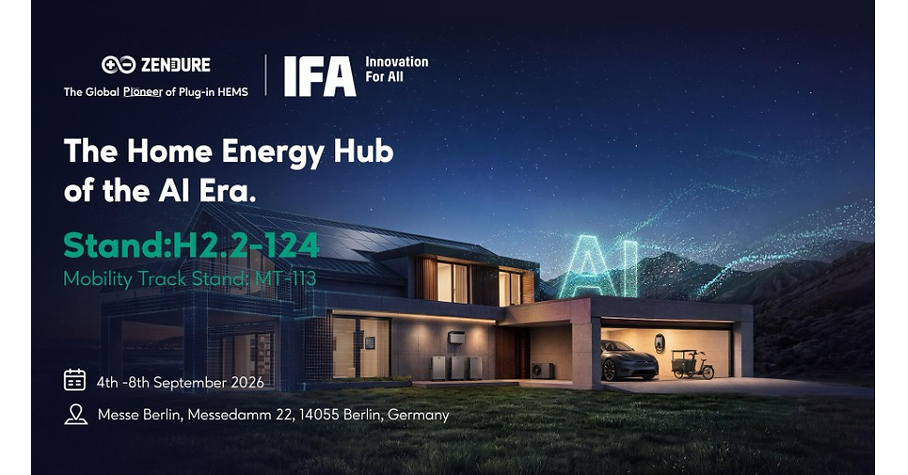
Zendure presents à l’IFA 2026 un HEMS « agentique » visant à anticiper et piloter automatiquement l’énergie domestique (solaire, stockage, VE, pompes à chaleur) en fonction de la météo et des prix de l’électricité via ZenPulse, ZENKI AI Agents et Zen+OS. Le système s’appuie sur un écosystème ouvert (APIs, intégrations MQTT/Home Assistant/Homey) et connecte à plus de 870 fournisseurs d’énergie en Europe pour plus de 150 millions d’utilisateurs. L’annonce met aussi en avant ZenWave (tarification dynamique) et des démonstrations produits (SolarFlow Mix/2400, PowerHub) pour automatiser l’arbitrage économies d’énergie/confort/sécurité. Impact attendu surtout produit/communication, sans chiffres financiers ni guidance publiés.
Analysis
This is more about category formation than an immediate earnings event: the first-order read is that home-energy orchestration is shifting from a static control layer to an operating system that can monetize flexibility. The economic winner over the next 6-18 months is likely the vendor that controls both the hardware install base and the tariff/data loop, because that is where customer lock-in, upgrade attach, and recurring software revenue can compound. By contrast, pure software players without utility integrations or hardware distribution risk becoming a feature, not a business.
The second-order effect is on installed-base utilization: better dispatch raises the effective ROI of batteries, EV chargers, and heat pumps, which can pull forward replacement cycles and increase attach rates for adjacent products. That tends to help residential energy ecosystems with broad interoperability and hurt point solutions that rely on one device category. The real moat is not “AI” branding; it is access to pricing data, utility enrollment, and enough device control to actually move load in real time.
Near term, this is mostly a sentiment catalyst rather than a fundamental one. The main falsifier is adoption friction: if utility integrations, latency, or device certification issues prevent automated dispatch at scale, the value prop compresses quickly. Over 1-3 months, watch whether installers and utilities treat this as a meaningful upsell; over 6-18 months, the key question is whether demand-response economics can become recurring software revenue or remain a bundled hardware feature.
AllMind Terminal
AI-powered research, real-time alerts, and portfolio analytics for institutional investors.
Request TrialMarket Sentiment
Overall Sentiment
mildly positive
Sentiment Score
0.20
Key Decisions for Investors
- No direct trade on the private issuer; treat this as a watch item. Set a 1-3 month alert on residential energy leaders with software attach exposure — ENPH and TSLA — if management commentary shifts toward AI-driven orchestration, that would support a higher multiple on recurring software/service mix.
- Relative-value idea: long TSLA / short a basket of commodity solar hardware exposure over 3-6 months. If home-energy software and EV charging orchestration improve attach rates, TSLA has a more credible path to monetizing the control layer; risk is that energy remains too small to move consolidated numbers.
- Tactical long ENPH on pullbacks only if channel checks show installers are using automation as a reason to upgrade batteries/inverters. Risk/reward is attractive only if the market starts pricing higher utilization and lower churn; falsify if residential demand weakens or attach rates do not improve by the next earnings cycle.
- Avoid chasing SEDG on this headline alone. The open-ecosystem framing lowers the odds of durable lock-in for any single hardware stack; use this as a reminder that software-led differentiation is the more important variable than unit growth.
- Watch utilities-and-flexibility proxies such as NEE and VST for secondary benefit if dynamic pricing and demand response expand. If regulatory support for retail dynamic tariffs accelerates over the next 6-12 months, these names could see incremental value from more addressable flexible load.
More News
- Trump Hails Iran Talks, Tehran Sets 'Firm Positions'
- Zelenskyy says Ukraine ready for ‘energy ceasefire’, calls for trilateral meeting with Putin, Trump
- Iran floats conditions for Hormuz reopening as Trump says deal could come after midterms
- Trump-Xi summit puts AI safety talks on the table but neither side wants to slow down
- Treasury yields edge lower as Brent crude falls below $99
- Wall Street’s Nasdaq hits all-time high as AI frenzy gathers pace