
BagelUp Growth Lab Returns as Business Incubator for Emerging Bagel Entrepreneurs, Launching a Year-Round Partner Program
Source: PR Newswire
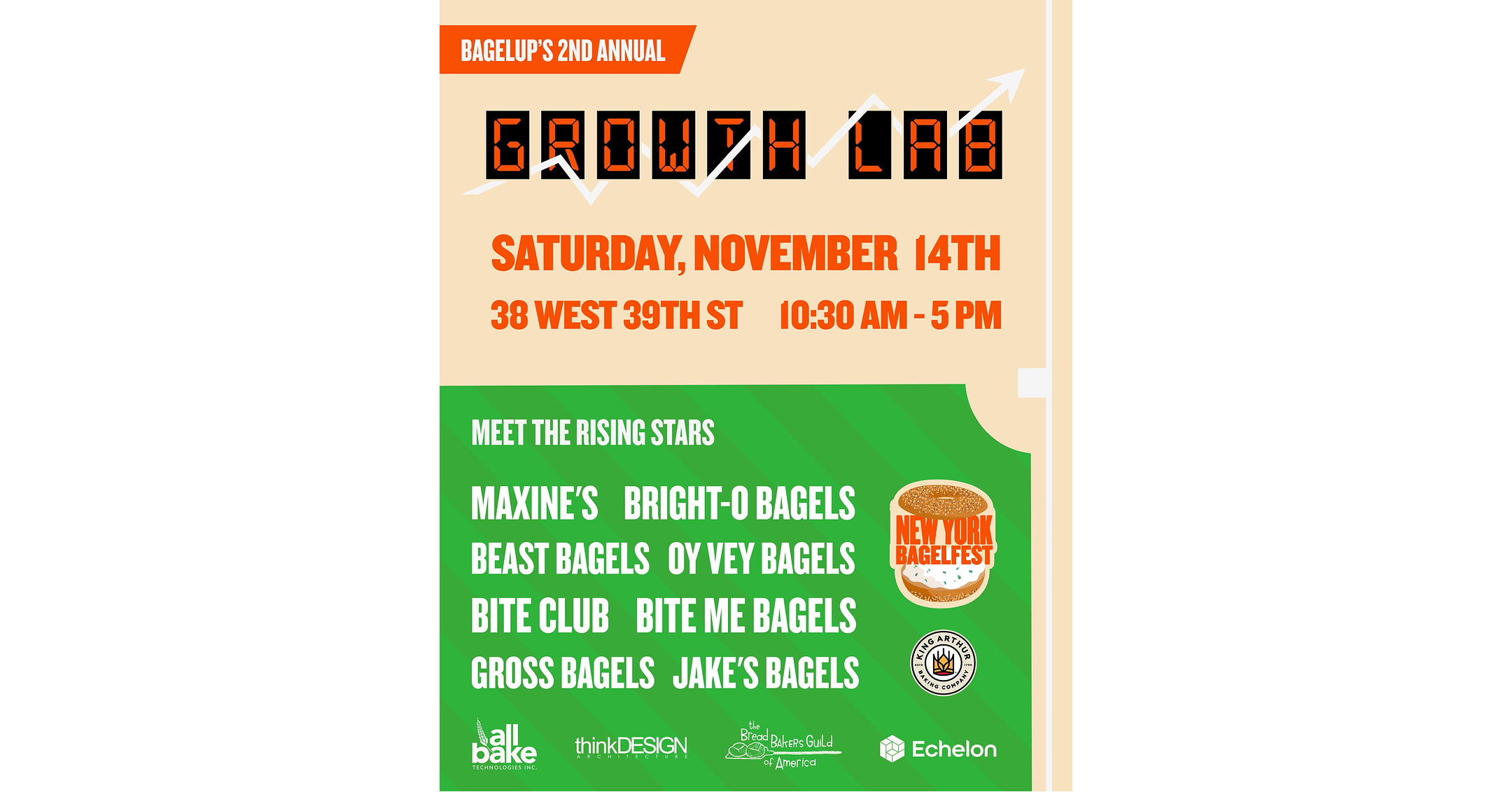
BagelUp will hold its second annual Growth Lab on November 14, 2026, expanding the incubator with a year-round partner program and educational webinars for emerging bagel entrepreneurs. The program offers business training, access-to-capital discussions, pitches, and connections with vetted suppliers and specialists to support founders working toward opening or scaling shops. BagelUp cited U.S. Bureau of Labor Statistics data indicating roughly 40–50% of new accommodation and food service establishments close within five years.
Analysis
The investable signal is small: this is ecosystem-building, not evidence of incremental demand or a material earnings driver for the named suppliers. The program could give equipment, ingredient, packaging, architecture and payments providers earlier access to independent-shop founders; any benefit is likely dispersed and contingent on participants actually opening and scaling. Do not translate sponsor participation into a sales estimate.
The more consequential mechanism is capital discipline. Mentorship and vendor access may help founders avoid costly layout, equipment and operating mistakes, but they do not remove the fixed-cost hurdle of a brick-and-mortar food business. If the program accelerates openings without validated repeat demand and workable shop-level economics, it could increase closures rather than create durable customers for suppliers. The supplied five-year closure statistic is broad food-service context, not a bagel-shop cohort outcome.
Horizon: negligible near-term public-market impact; over 1–3 months, watch for disclosed follow-on partners and evidence of actual shop openings, not webinar participation. Over 6–18 months, the useful read-through is whether participants convert from micro-bakeries/pop-ups to viable storefronts and generate repeat orders. A broader shift toward regional specialty concepts could modestly benefit flexible, small-order suppliers, but the article provides no evidence of category-scale growth.
Contrarian view: the optimistic framing overstates what an incubator can change. The binding constraints may be rent, labor, financing terms and repeat traffic—not access to vendors or advice. With no listed company identities supplied and no quantified commercial commitments, there is no defensible single-name trade here.
AllMind Terminal
AI-powered research, real-time alerts, and portfolio analytics for institutional investors.
Request TrialMarket Sentiment
Overall Sentiment
mildly positive
Sentiment Score
0.20
Key Decisions for Investors
- No trade on the announcement; treat it as a low-impact ecosystem initiative, not a near-term catalyst for any supplier.
- Add a watch item for participant storefront openings, closure rates and repeat-demand indicators over the next 6–18 months; distinguish durable operations from event visibility or sell-out claims.
- For food-service and small-business exposure, test the bullish read-through against shop-level economics: rent, labor, capex, financing costs and sales per location. Deteriorating economics would falsify the thesis that better founder support translates into scalable supplier demand.
More News
- Samsung, SK Hynix shares drop as Q3 earnings loom
- DeepSeek set to raise at least $12 bln in Tencent, CATL-led round- Bloomberg
- CH Robinson to Buy RXO for $5.8B in Bet on AI Model
- BPCE acquires 7% stake in Spain’s Banco Sabadell
- Wells Fargo gets a bold upgrade ahead of earnings. Why the stock can play catch-up
- SpaceX stock climbs to highest since June, returning Musk to trillionaire status
From AllMind Research
- Anthropic IPO Preview: Valuation, Timing, and What to Watch
- Shein After the IPO: Venue, Valuation, and What Must Be Proved
- What AI Research Tools Should a Small Hedge Fund Buy First?
- AllMind Fixed Income Compass for October 2025: Navigating Policy Divergence and Political Risk
- AI Equity Research Tools for RIAs and Wealth Managers