
Waters Sets Benchmark for Standardized Spectral Flow Cytometry with Commercial Launch of BD FACSDiscover A7 Cell Analyzer
Source: PR Newswire
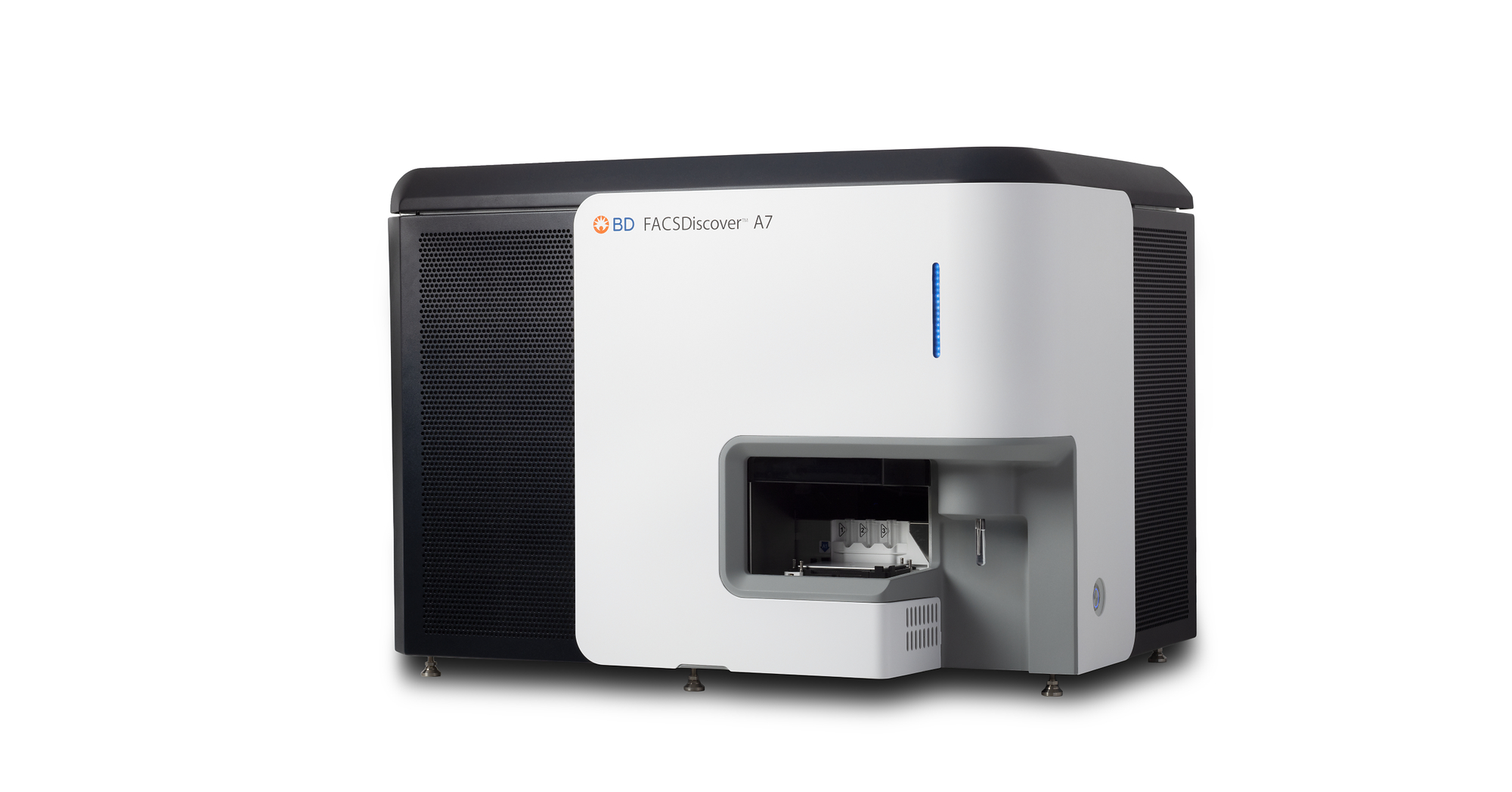
Waters launched the BD FACSDiscover A7 Cell Analyzer globally, expanding its spectral flow-cytometry platform for academic, pharmaceutical, and CRO laboratories. The instrument supports routine experiments with more than 50 cellular parameters and targets less than 10% coefficient-of-variation reproducibility across more than 50 dyes through FACSTruQ calibration technology. The launch broadens Waters' life-sciences instrumentation offering and may improve accessibility of high-parameter cell analysis, though no revenue, pricing, or sales outlook was disclosed.
Analysis
The investable issue is not the instrument launch itself but whether Waters can convert the acquired BD Biosciences installed base into a recurring ecosystem: service contracts, reagents, software and replacement-cycle pull-through. If the platform reduces multi-site assay variability in practice, it should improve win rates in pharma/CRO accounts where validation failure is more costly than instrument capex, supporting a higher mix of recurring revenue and modest gross-margin expansion over 6-18 months. The claim of superior reproducibility is internal-company benchmarking and should not be capitalized until independent core-lab adoption and order/backlog data validate it.
WAT has the most upside sensitivity because successful commercialization would demonstrate that the BD asset integration is producing growth rather than merely adding complexity. The nearer-term risk is execution: channel disruption during regulatory-manufacturer transfers, salesforce retention, and customers delaying purchases until platform support and reagent availability are proven. BDX loses a potential high-growth adjacency but gains strategic focus; the financial impact to BDX should be immaterial relative to its core medtech and diagnostic franchises.
Competitive pressure should fall most directly on Cytek Biosciences (CYTK), whose spectral-flow positioning depends on accessible high-parameter workflows, and on Danaher’s Beckman Coulter Life Sciences franchise (DHR). Waters' differentiation may be strongest in centralized pharma and CRO labs, while academic labs remain budget constrained and likely require leasing or grant-funded purchasing; therefore, early placements alone are a weak signal unless accompanied by consumable attach rates. Consensus may overread this as an immediate revenue catalyst: capital-equipment qualification cycles commonly extend two to four quarters, making 2027 guidance and evidence of recurring-revenue attachment more important than initial launch commentary.
A 1-3 month catalyst is distributor/order commentary, independent application notes, and any disclosure of early placements in biopharma accounts. Thesis falsifiers are weak order conversion by year-end, service/reagent attach below legacy BD levels, or WAT management signaling integration costs or regulatory-transition delays that pressure Biosciences margins. Over 6-18 months, sustained share gains versus CYTK/DHR in high-complexity panels would justify a rerating; absent that, acquisition-related leverage and integration risk can compress WAT's multiple.
AllMind Terminal
AI-powered research, real-time alerts, and portfolio analytics for institutional investors.
Request TrialMarket Sentiment
Overall Sentiment
moderately positive
Sentiment Score
0.42
Ticker Sentiment
Key Decisions for Investors
- Maintain a modest long WAT only as a 6-18 month integration thesis; add after evidence of commercial traction in the next two quarterly updates rather than chasing launch-day sentiment. Target a 10-15% upside from recurring-revenue mix and integration credibility, with a stop/review if Biosciences growth or segment margin disappoints for two consecutive quarters.
- Monitor a relative-value long WAT / short CYTK basket over 3-6 months, but initiate only if independent customer wins show displacement in pharma/CRO accounts. The pair expresses standardization and installed-base advantages while reducing broad life-science capex risk; cover if CYTK reports accelerating spectral-flow placements or WAT does not disclose meaningful backlog conversion.
- Avoid treating BDX as a direct short catalyst. Any valuation benefit from focus is likely overwhelmed by its larger operating drivers; use BDX only as a hedge against transaction/integration concerns if WAT-specific exposure is required.
- Set an alert for WAT disclosures on service, reagent, and software attachment rates, regulatory-transfer milestones, and realized acquisition synergies. Those metrics—not instrument specifications or initial placements—determine whether the launch can alter fiscal-2027 earnings power.
More News
- Waters’ new AI tool targets one of the pharmaceutical industry’s most tedious tasks
- Ferrovial 9M 2026 presentation: profitability jumps 24% on pricing power
- Labcorp Reports Strong 2026 Third Quarter Results; Raises Full Year 2026 Guidance
- What investors need to know about Alphabet's stock-busting earnings report
- Our next steps for Alphabet stock after earnings disappoint at nearly every turn
- Wendy's shares jump 15% as Nelson Peltz's Trian offers $1.4 billion to buy burger chain