
US Farmers Face New Crop Challenge From Brazil’s Sorghum Boom
Source: Bloomberg
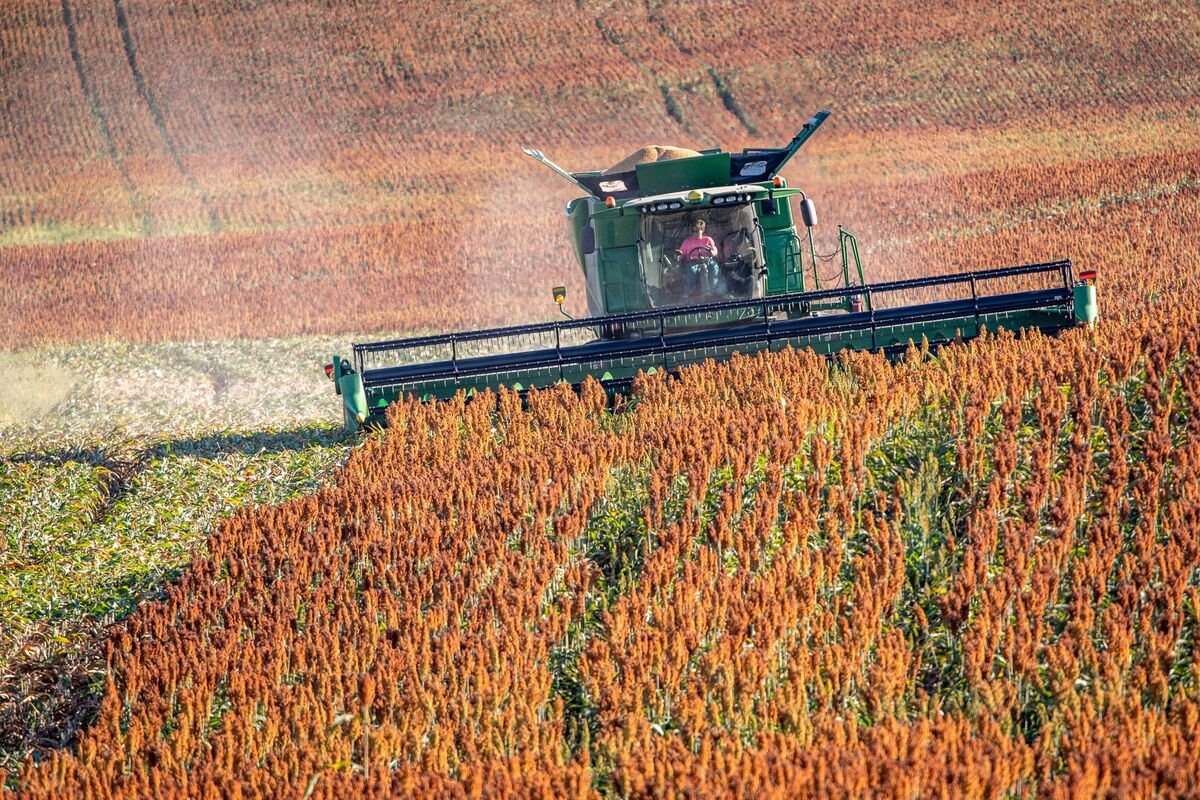
Brazil's growing sorghum production is creating a new competitive challenge for US farmers, particularly in a drought-tolerant grain prized by Asian buyers. The article says US agriculture has already ceded leadership to Brazil in soybeans, cotton and other products, but provides no figures on sorghum output or market share.
Analysis
The investable signal is not simply more Brazilian supply; it is a possible reduction in the scarcity premium US sorghum can command from export buyers. If Brazilian harvest volumes arrive during the same buying window and are competitively priced after freight, US export bids and local basis could weaken before the futures market reflects a durable change. That would pressure US growers’ revenue and, at the margin, reduce incentives to plant sorghum relative to corn or soybeans. Any benefit to livestock or feed users is conditional: it depends on sorghum discounts, regional availability, and whether rations can substitute it economically.
Near term, the article provides no production, export, freight, or sales data to establish the scale of displacement; the reported challenge may therefore be more narrative than price signal. Over 1–3 months, monitor Brazilian export offers and harvest timing alongside US export sales, destination demand, and local sorghum basis. Over 6–18 months, sustained competition could alter US acreage and investment decisions, but weather, yields, trade policy, and logistics could reverse the relative-cost advantage. The contrarian risk is that buyers value US reliability or Brazilian supply is constrained by harvest or transport bottlenecks, preserving US basis. No broad equity or futures position is warranted from this headline alone.
AllMind Terminal
AI-powered research, real-time alerts, and portfolio analytics for institutional investors.
Request TrialMarket Sentiment
Overall Sentiment
mildly negative
Sentiment Score
-0.25
Key Decisions for Investors
- Keep a watch, not a directional position, in US grain exposure until Brazilian export volumes and delivered prices are independently verified. The key missing data are crop size, shipment timing, freight costs, and destination-level sales.
- For grain merchants or producers with basis exposure, stress-test weaker US sorghum export bids and local basis; consider hedging only where Brazilian offers are demonstrably displacing US sales, rather than using corn futures as an uncalibrated proxy.
- Track US export-sales data, Brazilian shipment/logistics updates, and sorghum-versus-corn price spreads over the next 1–3 months. A sustained decline in US sales and basis would strengthen the bearish thesis; stable sales or a narrowing Brazilian delivered-cost advantage would falsify it.
- Avoid extrapolating this crop-specific competition into a broad bearish view on US agriculture or farm machinery: the article supplies no evidence on acreage, producer earnings, or consolidated company exposure.
More News
- Taiwan agrees to buy 30% of gas from Alaska LNG project, Trump says
- Oil rises amid growing Mideast tensions between Iran-backed Houthis and Saudi Arabia
- South Korean carmaker Hyundai plans 'strategic' investment of $15.5 billion in India by 2032
- Speculation Over STT Cut Lifts Sentiment for Indian Stocks
- Namibia battles cattle disease outbreak as EU suspends several meat imports
- Applied Materials’ $5 billion AI lab aims to cut chip development time in half—and restore Silicon Valley’s edge