
TeleRay Virtual Care and Ascom Telligence Nurse Call Partner to Integrate Solutions in Support of Smart Room Initiatives
Source: PR Newswire
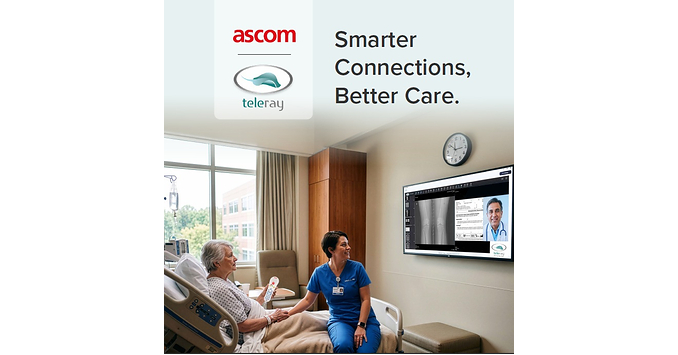
TeleRay and Ascom announced an integration connecting TeleRay’s virtual-care and telesitting platform with Ascom Telligence Nurse Call. The companies say it will link virtual nurses, telesitters and patient observers with bedside teams through coordinated workflows, with access to authorized clinical information and tools for notification and escalation. No financial terms, adoption figures or measured clinical outcomes were disclosed.
Analysis
This is a product-integration signal, not evidence of material bookings: the announcement gives no customer deployments, pricing, contract value, or adoption targets. The economic upside for Ascom Holding AG (ASCN) depends on whether the integration helps it defend or expand nurse-call deployments by making its installed workflow harder to replace. If hospitals can avoid manual handoffs and separate systems, the value may accrue across implementation and retention—not necessarily as a large standalone software sale.
The key competitive test is interoperability. Established nurse-call and clinical-communications vendors, including Baxter/Hillrom and Rauland, can respond with comparable integrations; hospital IT teams may also prefer solutions already embedded in their EHR and communications stack. Integration effort, security review, and procurement cycles could therefore delay conversion even where the workflow case is attractive. TeleRay’s claims about improved coordination and response are potential benefits, not independently verified clinical or financial outcomes.
Near term, expect limited fundamental read-through absent named deployments. Over 1–3 months, watch for customer references, rollout timing, and evidence the partnership is included in hospital bids. Over 6–18 months, repeatable deployments and renewals would support a more durable workflow-platform thesis; isolated pilots would not. The contrarian point is that the operational case may be strategically useful while remaining financially immaterial to consolidated results. Falsification: no disclosed customer conversions or measurable contribution in subsequent reporting, or evidence that integration costs and deployment complexity impair adoption.
AllMind Terminal
AI-powered research, real-time alerts, and portfolio analytics for institutional investors.
Request TrialMarket Sentiment
Overall Sentiment
mildly positive
Sentiment Score
0.20
Ticker Sentiment
Key Decisions for Investors
- No immediate directional trade in ASCN: the announcement lacks deployment and revenue evidence, so the near-term signal is too weak to underwrite a position.
- Add ASCN to a catalyst watchlist; seek named hospital customers, paid rollout scope, implementation timelines, and any management commentary on pipeline conversion before revisiting.
- Treat future customer wins as more meaningful if they demonstrate repeatable integration with nurse-call workflows and renewals; a pilot or product demonstration alone does not validate recurring economics.
- Reassess the thesis if subsequent reporting shows attributable healthcare software growth or improved retention; downgrade the opportunity if deployments remain unannounced or procurement and integration friction persist.
More News
- Asia stocks fall as AI rout batters S.Korea; Japan spooked by strong CPI
- SK Hynix shares slide after chipmaker scraps Solidigm IPO plans
- Why is SK Hynix stock sliding today?
- Apple’s iPhone Duo Hits Stores in Face of Short Supply and High Demand
- OpenAI nears up to $30 billion funding round at $1.25 trillion valuation led by UAE investors
- Why is Samsung Electronics stock declining today?
From AllMind Research
- Anthropic IPO Preview: Valuation, Timing, and What to Watch
- Shein After the IPO: Venue, Valuation, and What Must Be Proved
- What AI Research Tools Should a Small Hedge Fund Buy First?
- How to Write an Investment Memo with AI: A Decision-Record Template
- Best AI to Write Earnings Notes for Sell-Side Analysts