
CARKU Showcased Next-Generation Sodium-Ion Products at Automechanika Frankfurt 2026
Source: PR Newswire
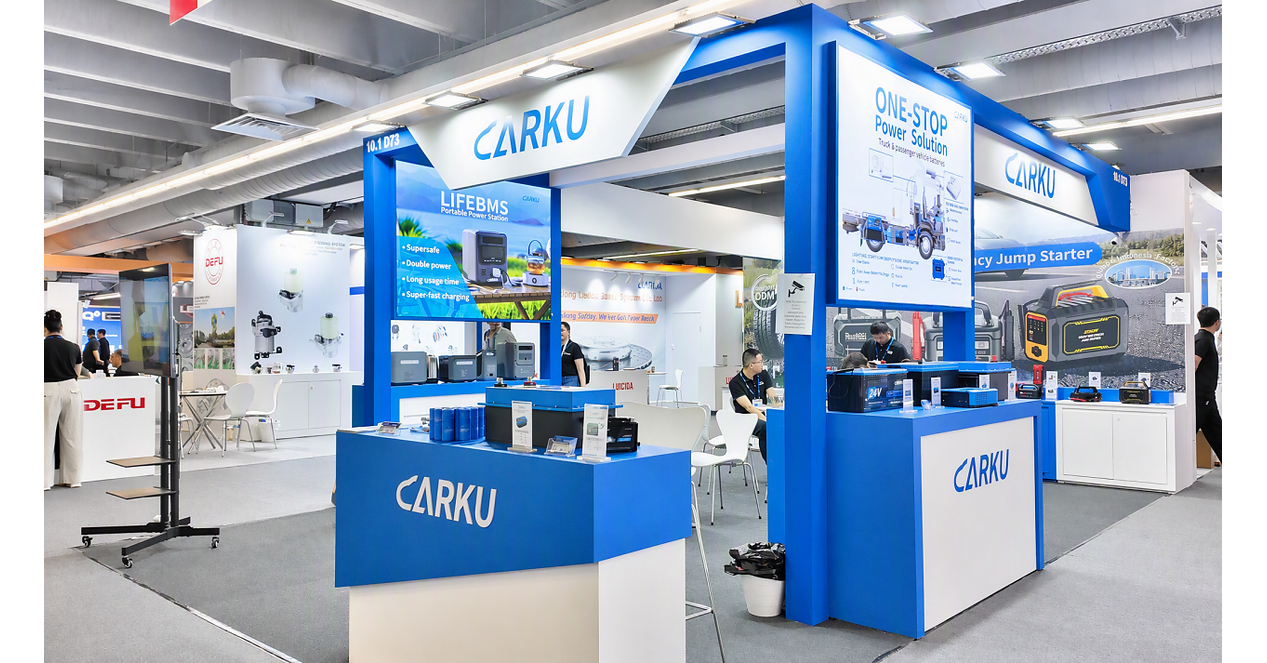
CARKU showcased its JS-617N sodium-ion 12V/24V jump starter and two 24V commercial-vehicle starting batteries at Automechanika Frankfurt 2026, expanding applications for sodium-ion and LiFePO4 technologies. The JS-617N is designed to start vehicles at temperatures as low as -40°C, while the CBN50-G51-24V sodium-ion battery and CBL230D-24V LiFePO4 dual-purpose battery target commercial vehicles. Europe contributes approximately 30% of CARKU's jump-starter revenue, and its 24V LiFePO4 battery series is already in mass production in Southeast Asia.
Analysis
This is not investable as a standalone catalyst: CARKU is private, the claims are internally sourced, and no pricing, production capacity, customer wins, warranty data, or third-party cold-weather validation is disclosed. The relevant public-market read-through is a longer-cycle threat to lead-acid replacement demand in commercial starting and auxiliary-power applications, but adoption will be constrained by fleet qualification cycles, service-network availability, and upfront-cost sensitivity.
The nearer-term competitive implication is not broadly bullish for sodium-ion supply chains. Automotive-grade sodium-ion remains a low-volume commercialization market, and a product showcase does not establish material cell procurement. Watch CATL (300750.SZ) and HiNa Battery/private Chinese suppliers for disclosed commercial-vehicle battery contracts; without them, sodium-ion enthusiasm is likely to remain promotional rather than earnings-relevant over the next 12 months.
The more credible structural pressure is on exposed lead-acid incumbents such as Clarios (private), EnerSys (ENS), and Exide Industries (EXIDEIND.NS), particularly if fleet operators validate lithium/sodium batteries' lower maintenance and longer-cycle economics. However, starting batteries are unusually conservative: failure costs are high, recycling infrastructure favors lead acid, and cold-weather claims must be proven over multi-year field deployments. That makes any displacement a 6-18 month monitoring theme rather than an immediate short catalyst.
AllMind Terminal
AI-powered research, real-time alerts, and portfolio analytics for institutional investors.
Request TrialMarket Sentiment
Overall Sentiment
mildly positive
Sentiment Score
0.32
Key Decisions for Investors
- No directional trade on this announcement; treat it as a watch item rather than a sodium-ion supply-chain signal until customer names, unit volumes, cell supplier, and independently verified field-performance data are disclosed.
- Add ENS to a 6-18 month disruption watchlist, not a short: reassess if lithium/sodium auxiliary or starting batteries begin appearing in OEM fleet specifications or if ENS reports material commercial replacement-volume or pricing pressure. Falsifier: sustained aftermarket growth and stable gross margin would confirm lead-acid resilience.
- Monitor CATL (300750.SZ) disclosures and Chinese commercial-vehicle registrations for sodium-ion battery contracts over the next two quarters. A named multi-year fleet/OEM award would be a more actionable long catalyst than product-launch publicity; absent contract evidence, avoid paying a technology premium.
- For commodity exposure, do not extrapolate to a lead-price short. Battery replacement demand is fragmented and sodium-ion penetration is too small to alter lead balances in the next 12 months; only revisit if multiple fleet-scale conversions emerge alongside lower lead-acid OEM fitment.
More News
- US military claims Strait of Hormuz remains open amid ongoing blockade
- Oil prices extend losses as fears of Middle East supply disruptions ease
- US official says upcoming spectrum auctions could generate more than $100 billion
- Shares tick higher as Fed hikes rates, dollar jumps with short-term yields
- Investors react to Fed hike and market sell-off: Brace for 'higher for longer' rates
- Gold slips as Fed hike, hawkish outlook strengthen dollar