
Hormuz Oil Flow Recovery Imperiled by Renewed Tanker Attacks
Source: Bloomberg
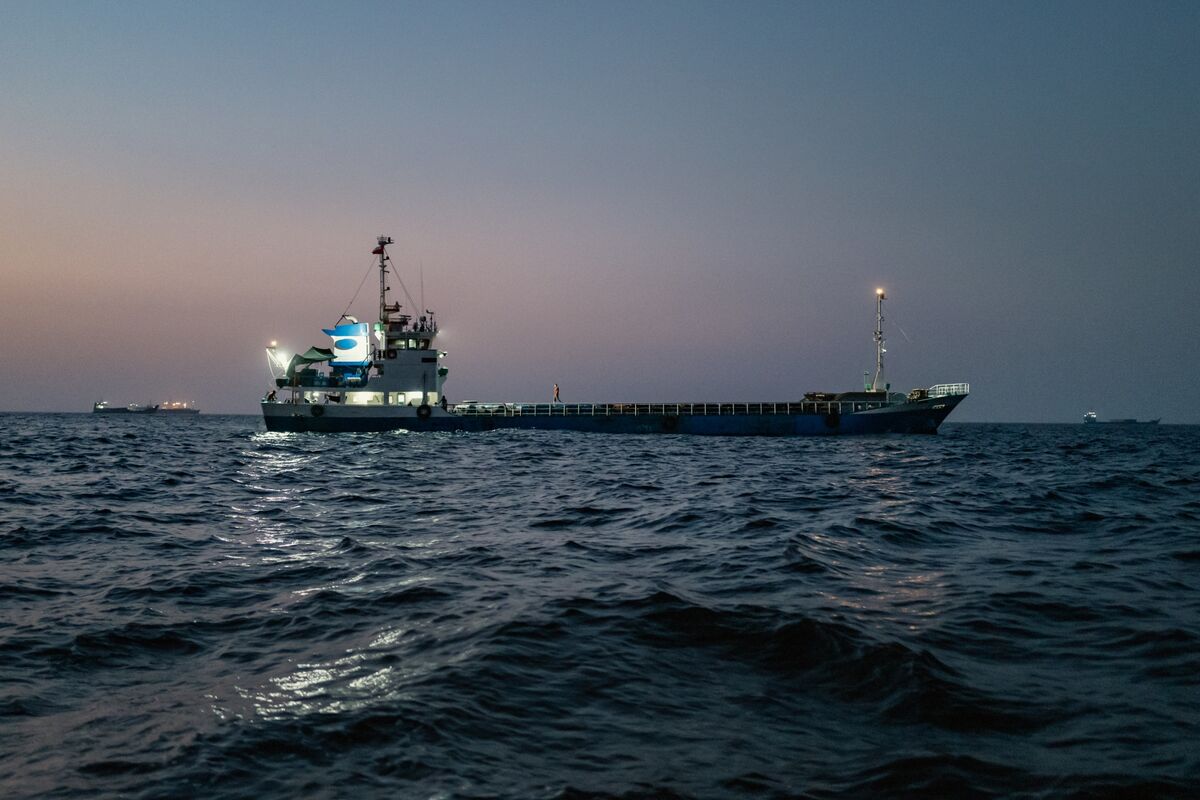
Renewed tanker attacks targeting shipping through the Strait of Hormuz are jeopardizing the recent recovery in Persian Gulf oil exports, making higher export levels look tenuous again. The risk of disrupted flow raises downside pressure for near-term crude supply expectations and supports energy price volatility.
Analysis
This is first and foremost a volatility event, not yet a confirmed supply shock. The market mechanism is a higher geopolitical risk premium embedded in Brent, plus a wider Brent-WTI spread if traders assume seaborne Middle East barrels are the most vulnerable while US inland supply is comparatively insulated. If the attacks remain episodic, the first move can fade quickly; the more durable implication comes if war-risk insurance, shipping schedules, or port turnaround times tighten enough to reduce effective export capacity for weeks.
The near-term winners are upstream producers with unhedged exposure to international pricing and any asset that monetizes elevated crude volatility. The losers are the most oil-sensitive consumers: airlines, some chemical/feedstock users, and Asian refiners that rely on Gulf barrels and have little flexibility in prompt cargo replacement. Second-order effects matter: if charter rates and insurance costs rise, tanker owners can benefit even without a large volume disruption, while LNG-linked infrastructure and Gulf exporters face a higher discount rate on throughput assumptions.
The contrarian risk is that the market overprices physical disruption and underprices policy response. A visible naval escort, diplomatic de-escalation, or a rapid front-loading of exports from the Gulf could cap the duration of the move. Over 1-3 months, the key tell is whether inventories in Asia/OECD begin drawing faster than normal; over 6-18 months, persistent insecurity would support a structural risk premium in Brent, but only if spare capacity cannot be mobilized quickly. The thesis is falsified if Brent-WTI narrows back to pre-event levels and insurance/freight rates normalize despite continued headlines.
AllMind Terminal
AI-powered research, real-time alerts, and portfolio analytics for institutional investors.
Request TrialMarket Sentiment
Overall Sentiment
moderately negative
Sentiment Score
-0.50
Key Decisions for Investors
- Long Brent vs short WTI on a 1-3 month horizon (BNO vs USO if using ETFs): best expression of Strait-of-Hormuz risk because it isolates seaborne Middle East disruption. Add on pullbacks after headline spikes; reduce if the Brent-WTI spread falls back below roughly $2/bbl.
- Buy a near-dated Brent call spread rather than outright calls to capture convexity around another attack escalation while limiting theta bleed. Best used as a 2-6 week event hedge; close if shipping-war-risk premiums fail to widen further within a week.
- Pair trade: long XLE / short JETS for a 4-8 week window. Energy equities have direct earnings leverage to sustained crude strength, while airlines absorb the fuel-cost shock before fares can fully reset. Falsify if crude retraces and airline guidance holds unchanged.
- Do not chase tanker names immediately; set an alert on VLCC/dayrate and war-risk insurance data. If those metrics rise for 2+ weeks, consider long FRO or DHT as a second-order beneficiary; otherwise the trade is too dependent on volume not just rhetoric.
More News
- ‘I told you so’: China’s chip sector is making breakthroughs—and U.S. export controls are the reasons why
- UK's Healey Plans to Raise Bank Taxes
- One Singapore ship was sunk, but here's why others are still transiting the Strait of Hormuz
- Treasuries Soar as Tech Slump Threatens Growth
- Order to limit Starshield for Ukraine came from inside White House: Reuters reports
- EU Seeks New Trade Powers to Cut Trade Deficit