
AI’s Big Bet on Trump Risks Backfiring After the Midterms
Source: Bloomberg
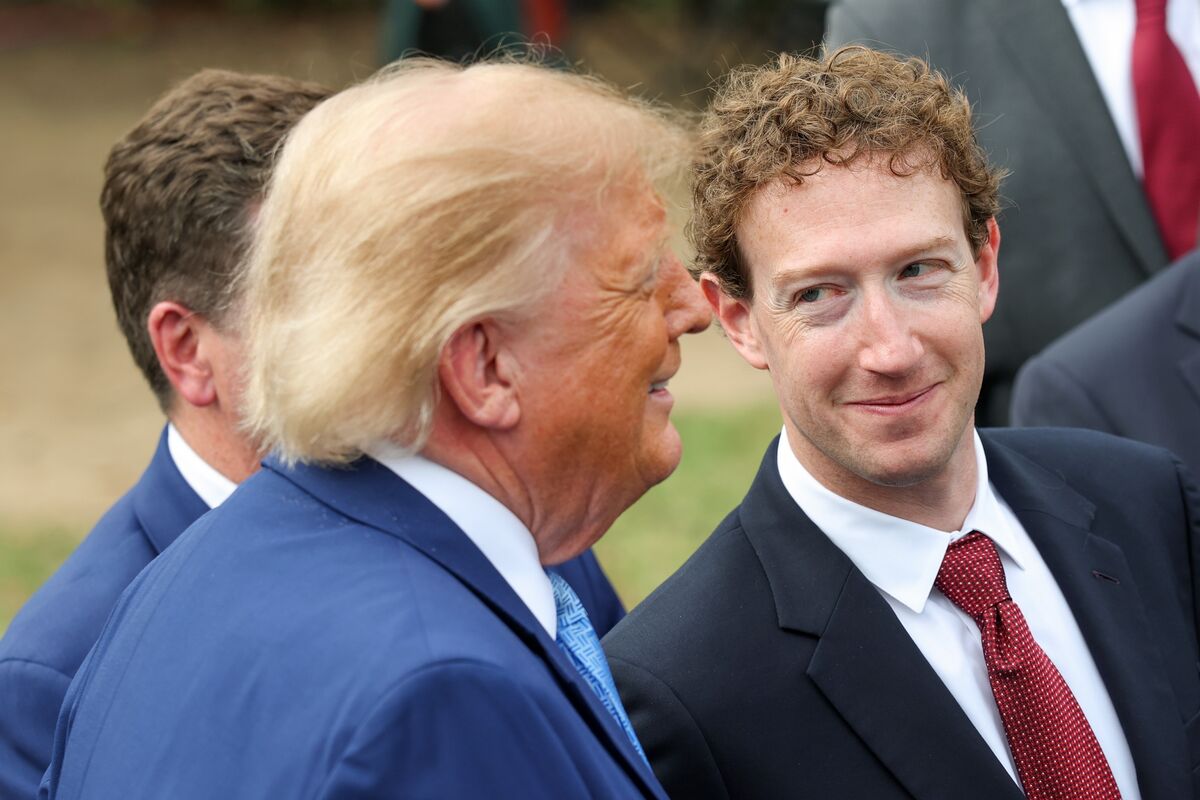
The briefing says the AI industry's political alignment with Donald Trump may backfire after the midterms, but provides no supporting details or quantified market implications. It also previews coverage of China's future ambitions and Japanese shoppers' influence on Uniqlo.
Analysis
The investable signal is policy uncertainty, not evidence of a near-term change in AI demand. If AI companies have tied their public positioning or investment plans to the current administration, a shift in congressional control could raise the probability of hearings, procurement changes, export-control disputes, or slower permitting. The transmission to earnings would likely be uneven: firms dependent on federal contracts or politically sensitive approvals may face more direct exposure, while broad commercial cloud demand is less directly linked. The larger second-order risk is that policy volatility delays data-center, power, and chip commitments, affecting infrastructure suppliers before it changes software monetization.
Timing matters. In the days around the midterms, expect headline-driven volatility rather than a clean earnings signal. Over 1–3 months, watch legislative priorities, agency actions, and company capex or guidance for evidence that policy is affecting deployment. Over 6–18 months, the structural question is whether AI investment remains economically attractive across administrations. The contrarian point: congressional turnover alone does not establish that AI regulation will tighten or spending will fall; markets may overprice political headlines while underweighting power availability, customer returns, and infrastructure execution. The article supplies no company-level exposure, valuation, or policy detail, so a directional sector call is not justified.
AllMind Terminal
AI-powered research, real-time alerts, and portfolio analytics for institutional investors.
Request TrialMarket Sentiment
Overall Sentiment
neutral
Sentiment Score
-0.10
Key Decisions for Investors
- No broad AI long/short on this item alone. Treat the midterms as a volatility catalyst; avoid adding to positions solely on political headlines.
- Map portfolio exposure by federal revenue, reliance on permits or export approvals, and sensitivity to data-center build timing. Reassess only when company disclosures or policy actions connect those channels to spending or revenue.
- For the next 1–3 months, monitor capex guidance, data-center and power-project timelines, procurement decisions, and concrete legislative or agency proposals. A policy headline without a change in these indicators is not thesis confirmation.
- Falsification: reduce the political-risk thesis if post-election policy remains stable and affected companies maintain deployment schedules and guidance; strengthen it if concrete restrictions or delays lead to capex cuts, weaker orders, or revised revenue outlooks.
More News
- Stocks slump, bonds leap as AI giants’ spending spooks investors
- Alphabet Erases $500 Billion as ChatGPT, Google AI Cut into Search
- Alphabet just had its worst day as a public company. BofA now values Google search at a lower multiple than fossil fuel stocks
- ‘Whenever I want it to end’: U.S. tells Middle East allies to prepare for possible new strikes on Iran after the midterms
- Taiwan Stocks Heads for Correction as Global AI Selloff Deepens
- Asia stocks tumble as AI spending concerns deepen; BOJ holds rates