
Micron stock rebounds 5% after huge selloff even as AI demand risks persist
Source: invezz.com
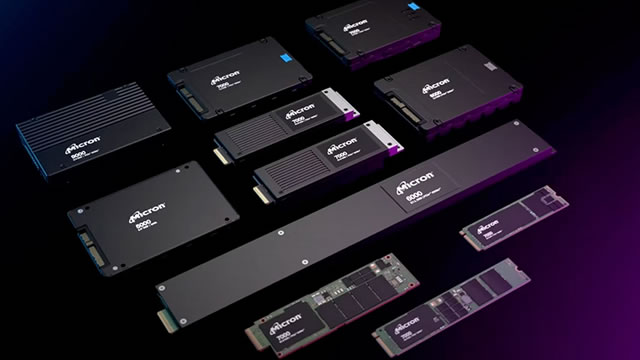
Micron shares rose 5.8% Friday after falling 17% in Thursday’s technology selloff. The article says investors are weighing whether the memory-chip maker’s low valuation presents an opportunity or reflects risk of a downturn in AI-related demand.
Analysis
The key issue is not whether AI compute demand persists, but whether it translates into durable, profitable memory demand for Micron rather than a temporary HBM allocation surge followed by excess capacity or weaker conventional DRAM/NAND pricing. HBM can improve the industry mix while absorbing capacity that might otherwise serve standard memory; that can support pricing near term, but also raises the cost of a demand miss if capacity additions arrive before customer orders do. Samsung and SK Hynix are relevant competitive checks: watch for evidence that their supply, yields, or customer wins constrain Micron’s ability to capture the AI premium.
The sharp reversal in MU is a flow signal, not fundamental confirmation. Over days, high volatility and positioning can dominate; over 1–3 months, memory contract prices, customer inventory commentary, and Micron’s HBM shipment/ramp disclosures matter more. Over 6–18 months, the test is whether AI-related mix and pricing offset the inherently cyclical supply response. A contrarian risk is that investors extrapolate AI demand directly into memory profits while underweighting qualification delays, customer concentration, and eventual capacity normalization. Conversely, treating all memory demand as a commodity downturn may understate mix improvement. No valuation conclusion is supportable from the information provided.
AllMind Terminal
AI-powered research, real-time alerts, and portfolio analytics for institutional investors.
Request TrialMarket Sentiment
Overall Sentiment
mixed
Sentiment Score
-0.10
Ticker Sentiment
Key Decisions for Investors
- Do not chase the rebound as evidence that the cycle is bottoming. Keep MU exposure tactical until the next company update and independent memory-price data confirm improving DRAM pricing and HBM shipment/ramp execution.
- For investors seeking upside, consider a small, defined-risk MU call spread only after price stabilization and confirmation that memory pricing is firming; avoid unhedged size given the stock’s event-driven volatility. Reassess if MU resumes material underperformance versus the semiconductor index despite stable memory pricing.
- Use a bearish thesis only if HBM demand or customer orders weaken alongside falling DRAM prices, rising inventory, or a cut to Micron’s outlook; those signals would indicate that AI expectations are not converting into earnings durability. Verify each metric rather than infer it from share-price action.
- Falsification watch: the cautious view weakens if Micron reports sustained HBM execution and improving memory pricing without inventory deterioration; the recovery thesis fails if pricing rolls over, customer inventory builds, or guidance is reduced.
More News
- Further turmoil could be in store for tech stocks. What to watch in the week ahead
- AI stocks hammered by midterm shock as data center buildout becomes a 'war of attrition'
- Anthropic IPO announcement odds drop on Kalshi following midterms and AI sell-off
- U.S. chip stocks recover sharply after Thursday’s brutal selloff
- South Korean corporate reforms hit rough patch as Samsung digs in
- TSMC considers making advanced memory chips, The Information reports