
Can Nvidia’s stock become a safe haven as Wall Street rethinks the AI trade?
Source: MarketWatch
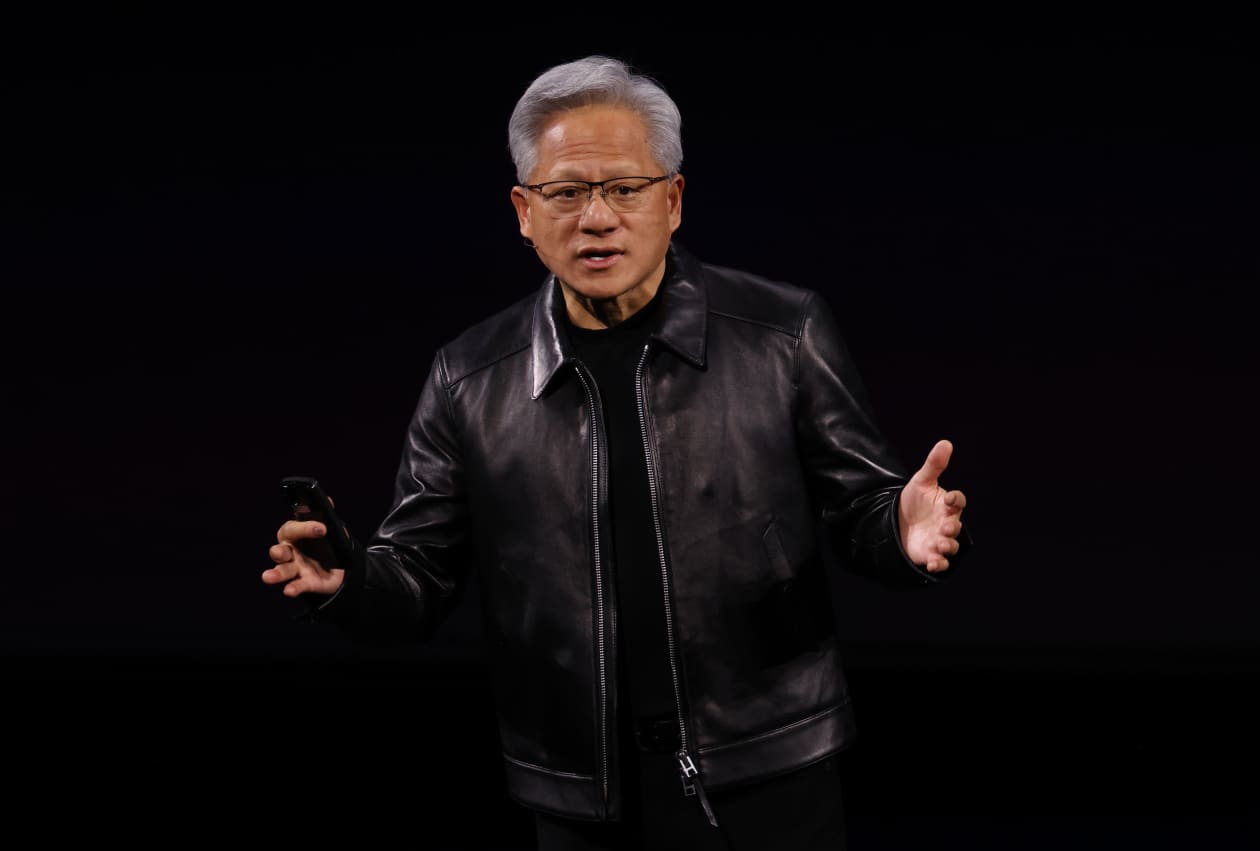
Nvidia shares are up 14% this year, only slightly ahead of the S&P 500, as investors reassess the AI trade. Wall Street is scrutinizing debt behind AI investment and the durability of long-term growth projections; some analysts argue Nvidia’s perceived dependability may appeal more in this cautious environment.
Analysis
NVDA may act as a relative safe haven inside the AI complex, not as a true defensive asset: if investors are repricing the funding risk of AI infrastructure, the strongest chip supplier could retain exposure to AI demand while avoiding some balance-sheet risk borne by debt-dependent data-center and power developers. But this distinction is conditional. Nvidia’s revenue still depends on customers sustaining large capital budgets; tighter financing can ultimately reach chip orders with a lag. A rotation into NVDA could therefore precede, rather than rule out, a broader AI capex slowdown.
Near term (days), positioning and relative-value flows may matter more than fundamentals. Over 1–3 months, monitor hyperscaler capex commentary, financing conditions and order visibility; these test whether spending remains cash-funded and durable. Over 6–18 months, competition and customer concentration could constrain the “quality premium” even if AI adoption grows. The article provides no evidence that NVDA’s valuation or demand outlook is cheap, so relative resilience should not be confused with downside protection. A thesis failure would be a material cut to customer capex or Nvidia guidance, or evidence that financing stress is spilling into orders.
AllMind Terminal
AI-powered research, real-time alerts, and portfolio analytics for institutional investors.
Request TrialMarket Sentiment
Overall Sentiment
mixed
Sentiment Score
0.05
Ticker Sentiment
Key Decisions for Investors
- Treat NVDA as a relative-quality expression, not a market hedge. Consider a modest, beta-controlled long NVDA versus a short basket of more financing-sensitive AI infrastructure equities only after verifying those names’ debt maturities, funding needs and valuation; the article does not identify suitable constituents.
- Avoid chasing an absolute breakout on the safe-haven narrative alone. Add only if subsequent earnings or customer disclosures confirm durable orders and capex, rather than relying on sentiment rotation.
- Track hyperscaler capex guidance, data-center financing spreads and NVDA order/guidance revisions over the next 1–3 months. A capex downgrade or widening financing stress alongside weaker order visibility falsifies the relative-resilience thesis and is a signal to reduce exposure.
- Contrarian check: investors may overstate how insulated the chip supplier is from debt-funded infrastructure. If financing scrutiny shifts from developers to customers’ return on AI investment, NVDA’s premium could compress even before reported demand weakens.
More News
- US tech stocks tumble as investors fret over AI spending
- 10-year Treasury yield tumbles below 5% to lowest level in nearly a month
- On the ground at Nvidia GTC Berlin: Jensen Huang, robot ducks and neocloud distress
- SK Hynix shares slide after chipmaker scraps Solidigm IPO plans
- Meta’s deal to keep Zuckerberg in California adds fuel to wealth tax debate ahead of election
- Stock futures are little changed after tech sector sell-off: Live updates