
Price Reporter Data Shows Leading Federal Suppliers Now Take Up to Half of Government Orders Through Their Own Storefronts
Source: PRWeb
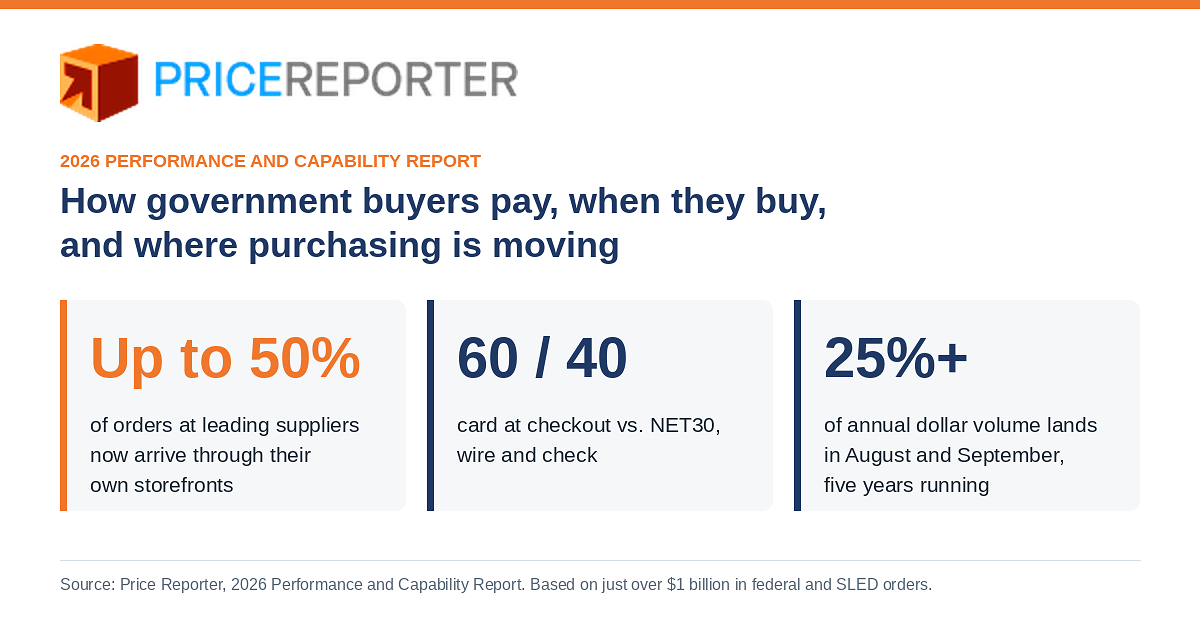
Price Reporter’s 2026 report says its system processed just over $1 billion in federal and SLED orders year to date, with August and September accounting for more than 25% of annual dollar volume across five years. About 5% of client order volume comes through supplier-owned or open-market channels, reaching nearly 50% for some leading clients; the report also says clients averaged more than 40 IDIQ contracts and 20 BPAs annually over five years. These are aggregate figures from Price Reporter’s client base; the firm expects to phase out EDI catalog uploads to GSA in early 2027 if GSA continues its transition to the FAS Catalog Platform.
Analysis
The investable signal is operational, not a broad government-spending bullish call. For federal suppliers, concentrated August–September ordering can amplify fulfillment, inventory and receivables demands: 40% of orders on non-card terms may leave vendors carrying working capital after delivery. Suppliers with reliable distribution and cash capacity could take share during the year-end rush; smaller vendors may face execution or liquidity strain. The aggregate figures do not identify which public companies have meaningful exposure.
The planned EDI catalog transition creates a near-term implementation and compliance workload for affected contractors, potentially supporting specialist consulting and integration providers while disrupting suppliers that are slow to migrate. Treat the early-2027 timing as conditional on GSA’s transition continuing; verify the scope, timetable and vendor readiness before trading it.
Shopify is mentioned only as one possible storefront platform. The report gives no SHOP-specific adoption, revenue or payment volume, so this is not evidence of material earnings upside. The storefront trend may shift customer relationships and transaction data toward suppliers, but marketplace-to-owned-store migration could also increase vendors’ own technology and customer-acquisition costs.
Contrarian read: the year-end surge is predictable, not necessarily incremental demand; it may mainly shift order timing and intensify working-capital needs. Near term, avoid extrapolating consulting-client award counts or order volume into public-company growth. Over 1–3 months, watch GSA transition notices and contractor disclosures; over 6–18 months, assess whether supplier-owned channels gain share and whether catalog migration creates measurable software or services revenue.
AllMind Terminal
AI-powered research, real-time alerts, and portfolio analytics for institutional investors.
Request TrialMarket Sentiment
Overall Sentiment
mildly positive
Sentiment Score
0.20
Key Decisions for Investors
- No trade in SHOP on this report alone. Treat Shopify storefront references as anecdotal; revisit only if SHOP or suppliers disclose material government-commerce adoption or transaction volume.
- For government-exposed suppliers, monitor August–September order concentration alongside receivables, inventory and cash-conversion disclosures. A deterioration in working capital despite order growth would falsify the assumption that seasonal volume is uniformly beneficial.
- Track GSA notices on the FAS Catalog Platform transition and supplier implementation timelines. Consider specialist services exposure only after confirming named public beneficiaries, contract economics and migration deadlines.
- Do not equate BPA/IDIQ award positions or ceiling values with funded revenue. Require evidence of task orders, realized sales and repeat purchasing before taking a revenue-growth position.
More News
- Mark Zuckerberg says over 10 million people used Meta’s Muse—and demand was so high, he had to get Stripe to raise credit limits
- Claude Duet app is Anthropic’s bet on agents
- Asia stocks fall as AI rout batters S.Korea; Japan spooked by strong CPI
- AI debt and French bonds face a stress test — why it may not be over
- SK Hynix shares slide after chipmaker scraps Solidigm IPO plans
- Why is SK Hynix stock sliding today?