
CISOs Risk MDR Buyer's Remorse Without Clear Procurement Requirements, Says Info-Tech Research Group
Source: PR Newswire
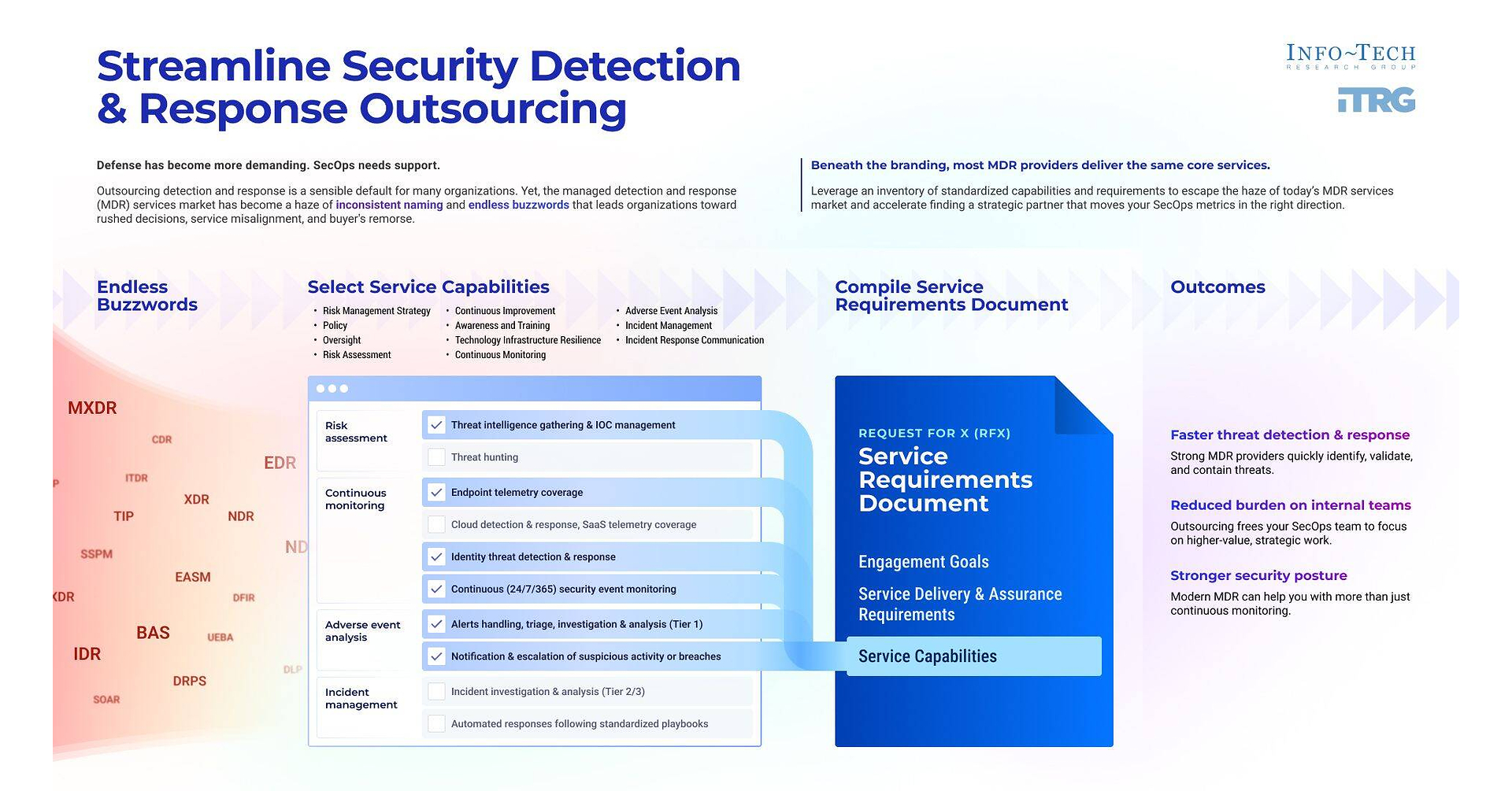
Info-Tech Research Group warns that CISO buyers face “buyer's remorse” in MDR procurement due to inconsistent vendor terminology and rushed, under-specified requirements. The firm’s Streamline Security Detection & Response Outsourcing blueprint recommends a four-phase process—define scope, set measurable outcomes/SLRs, procure against standardized capabilities, and implement/govern performance—to prevent service misalignment and reduce duplicated security investments.
Analysis
This is more a procurement-quality memo than a demand catalyst, so the near-term market effect is mostly second-order. The likely winners are scale platforms that can bundle detection, response, identity, and telemetry into one SLA-backed package; that favors the largest vendors with the best operating leverage and punishes smaller MDR shops that compete on marketing language rather than measurable outcomes. In practice, tighter requirements usually compress win rates for undifferentiated providers and expand share for incumbents with clearer data, broader integrations, and stronger channel coverage.
The bigger implication is that procurement discipline can slow deal velocity before it improves renewals. Over the next 1-3 months, this reads as a headwind to booking momentum for service-heavy cyber names because buyers will spend longer in RFPs, demand more concessions, and rationalize duplicate tools; over 6-18 months, it can actually improve platform stickiness and reduce churn for vendors that become the default operating layer. The article is bullish only if you believe customers use the process to standardize on one major provider rather than keep shopping price.
The contrarian read is that consensus may be underestimating how deflationary this is for the MDR market itself. More scrutiny does not automatically mean more spend; it can mean lower ARPU, fewer point solutions, and a slower conversion cycle until a compliance event or breach forces urgency. The thesis is falsified if vendor commentary starts showing faster close rates, larger multi-year commitments, or meaningful attach-rate uplift from outsourced SOC services in the next two earnings cycles.
AllMind Terminal
AI-powered research, real-time alerts, and portfolio analytics for institutional investors.
Request TrialMarket Sentiment
Overall Sentiment
neutral
Sentiment Score
-0.05
Key Decisions for Investors
- No immediate trade in BYRG/FCD.UN.TO/TCHC on this release; treat as a low-signal process note and wait for vendor-specific evidence of booking impact or renewal pressure.
- Relative long CRWD / PANW on pullbacks versus a basket of smaller MDR/service-heavy cyber providers: thesis is that procurement rigor favors platforms with auditable outcomes and broad integration depth. Time horizon: 1-3 months into earnings; stop if billings or cRPO commentary shows sales-cycle deterioration.
- Use CIBR as the cleaner expression for cyber platformization only if the next earnings season confirms share shift toward incumbents; otherwise avoid chasing sector beta because the article itself is not a demand acceleration signal.
- Set an alert for any cyber vendor reporting higher discounting, longer procurement cycles, or weaker ACV in MDR-related deals; that would confirm the article's deflationary read and support a short on overvalued service-led names.
More News
- Musk says Terrafab chip factory could outperform rivals despite challenges
- Stocks saw new highs and big declines: How the volatile AI trade moved last week's market
- Will Warner Bros. kill Skydance — or will David Ellison kill Warner Bros?
- Nvidia GPUs are everywhere. Here are the ways companies are accessing them
- How U.S. know-how is fracking Australia into a gas boom, from Texas oilmen to Trump’s energy secretary
- Cerebras Is About as Big as Nvidia's Data Center Business Was Nearly a Decade Ago. The Similarities Mostly End There.