
PortSwigger Scales Burp AT for Enterprise Testing Programmes
Source: PR Newswire
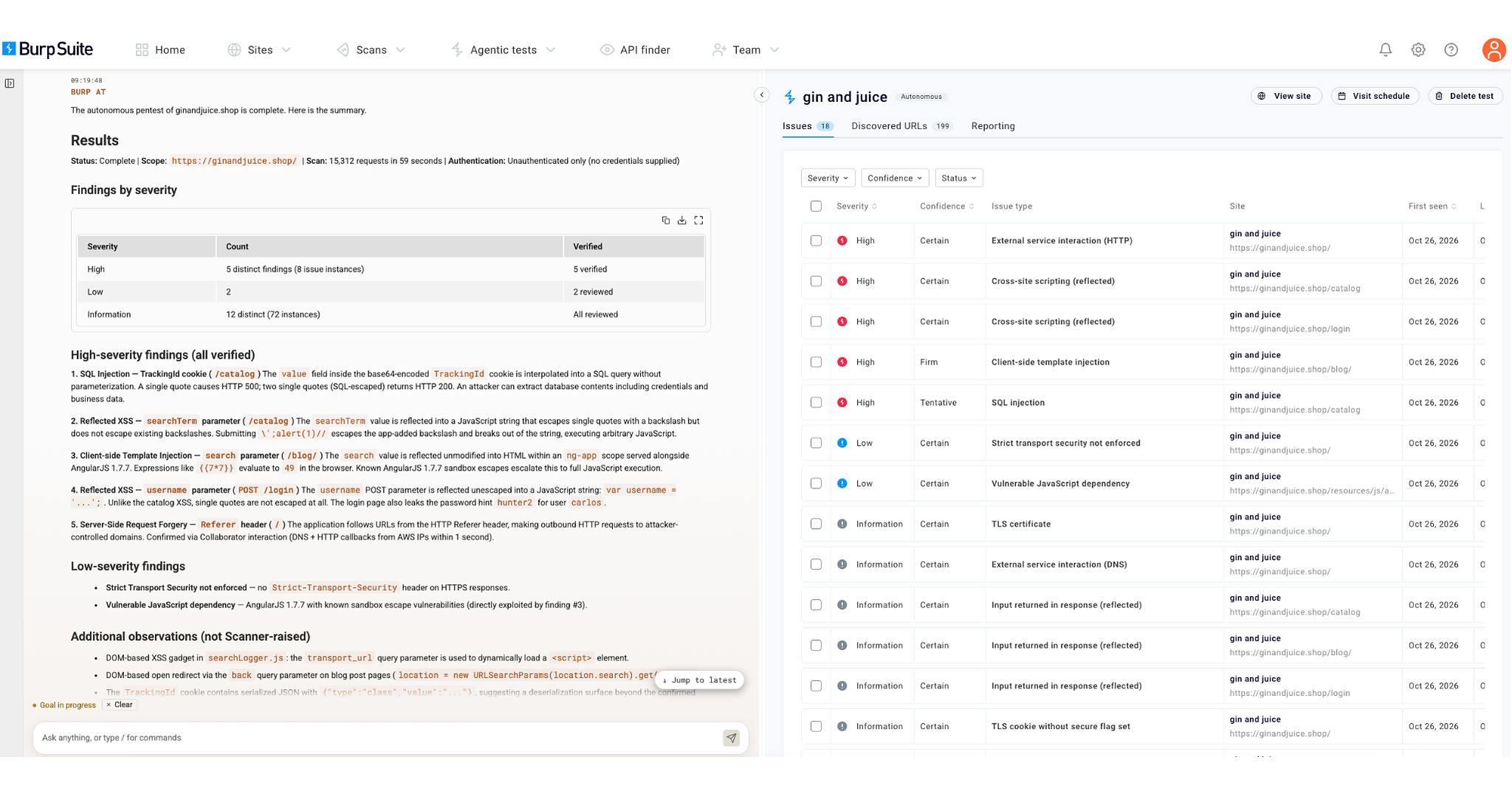
PortSwigger announced Burp AT, an agentic penetration-testing product now available for enterprises, designed to test more applications in depth and more frequently. Organisations can choose the level of autonomy, while Burp deterministically enforces configured scope and permissions; security teams retain visibility and assess findings. The announcement provides no pricing, adoption figures or financial guidance.
Analysis
This is a product-availability signal, not evidence of material adoption or revenue. PortSwigger is private, so the direct equity read-through is limited; SAP’s cited strategic relationship does not establish that SAP uses Burp AT or that the launch changes SAP’s economics. The investable question is whether agentic testing expands the addressable market for application security testing—or mainly shifts spend from human pentesting and existing DAST tools.
Over days, the launch may reinforce investor interest in AI-enabled security, but the announcement alone does not support a sector-wide re-rating. Over 1–3 months, monitor enterprise deployments, paid conversion, renewal/expansion, and independently verifiable evidence that agents find material vulnerabilities with manageable false-positive rates. Competitors in DAST and application security, including Veracode, Checkmarx, Tenable, and Rapid7, could face pricing or retention pressure if automated depth proves reliable; alternatively, testing volume may rise without displacing human-led validation. That latter outcome leaves expert review capacity as the bottleneck and limits labor-cost substitution.
Over 6–18 months, the structural upside depends on safe integration into CI/CD and repeatable governance. Scope enforcement reduces—but does not eliminate—operational risk: misconfigured permissions, noisy findings, or an intrusive test against production could slow procurement. Contrarian view: “more applications tested” is a workflow claim, not proof of fewer breaches or budget displacement. No direct public-company trade is justified yet; a broad cybersecurity ETF is too diluted for this product-specific signal.
AllMind Terminal
AI-powered research, real-time alerts, and portfolio analytics for institutional investors.
Request TrialMarket Sentiment
Overall Sentiment
mildly positive
Sentiment Score
0.25
Key Decisions for Investors
- No immediate position: PortSwigger is private, and the announcement supplies no adoption, pricing, or financial-impact data. Do not treat SAP’s mention as evidence of SAP deployment or revenue exposure.
- Set a 1–3 month watch on enterprise customer wins, paid expansion, renewal rates, validated vulnerability yield, and false-positive rates. Reassess DAST/application-security names such as Tenable, Rapid7, Veracode, and Checkmarx only if evidence shows sustained displacement or pricing pressure.
- Treat the 6–18 month opportunity as conditional on secure CI/CD integration and customer willingness to delegate testing authority. A material production incident, scope-control failure, or persistent need for manual triage would falsify the labor-substitution thesis.
- Avoid a thematic long based on this release alone; the thesis strengthens only with independently verifiable adoption and repeatable evidence that testing coverage rises without a commensurate increase in expert review burden.
More News
- SAP promises to open out data flows in both directions
- Magnificent 7 loses $1 trillion. The most eye-popping stats from Thursday's tech stock plunge
- Tech stocks are suffering their biggest selloff since Covid, as investors see premature end to AI datacenter boom
- Wall Street’s best post-midterm rally in 44 years lasted just one day—then $3 trillion vanished as chip stocks plunged over AI fears
- How Wall Street's postelection rally got obliterated — and what's next
- AI stocks plunge after election, driving down US markets