
Lokale KI für zu Hause: UGREEN stellt den „Privacy-First"-HomeAgent für ein smarteres Leben vor
Source: PR Newswire
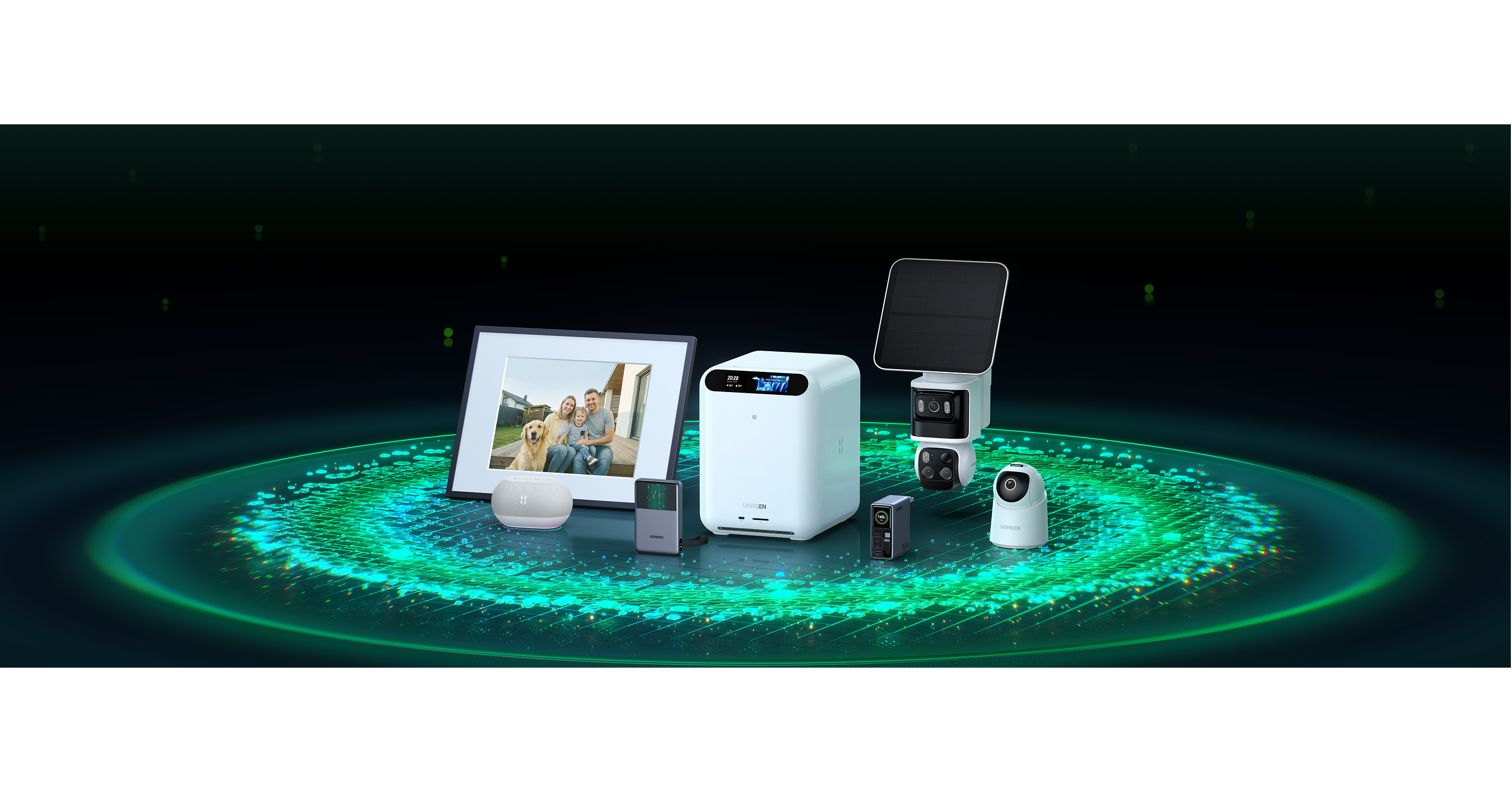
UGREEN announced the EU product launch of its “Privacy-First” HomeAgent, an on-device local AI hub (UGOS Pro-based) aimed at keeping data private and enabling proactive smart-home monitoring and natural-language control. The company also unveiled the MagFlow Pro, a 25W liquid-cooled magnetic Qi2 power bank with CryoPulse™ micro-pump cooling and “always-on” fast charging. Pre-orders for the HomeAgent HA100/HA100 Pro and MasterAgent MA100 started Sept. 4, 2026, and customers can deposit from $50 to secure a 50% “Super-Early-Bird” discount ahead of the official Kickstarter campaign opening Oct. 27, 2026.
Analysis
This is more of a category signal than a material fundamental event. The only economically relevant linkage is the Jetson-based module, which is a useful data point for NVDA’s edge-AI narrative, but the likely unit volumes are far too small to move estimates; at most it supports the idea that NVIDIA is penetrating consumer-adjacent embedded applications beyond the datacenter. The bigger mechanism is competitive: privacy-first, local inference pushes smart-home value capture away from cloud subscriptions and toward higher-BOM hardware, which favors silicon and storage attach rates while pressuring assistant ecosystems that monetize via cloud processing and data collection.
The second-order effect is that if this framing resonates, it could accelerate copycat launches from NAS, router, and home-security OEMs over the next 6-18 months. That would be incrementally positive for edge silicon vendors and camera/storage suppliers, but it also raises the risk that consumer enthusiasm remains niche and Kickstarter conversion disappoints. The near-term catalyst is reviews/preorders into the October launch; the medium-term check is whether this becomes a repeatable SKU family or just a branding exercise.
Contrarian view: the market may overread the AI angle here. Privacy-first local AI sounds compelling, but it usually means constrained inference, higher bill of materials, and weaker gross-margin economics unless there is real software lock-in. If adoption is weak or the ecosystem remains fragmented, this becomes a marketing-led launch with little read-through for NVDA beyond sentiment. The thesis would be falsified if Jetson-related design wins fail to show up in edge/embedded commentary or if Kickstarter conversion is soft versus preorder deposits.
AllMind Terminal
AI-powered research, real-time alerts, and portfolio analytics for institutional investors.
Request TrialMarket Sentiment
Overall Sentiment
mildly positive
Sentiment Score
0.18
Ticker Sentiment
Key Decisions for Investors
- Do not buy NVDA on this announcement alone; treat it as a watch item, not a catalyst, unless edge/embedded commentary in the next 1-2 quarters starts naming consumer AI home devices as a meaningful design-win cohort.
- If already long NVDA, tighten risk on any post-news bounce and use a 3-6 month time stop; the upside from this kind of edge-AI validation is likely sentiment-only, not estimate-changing.
- Watch for read-through to edge AI enablers (NVDA, ARM) versus cloud assistants (AMZN, GOOGL) over the next 6-18 months; a relative-value long NVDA / short cloud-assistant basket only makes sense if local inference adoption broadens beyond niche privacy buyers.
- Set an alert for Kickstarter conversion and third-party review quality on 27 Oct 2026; weak conversion or poor performance would falsify the broader 'consumer edge AI' enthusiasm and likely cap any NVDA halo effect.
- No options trade recommended today; implied move is likely too small versus the uncertainty. Revisit only if NVIDIA management explicitly cites edge/home AI attach rates in a future earnings call.
More News
- Nscale, Anthropic Eye $45 Billion Cloud Deal as AI Trade Rebounds
- Elice shares plunge 28% on debut as investor doubts over AI trade deepen
- Tenstorrent hits $6.2B valuation to scale open-weight AI chips
- Amazon says its AI chips will work with popular coding language, challenging Nvidia
- Apple's iPhone Duo is proving itself the catalyst that Jim Cramer said it would be
- Microsoft says AI agents are like insider threats as ‘frontier models can’t be trusted’