
GOFO Deploys Automated Narrow-Belt Sorter at Rome Hub, Lifting Southern Italy Capacity by 40%
Source: PR Newswire
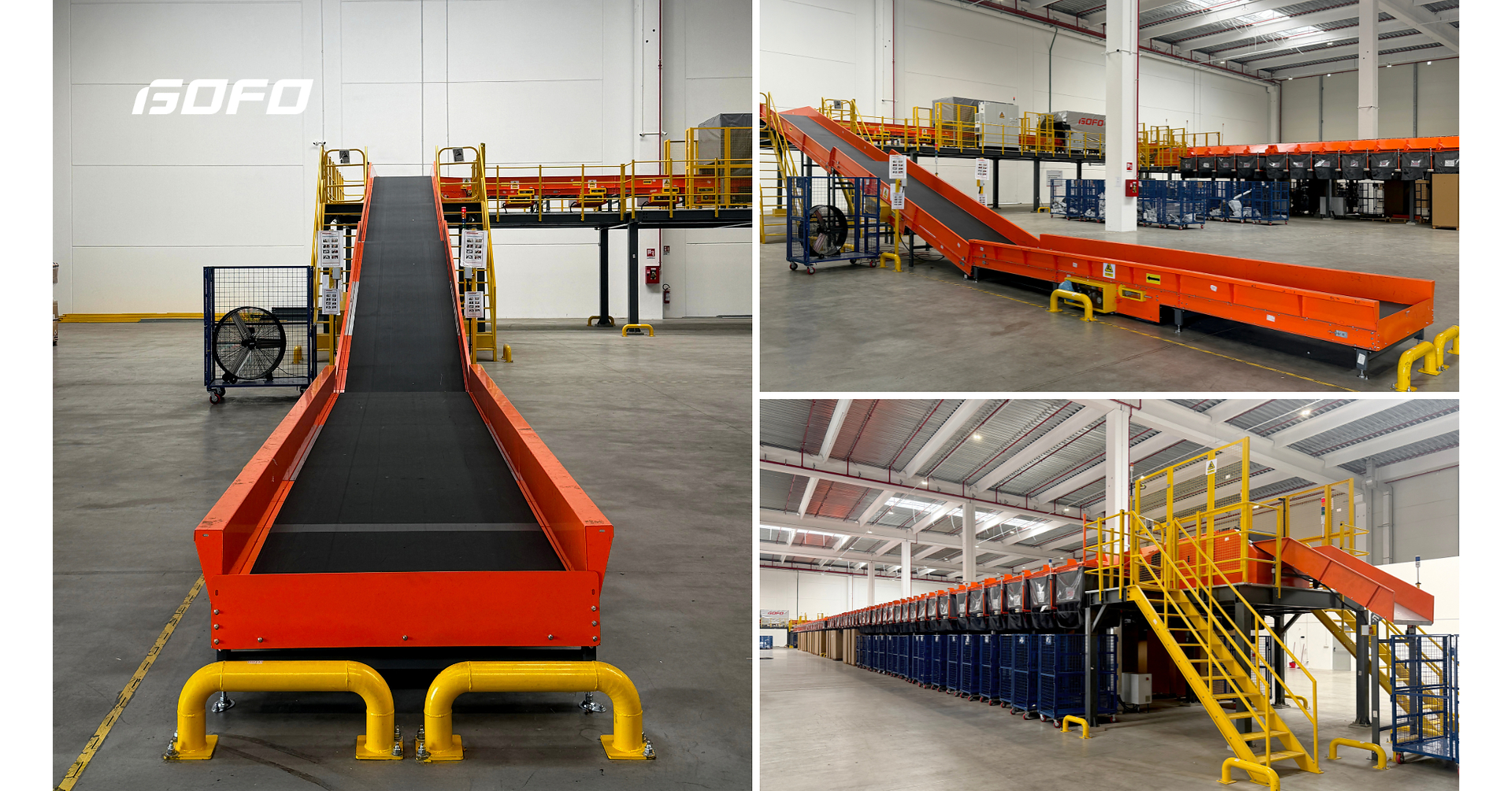
GOFO launched a new automated narrow-belt sorter at its Rome hub, bringing the center fully into production and lifting overall efficiency by 40% versus prior operations. The system runs at 6,500 parcels/hour with integrated singulation, dimensioning and weighing in one pass, and automation increased to ~80% of the sorting workflow. Management positioned the upgrade as a reliability boost ahead of the autumn peak season, supporting growing e-commerce demand across southern Italy.
Analysis
This is more a unit-cost signal than a company-specific growth story. If the install works as claimed through peak, the margin lever is not revenue expansion but density: fewer exception touches, lower labor intensity, and better service reliability at the exact point where parcel networks usually get punished on overtime and rework. The second-order effect is competitive: once one dense regional hub is automated, local rivals without similar throughput gains will either lose service quality or be forced into a capex race that compresses returns across the sector.
The most exposed losers are small and mid-sized regional couriers in Southern Europe that still rely on manual sortation and seasonal labor. Their problem is not just higher cost per parcel, but worse peak-season consistency, which is what e-commerce merchants remember when reallocating volume next quarter. On the winner side, large integrators with broad automation budgets and high route density should see this as validation that mechanical throughput upgrades still earn attractive paybacks; software-only “AI warehouse” narratives are less differentiated when the bottleneck is basic parcel flow.
Near term, the market impact is likely limited because this is an execution milestone, not a demand shock. The catalyst path is 1-3 months: watch whether peak-season SLA performance improves enough to attract incremental merchant share or justify better pricing. Over 6-18 months, the key question is whether the productivity uplift is replicated at other hubs; if not, this remains a local efficiency story, but if it scales, it argues for a broader automation capex cycle in European last-mile logistics.
Contrarian view: the consensus may overread the headline into a secular AI/automation winner when the actual message is that proven mechanical systems still dominate in high-volume parcel handling. That favors boring industrial automation economics over software hype. The thesis would be falsified if the hub’s service levels deteriorate in peak, or if capex intensity rises without visible margin improvement in the next two reporting cycles.
AllMind Terminal
AI-powered research, real-time alerts, and portfolio analytics for institutional investors.
Request TrialMarket Sentiment
Overall Sentiment
mildly positive
Sentiment Score
0.15
Key Decisions for Investors
- No immediate direct equity trade from this release; treat it as a watch item on European parcel automation economics rather than a standalone catalyst.
- Long DHL Group (DHL.DE) / short European regional parcel operators via a basket or weakest local names over 1-3 months if peak-season service data show scale players are capturing density advantages; risk/reward improves if labor-cost inflation persists.
- Long industrial automation exposure (KION.DE or Swisslog-linked supply chain automation proxies where accessible) over 6-18 months on the thesis that parcel networks will continue to fund throughput projects; invalidate if order intake does not accelerate by next earnings season.
- Pair trade: long UPS (UPS) / short XPO (XPO) only if U.S./EU parcel volume reports show density-driven margin separation; this is a relative-quality trade, not a growth bet, and should be sized modestly until there is evidence of sustained utilization.
- Set an alert on European parcel margin commentary and peak-season delivery metrics in the next 1-2 quarters; if no improvement appears, fade the automation capex narrative and avoid paying up for logistics tech multiples.
More News
- AI Capex, Gamble or Jackpot?: Market Snapshot
- ‘I told you so’: China’s chip sector is making breakthroughs—and U.S. export controls are the reasons why
- One Singapore ship was sunk, but here's why others are still transiting the Strait of Hormuz
- Order to limit Starshield for Ukraine came from inside White House: Reuters reports
- Ukraine to resume strikes on Russian refineries, shattering hopes of an 'energy ceasefire'
- Brian Sullivan: Why the 'real' price of oil is likely $30-$40 higher than where it is now