
Warhound Launches with $200 Million to Rebuild America's Military Working Dog Supply, Using Advanced Genetics and Defense Technology
Source: PR Newswire
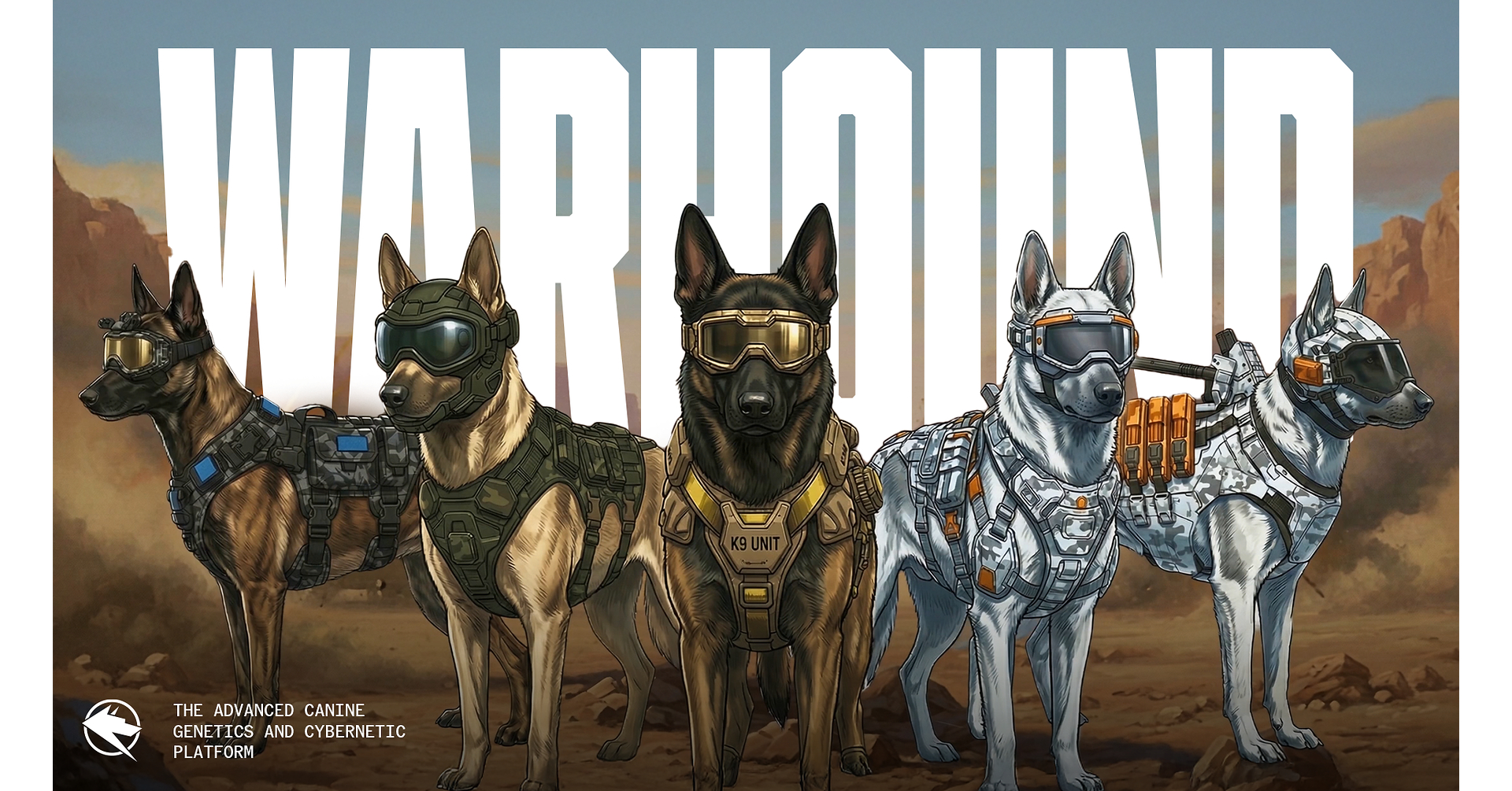
Warhound emerged from stealth with a $200 million seed round to build a U.S.-based supply of genetically enhanced, technology-equipped working dogs for military, law-enforcement and emergency-response teams. More than 80% of U.S. military working dogs are sourced from Europe, and fewer than half of procured dogs ultimately qualify for service after an roughly three-year acquisition and training pipeline. The company combines Colossal's genetics and cloning capabilities with Anduril's cybernetic augments and software, positioning the venture as a significant defense-tech startup rather than a broad market-moving event.
Analysis
The investable signal is strategic validation, not near-term earnings: Warhound’s model links canine breeding, training and battlefield electronics, but procurement qualification and the multi-year training cycle make meaningful deployment a slow path. The key economic test is whether better health and selection materially improve the share of dogs that qualify—not whether the technology sounds differentiated. Cloning and genetic tools may improve consistency, but they do not remove behavioral, training or mission-fit attrition.
If successful, domestic breeding could displace some European suppliers and create a proof point for Anduril’s field hardware/software ecosystem; however, no disclosed contract, unit economics or commercial terms support attributing revenue to Anduril or Colossal. PLTR’s former-adviser connection is not evidence of a contract or revenue exposure. Franklin Templeton (BEN) is named among investors, but without its investment amount, vehicle or ownership terms, the exposure cannot be translated into a meaningful earnings or valuation sensitivity.
Over 1–3 months, watch for Pentagon procurement, pilot or qualification details and independently verifiable animal-health outcomes. Over 6–18 months, deployment rates and repeat orders matter more than launch claims. Reversal risks include slow government adoption, biological performance falling short, welfare or regulatory scrutiny, and costs that fail to beat current sourcing and training economics. The contrarian point: national-security framing may invite over-attribution to public-market names despite Warhound and Anduril being private and direct financial exposure being undisclosed.
AllMind Terminal
AI-powered research, real-time alerts, and portfolio analytics for institutional investors.
Request TrialMarket Sentiment
Overall Sentiment
moderately positive
Sentiment Score
0.65
Key Decisions for Investors
- No trade in PLTR on this announcement: the CEO’s prior Palantir role does not establish a commercial relationship. Revisit only if a specific contract or partnership is disclosed.
- Treat BEN as an unquantified private-investment exposure, not an earnings catalyst. Verify investment size, fund or balance-sheet vehicle, and ownership terms before adjusting estimates.
- Place Warhound/Anduril on a defense-tech watchlist; seek evidence of funded procurement, qualification milestones, repeat orders and improved training completion before underwriting a revenue thesis.
- Falsify the adoption thesis if pilots fail to produce measurable health or qualification improvements, or if procurement remains unfunded; monitor welfare/regulatory developments as a potential delay catalyst.
More News
- Palmer Luckey teams with dire wolf billionaire Ben Lamm to launch $200 million Warhound, unleashing genetically engineered clone dogs of war
- Vendors asking forward deployed engineers to make good on trillion-dollar AI bet
- UK government hasn't the foggiest how much it's spending on digital transformation
- Asia stocks fall as AI rout batters S.Korea; Japan spooked by strong CPI
- SK Hynix shares slide after chipmaker scraps Solidigm IPO plans
- Why is SK Hynix stock sliding today?