
As the Trump-Xi meetings unfold, investors should watch for this hidden AI trade
Source: marketwatch.com
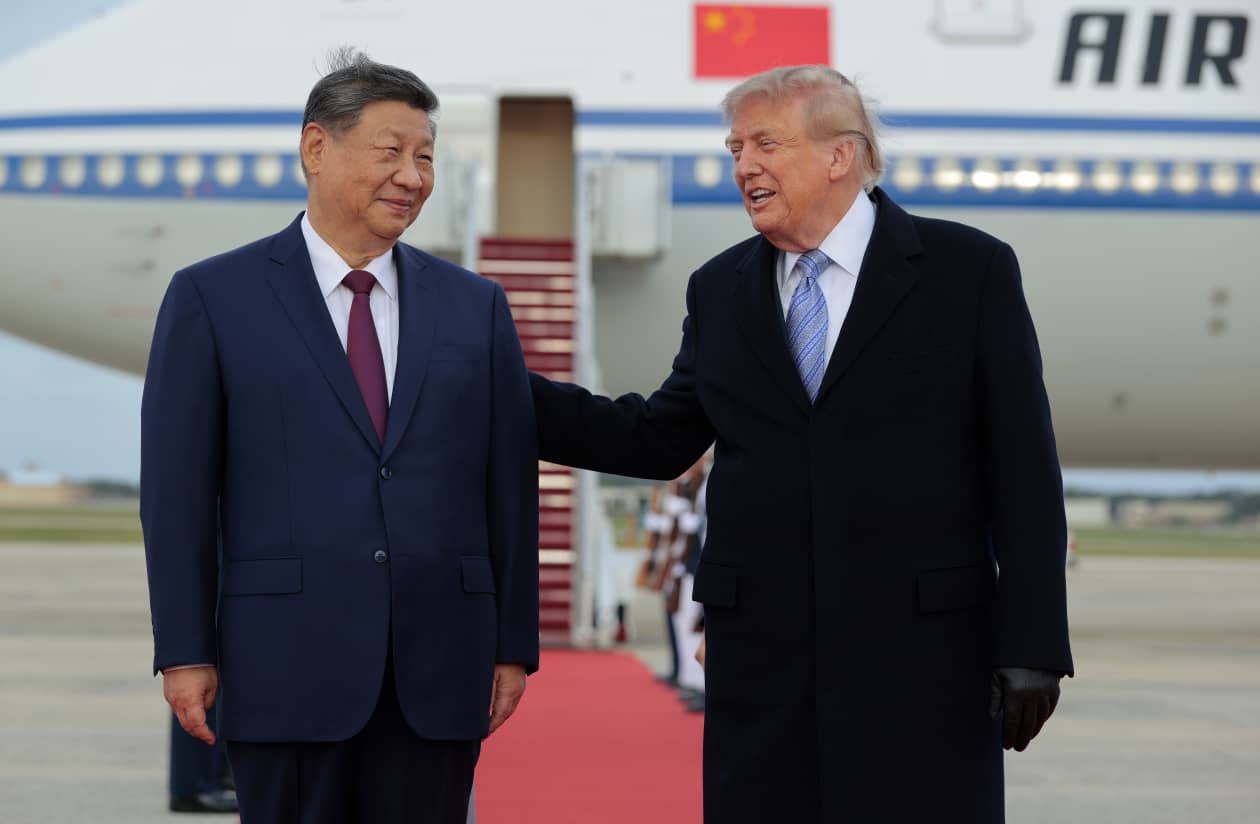
Investors are being urged to monitor Taiwan during President Trump’s meetings with Chinese President Xi Jinping, alongside headline risks around tariffs, trade and Iran. Any easing in Taiwan-related tensions could provide a positive spillover for U.S. chip stocks that underpin the AI investment boom, while renewed friction would pose supply-chain and valuation risks for technology holdings.
Analysis
The investable transmission mechanism is a lower Taiwan-risk discount on the AI hardware stack, not a broad technology rerating. TSMC (TSM) should be the highest-beta beneficiary because its multiple embeds both geographic concentration and customer concentration; Nvidia (NVDA), AMD and Broadcom (AVGO) benefit indirectly through reduced risk of a supply interruption, but their valuations remain more exposed to AI-capex durability. A credible de-escalation signal could narrow the relative valuation gap between TSM and U.S.-listed AI chip designers over the next 1-3 months, while also supporting Taiwan ETFs (EWT) and semiconductor equipment names with Taiwan revenue exposure, including ASML, AMAT, LRCX and KLAC.
The second-order loser from reduced geopolitical tension is the "China-plus-one" and domestic-fab scarcity premium. Intel (INTC), GlobalFoundries (GFS), and potentially U.S. fabrication-equipment beneficiaries could see limited multiple pressure if customers perceive less need to duplicate leading-edge capacity for resilience; this is a valuation effect rather than an immediate earnings risk. Conversely, any bilateral language that leaves technology-export restrictions intact would be insufficient to change near-term Chinese semiconductor demand: Chinese foundry and equipment substitutes (SMIC, Hua Hong, NAURA proxies) remain constrained primarily by access to leading-edge tools, not diplomatic tone.
Consensus may overreact to rhetoric because no summit language can eliminate the core strategic conflict or insure the physical supply chain. The relevant confirmation is whether corporate risk disclosures, long-term wafer agreements, inventory policies, and Taiwan insurance/freight costs change over 6-18 months. A reversal in cross-strait military activity, a new U.S. export-control action, or AI-server demand guidance below expectations would quickly overwhelm any geopolitical multiple expansion.
AllMind Terminal
AI-powered research, real-time alerts, and portfolio analytics for institutional investors.
Request TrialMarket Sentiment
Overall Sentiment
neutral
Sentiment Score
0.05
Key Decisions for Investors
- Watch for a post-meeting confirmation trade: go long TSM / short SOXX in equal dollar size only if TSM outperforms SOXX by less than 3% initially and no new semiconductor restrictions emerge within five trading days. Target 8-12% relative upside over 1-3 months; exit on renewed Taiwan military escalation or TSM cutting 2026 capex/revenue expectations.
- For existing AI exposure, rotate a portion of NVDA or AVGO gains into TSM rather than add gross semiconductor beta. TSM offers the cleaner geopolitical-risk-premium compression setup, while NVDA/AVGO require continued hyperscaler spending upside to justify further multiple expansion; reassess at the next hyperscaler capex-guidance cycle.
- Avoid a directional long in INTC or GFS based solely on de-escalation headlines. Their fabrication localization narrative could lose some scarcity premium, but the earnings impact depends on foundry customer wins, utilization, and subsidy execution; treat this as a valuation-risk alert rather than a short absent evidence of order or guidance deterioration.
- Set a risk trigger on the Taiwan complex: if Taiwan-related defense, freight, or political-risk indicators reprice higher after the meetings, reduce TSM/EWT exposure immediately. The downside is asymmetric because supply-chain disruption risk cannot be diversified within the AI hardware ecosystem.
More News
- Saudi, Turkish, Pakistani chiefs plan urgent talks amid Yemen fighting
- US 30-Year Yield Hits Highest Since 2004
- Oil falls amid optimism over potential diplomatic solution to the Iran conflict
- Trump Versus Xi: How Their High-Stakes Summits Compare
- History shows financial calamities occur when rates rise rapidly like this: 'Something always breaks'
- SEBI Allows Portfolio Managers to Invest Overseas, Short Equity Options