
Pylontech rozpoczyna seryjną produkcję ogniw LFP 588 Ah i 601 Ah do systemów magazynowania energii
Source: PR Newswire
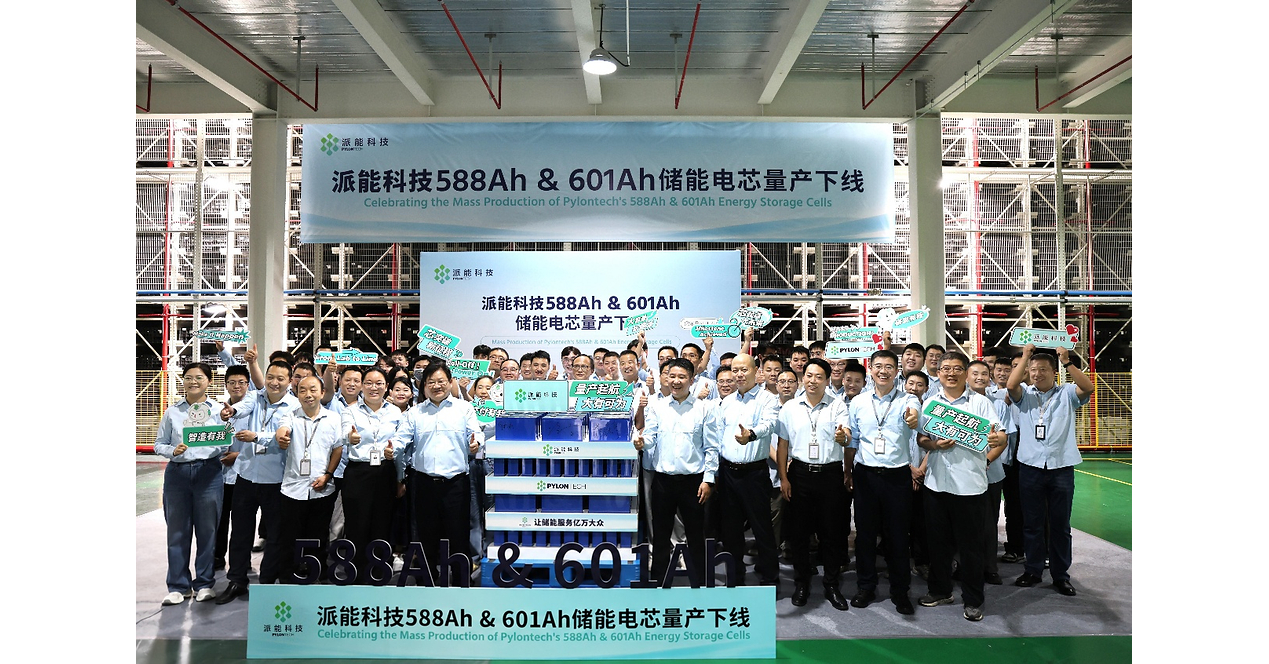
Pylontech began mass production of 588 Ah and 601 Ah prismatic LFP battery cells for utility-scale energy-storage systems, with cumulative output already exceeding 100 MWh. Its 601 Ah cell delivers 425.8 Wh/l energy density, more than 12,000 cycles and 96.5% energy efficiency, supporting new PyOcean storage systems with 6.25 MWh and 8 MWh capacities. The larger cells are designed to reduce component counts, installation complexity and lifecycle costs, strengthening Pylontech's position in the expanding global grid-scale BESS market.
Analysis
The investable implication is less about a single product launch and more about cell-format migration in utility storage: larger prismatic LFP cells reduce enclosure, busbar, thermal-management and installation costs per MWh. That shifts value away from lower-value balance-of-system suppliers and toward vertically integrated cell-plus-system vendors able to monetize lower project capex without fully passing savings to customers. For 688063.SS, the key question is whether the new format improves gross margin and bid-win rates rather than merely protecting volume in an increasingly commoditized Chinese BESS market.
Near term, the announcement is unlikely to alter consensus estimates without disclosed nameplate capacity, third-party qualification, backlog conversion and pricing. The relevant 1-3 month catalysts are tender wins outside China, disclosed utilization at Hefei, and evidence that system-level warranty terms remain stable; large-format cells have fewer electrical connections but concentrate failure and replacement risk in each unit. A qualification delay, field-performance issue, or aggressive pricing response from CATL (300750.SZ), EVE Energy (300014.SZ), REPT Battero (666.SS) or Hithium would turn claimed cost advantages into margin dilution.
Over 6-18 months, greater cell standardization could pressure standalone integrators such as Fluence (FLNC) and Wärtsilä (WRT1V.HE) unless they retain differentiation through controls software, project execution and bankability. The contrarian view is that higher Ah ratings are rapidly becoming table stakes, not a durable moat: utility buyers principally underwrite delivered $/kWh, availability guarantees, fire certification and financing acceptance. The thesis is falsified if 688063.SS does not show improving storage-system gross margin and overseas order growth within the next two reporting cycles, or if competitors match the format while sector pricing continues to fall faster than manufacturing costs.
AllMind Terminal
AI-powered research, real-time alerts, and portfolio analytics for institutional investors.
Request TrialMarket Sentiment
Overall Sentiment
strongly positive
Sentiment Score
0.58
Key Decisions for Investors
- No immediate directional position in 688063.SS on the release alone; place on a 1-3 month catalyst watch for disclosed capacity ramp, third-party certification, project awards and export backlog. Upgrade only if management demonstrates margin accretion rather than volume-led growth.
- Monitor a relative-value long 688063.SS / short 300750.SZ basket only after evidence of overseas utility-scale wins, where a smaller specialized supplier can re-rate on bankability. Target a 10-15% relative move over 6-12 months; exit if reported storage gross margin declines or CATL cuts BESS pricing materially.
- Maintain caution on FLNC into the next two earnings cycles: cell vendors moving to more integrated, lower-cost container architectures can compress integrator hardware margins. This is a watch thesis, not a new short, until order-book margin, competitive commentary, or supplier pass-through economics deteriorate.
- Track China utility-storage tender prices and LFP cell pricing monthly. If turnkey BESS prices fall faster than LFP input costs for two consecutive quarters, favor scale cell manufacturers with captive systems channels over pure-play integration and EPC exposure.
More News
- America’s Asian allies want a Trump-Xi truce — but not at their expense
- Chinese authorities reportedly in possession of F-35 components in Hong Kong
- Meta announces new lightweight virtual reality glasses to one-up Apple’s Vision Pro
- How Meta took the lead in the race for the post-smartphone world
- SoftBank shares jump over 7% after $11.1 billion bond issuance to fund OpenAI bet
- Mark Zuckerberg debuts $1,299 Meta VR Glasses and Muse Charm pendant amid AI agent push