
HL Klemove und Lenovo schließen Partnerschaft, um den Markt für autonomes Fahren anzuführen
Source: PR Newswire
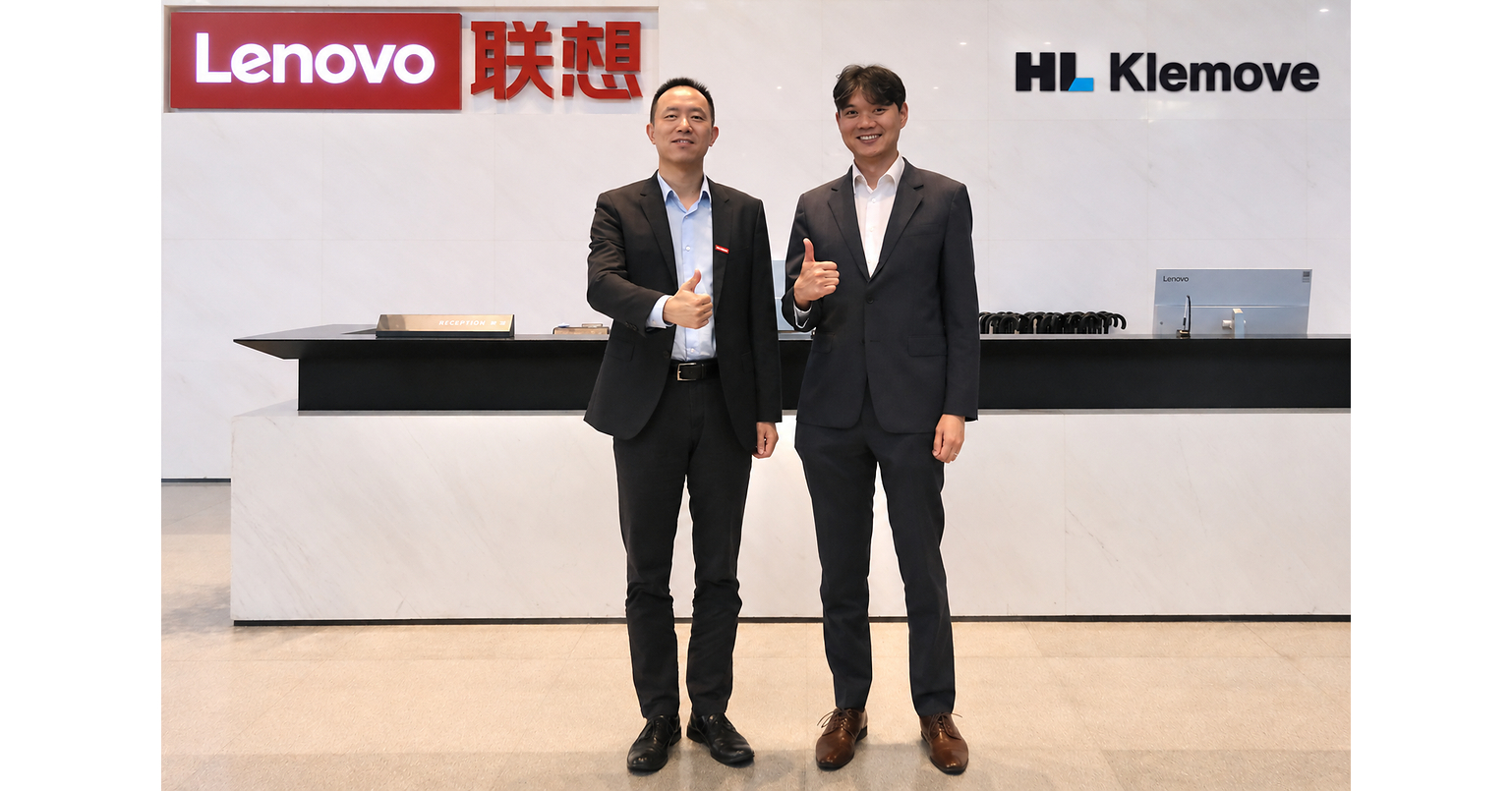
HL Klemove and Lenovo formed a strategic partnership to jointly develop high-performance AI computing (HPC) solutions for autonomous driving, targeting global OEM contracts and eventual mass production. The alliance will progress from vehicle-HPC development to order wins and serial production, combining Lenovo's automotive computing capabilities with HL Klemove's ADAS manufacturing network across South Korea, China, India and North America. Lenovo said the partnership will accelerate its expansion into Level 4 autonomous-driving and ADAS automotive computing markets.
Analysis
This is not yet a revenue event: the economic value sits in OEM design wins, software attachment rates, and automotive-grade validation rather than in the development agreement itself. Lenovo’s listed equity (0992 HK; LNVGY OTC) is unlikely to re-rate materially without disclosed program volume or backlog, but the partnership improves its credibility as a China-based vehicle-compute alternative at a time when OEMs are seeking to regionalize critical ADAS electronics supply. The more consequential competitive pressure falls on subscale domain-controller vendors that lack both automotive manufacturing qualification and a credible AI-compute roadmap.
For the next 1-3 months, monitor whether either partner names an OEM, chip architecture, or production start date; those disclosures determine whether this is a marketing alliance or a funded platform program. A China OEM award would also reinforce the localization threat to Mobileye (MBLY), whose take rates and valuation depend on retaining higher-value ADAS content as Chinese OEMs vertically integrate or source domestic stacks. Conversely, use of Nvidia (NVDA) or Qualcomm (QCOM) silicon would make the partnership incremental demand validation for those suppliers, but absent a disclosed bill of materials, that linkage is speculative.
The consensus risk is assuming that “Level 4” messaging translates into near-term unit volumes. Auto-grade HPC programs typically face 18-36 month qualification cycles, and production economics can deteriorate rapidly if compute costs rise faster than OEM willingness to pay for ADAS features. The thesis is falsified by no named design win within 12 months, a delayed SOP, or a disclosed platform relying on an incumbent compute stack with limited proprietary content; in that case, Lenovo remains primarily a low-margin hardware participant rather than an automotive AI beneficiary.
AllMind Terminal
AI-powered research, real-time alerts, and portfolio analytics for institutional investors.
Request TrialMarket Sentiment
Overall Sentiment
moderately positive
Sentiment Score
0.48
Key Decisions for Investors
- No immediate directional position in 0992 HK/LNVGY: treat any announcement-driven strength as low-conviction until management discloses OEM name, annual vehicle volume, SOP timing, and expected automotive margin profile. Reassess for a long only following a funded design win with production start inside 24 months.
- Place an event alert on MBLY for evidence that Chinese or Korea-linked OEM programs adopt localized domain-controller stacks; a cluster of such wins over the next 6-12 months would support a tactical MBLY underweight versus QCOM, which has broader automotive compute optionality.
- Watch for disclosed silicon selection. If Nvidia DRIVE is selected, consider adding NVDA only if the program includes a named OEM and minimum-volume commitment; if Qualcomm Ride is selected, QCOM offers the cleaner relative beneficiary because automotive remains a smaller but higher-multiple incremental earnings vector.
- Avoid extrapolating this alliance into a broad autonomous-driving long basket: the relevant risk/reward remains asymmetric only after production commitments, while validation delays and price competition can erase supplier economics before revenue begins.
More News
- Bank of Japan raises interest rates to 31-year high, flags concerns over inflation
- Italy to deploy warships to protect shipping through Bab al-Mandeb
- Oil prices fall as Saudi supply hopes outweigh fresh Houthi strikes
- Australia’s central bank chief warns inflation risks materialising
- This AI-picked stock jumps 18% on Amazon’s $8 billion power deal
- Explainer-What commodity markets can expect from the Trump-Xi summit