
India’s Small Investors Dump Stocks, Chase New Listings
Source: Bloomberg
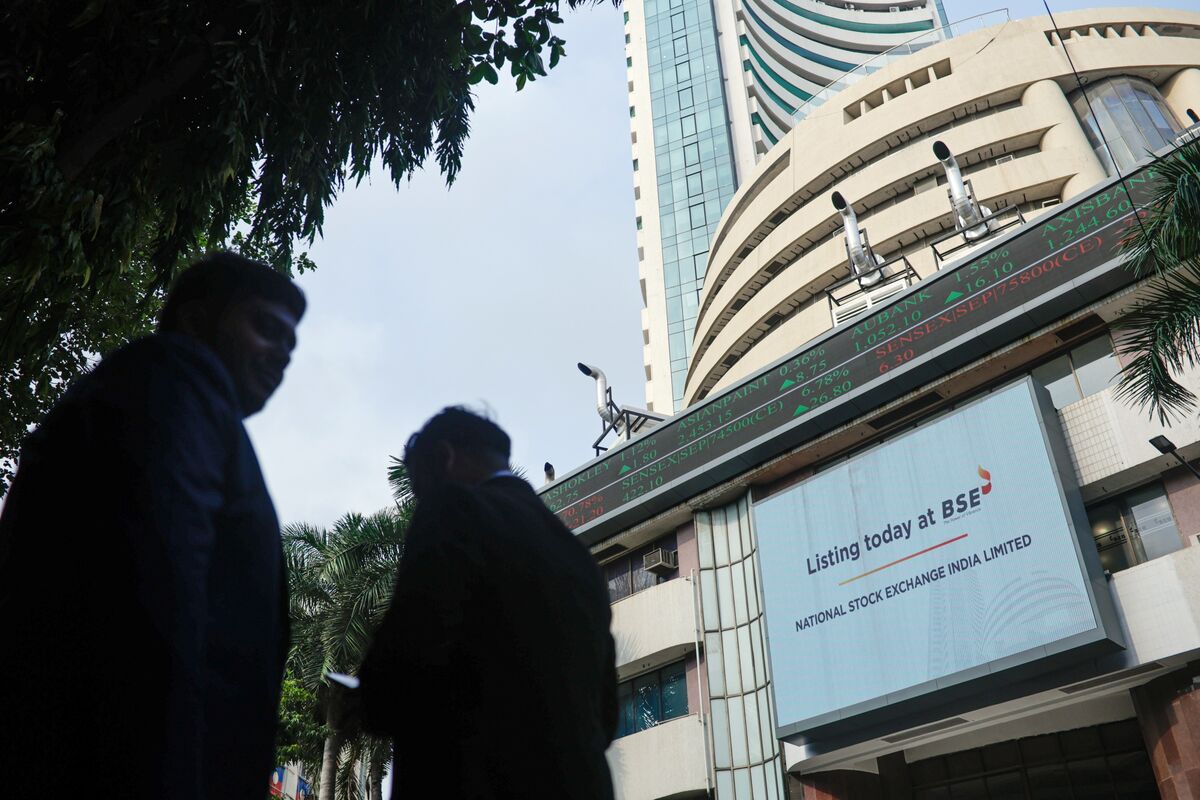
Indian individuals and proprietary traders sold more than 70 billion rupees of shares through Oct. 26, putting them on course for their largest monthly withdrawal since February. Leveraged stock positions fell below 1.5 trillion rupees, down more than 5% from September, even as appetite for marquee IPOs remains strong ahead of Jio Platforms’ debut. The Nifty 50 had its best day in two weeks on Thursday, while some company earnings have missed analyst estimates.
Analysis
The key signal is a split in risk appetite: demand for prominent IPOs can remain strong while willingness to own less-liquid listed equities weakens. That is not necessarily a broad-market bullish signal. Large offerings may divert cash from secondary-market buyers in the near term; later, added free float and potential index inclusion could deepen liquidity, but only if post-listing demand persists. The more immediate vulnerability is in small- and mid-cap stocks, where reduced leverage can amplify outflows and widen the gap between liquid large caps and crowded, lower-quality names.
A foreign-flow rotation toward India could cushion the index, but it need not rescue the breadth of the market. The contrarian risk is treating a marquee listing as proof that domestic risk appetite has recovered: IPO demand may reflect deal-specific scarcity or expected listing gains rather than confidence in the broader earnings pool. Over 1–3 months, watch IPO cash absorption alongside foreign portfolio flows, market breadth, and margin-financing balances. Over 6–18 months, sustained listing activity could improve market depth, but repeated supply without corresponding inflows risks a persistent secondary-market liquidity discount.
There is no clear market-wide directional trade from these data alone. A relative-quality expression is more defensible, subject to liquidity and index-composition differences. The thesis weakens if small-cap breadth and leverage stabilize while foreign inflows broaden beyond large caps; it strengthens if new issuance stays heavy and small-cap relative performance deteriorates.
AllMind Terminal
AI-powered research, real-time alerts, and portfolio analytics for institutional investors.
Request TrialMarket Sentiment
Overall Sentiment
mixed
Sentiment Score
-0.15
Key Decisions for Investors
- Consider a small, risk-defined relative-value position: long a broad India ETF such as INDA against a smaller-cap India vehicle such as SMIN. This expresses a liquidity and quality preference, not a forecast of an outright India decline; size conservatively because the funds have different index exposures.
- Avoid buying small-cap dips solely on the strength of IPO headlines. Wait for evidence that breadth and margin-funded positions have stabilized, and check whether post-listing trading holds up after initial allocation-driven demand fades.
- Track the next 1–3 months of foreign portfolio flows, IPO issuance and subscription quality, small-cap relative returns, and margin-financing data. If foreign inflows broaden and small-cap breadth improves despite issuance, reduce or close the relative-value position.
- Do not infer a broad earnings recovery from headline IPO demand. Reassess if company guidance and listed-market earnings breadth improve; absent that confirmation, treat new issuance as a potential near-term liquidity headwind rather than a standalone bullish catalyst.
More News
- Stocks slump, bonds leap as AI giants’ spending spooks investors
- Alphabet Erases $500 Billion as ChatGPT, Google AI Cut into Search
- Google Sales Miss Reignites AI Fears, Microsoft Eyes $25B Debt Offering
- Alphabet just had its worst day as a public company. BofA now values Google search at a lower multiple than fossil fuel stocks
- Christine Lagarde, Boris Vujčić: Monetary policy statement
- Norwegian shares surge 13% on earnings beat, guidance raise