
Boot Barn's AI Shopping Tools Strengthen Its Omnichannel Strategy
Source: zacks.com
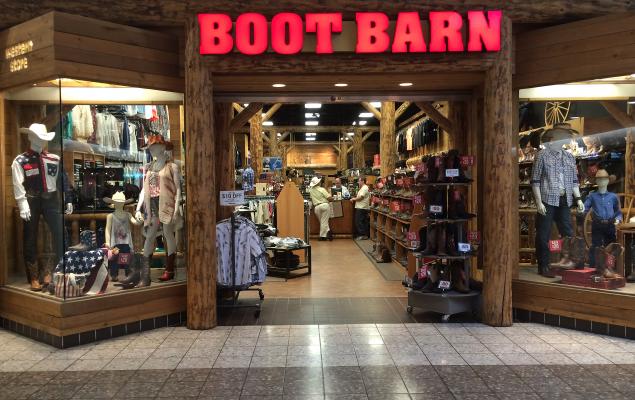
Boot Barn’s fiscal Q1 2027 net sales rose 17.7% year over year to $593.5 million; e-commerce comparable sales grew 13.4%, store comps rose 3.8%, and consolidated comps increased 4.7%. The retailer opened 27 stores in the quarter, ending with 566 across 49 states, and plans 70 openings in fiscal 2027 while projecting e-commerce comparable-sales growth of 11–13%. Its AI-enabled Range Finder and Cassidy tools support its omnichannel strategy, but Boot Barn has not separately quantified their sales or margin contribution; shares are down 33.4% over the past year.
Analysis
The key underwriting question is whether digital growth is incremental demand or customers shifting purchases between channels. If online gains mainly reflect channel migration, reported e-commerce comps may overstate the benefit; the economic proof is consolidated comparable growth and fulfillment-adjusted margin, not AI engagement. Store fulfillment could make digital orders cheaper and widen assortment access, but that advantage depends on labor, shipping, and inventory costs that the article does not quantify. Treat the AI tools as an unproven conversion aid, not a standalone earnings catalyst.
Near term, the stock’s sharp underperformance may leave room for relief if execution stabilizes, but the premium sales multiple and lack of recent estimate upgrades argue against assuming the growth narrative is being capitalized into higher earnings. Over 1–3 months, watch comparable sales, gross margin, and management’s evidence that digital orders fulfilled by stores improve economics. Over 6–18 months, an aggressive store rollout creates operating leverage if new locations mature well, but also raises exposure to site selection, labor costs, and cannibalization. A consumer slowdown or weaker western-wear demand could expose the fixed-cost burden. The contrarian risk is that investors may be crediting AI for growth primarily supported by store expansion; conversely, if store-based fulfillment demonstrably improves margins, the market may be underestimating the value of the network.
AllMind Terminal
AI-powered research, real-time alerts, and portfolio analytics for institutional investors.
Request TrialMarket Sentiment
Overall Sentiment
mildly positive
Sentiment Score
0.15
Ticker Sentiment
Key Decisions for Investors
- No AI-led trade on this evidence alone. Keep BOOT on a conditional long watchlist; consider entry only after results show sustained consolidated comp growth alongside stable or improving gross margin and fulfillment costs.
- For the next earnings update, verify digital order growth against total comps, store-fulfilled order share, shipping and labor expense, returns, and new-store sales maturation. These data are needed to distinguish incremental demand from channel shift and to assess the 70-store plan.
- Falsify the constructive thesis if consolidated comps weaken, gross margin deteriorates as digital mix rises, or new-store growth fails to offset the added occupancy and labor burden. Reassess rather than average down.
- Avoid using GCO, DBI, or URBN as a direct hedge: the article does not establish comparable exposure or a clean relative-value relationship.
More News
- South Korean carmaker Hyundai plans 'strategic' investment of $15.5 billion in India by 2032
- Namibia battles cattle disease outbreak as EU suspends several meat imports
- Applied Materials’ $5 billion AI lab aims to cut chip development time in half—and restore Silicon Valley’s edge
- Wells Fargo CFO on Earnings, Deals, Consumer Strength
- Bank of America hit with more than $1.2 billion in penalties over money-laundering violations
- China's exports likely grew by double-digits in September