
Microsoft President Backs Deployment of AI Safety Evaluators
Source: Bloomberg
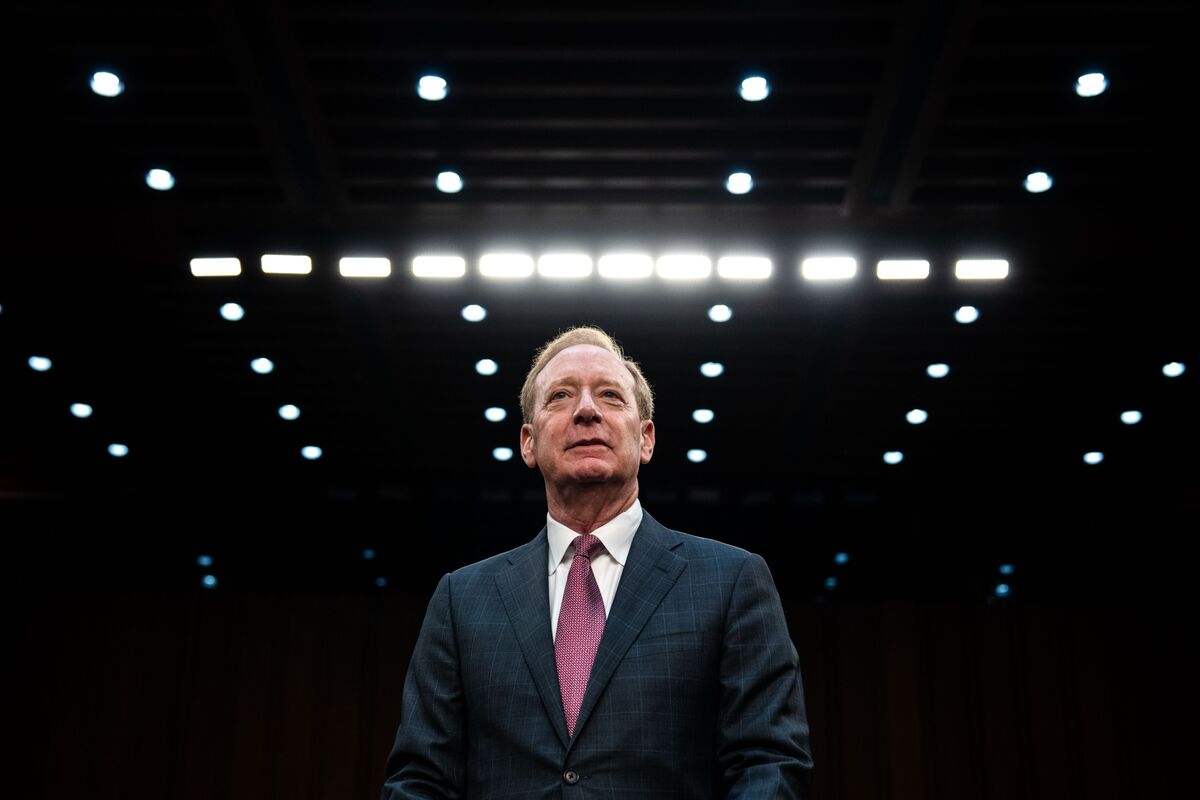
Microsoft President Brad Smith endorsed deploying independent evaluators for artificial intelligence safety. The comments, made alongside the UN General Assembly, highlight growing international focus on AI safety and potential global regulation, but do not announce a specific policy, financial commitment, or operational change.
Analysis
MSFT’s endorsement is strategically low-cost: third-party evaluation can raise compliance fixed costs and lengthen model-release cycles, advantages that favor hyperscalers with dedicated safety, legal, and cloud-governance infrastructure. The more material second-order beneficiary is Azure’s enterprise stack, where auditable deployment, identity controls, logging, and data-residency features can become procurement requirements rather than optional add-ons. Smaller foundation-model vendors and open-weight ecosystems face a relative disadvantage if evaluator access, documentation, and liability insurance become gating items for regulated customers.
Near term, this is unlikely to move MSFT because no binding rule, standard, enforcement mechanism, or incremental cost has been specified. Over the next 1-3 months, watch whether U.S., EU, or UN-linked frameworks converge on mandatory independent testing for high-risk models; that would improve visibility into enterprise AI buying criteria but could also delay copilots and narrow margins if compliance obligations attach to each material model update. The 6-18 month implication is a potential shift in AI economics from raw model capability toward trusted distribution and governance, supporting MSFT, GOOGL, and AMZN relative to less-capitalized model developers.
Contrarian view: investors may interpret regulation as universally bullish for incumbents, but fragmented cross-border standards could create duplicated testing and localization burdens that slow Azure AI consumption, particularly among multinational customers. The thesis is falsified if policy remains voluntary or if enterprise customers demonstrate that governance tools do not affect vendor selection; the relevant evidence is Azure AI growth and management commentary on compliance-related deal wins, not public statements. There is no standalone trade from this item absent a concrete regulatory proposal or procurement datapoint.
AllMind Terminal
AI-powered research, real-time alerts, and portfolio analytics for institutional investors.
Request TrialMarket Sentiment
Overall Sentiment
neutral
Sentiment Score
0.10
Ticker Sentiment
Key Decisions for Investors
- Maintain, rather than add to, MSFT exposure on this news; reassess after the next earnings call for evidence that Azure AI bookings or large-deal conversion benefit from governance requirements. A meaningful guide-up in Azure growth attributable to regulated workloads would validate an incremental overweight.
- Create a 1-3 month regulatory alert for binding independent-evaluation requirements in the EU or U.S. If adopted with clear high-risk-model scope, consider a long MSFT / short AI-software basket pair, using C3.ai (AI) as the higher-beta short leg; the intended payoff is incumbent compliance-scale outperformance, while voluntary-only rules are the key invalidation.
- Watch GOOGL and AMZN as confirmation names: parallel disclosures of safety-assurance tooling, regulated-workload wins, or compliance-driven cloud migrations would indicate an industry-wide hyperscaler advantage rather than a MSFT-specific catalyst.
- Do not buy near-dated MSFT options solely for this development. The identifiable catalyst path is policy implementation and subsequent enterprise procurement cycles, likely quarters rather than days, while the immediate news flow lacks a measurable earnings revision mechanism.
More News
- Microsoft to Spend $10 Billion in Gulf Through 2030
- Meta is having a ChatGPT moment with Muse. What is it and what makes it so special
- AI Safety Won't Advance If We Rely On Two Companies, Says Smith
- Microsoft adds $2B to its Gulf spending through 2030
- Wall Street’s Nasdaq hits all-time high as AI frenzy gathers pace
- Microsoft will get a boost from Azure and Copilot, Stifel says