
U.S. Navy Doubles UAS Command and Control Capacity with Second MD-5C, Powered by Skunk Works® MDCX™
Source: PR Newswire
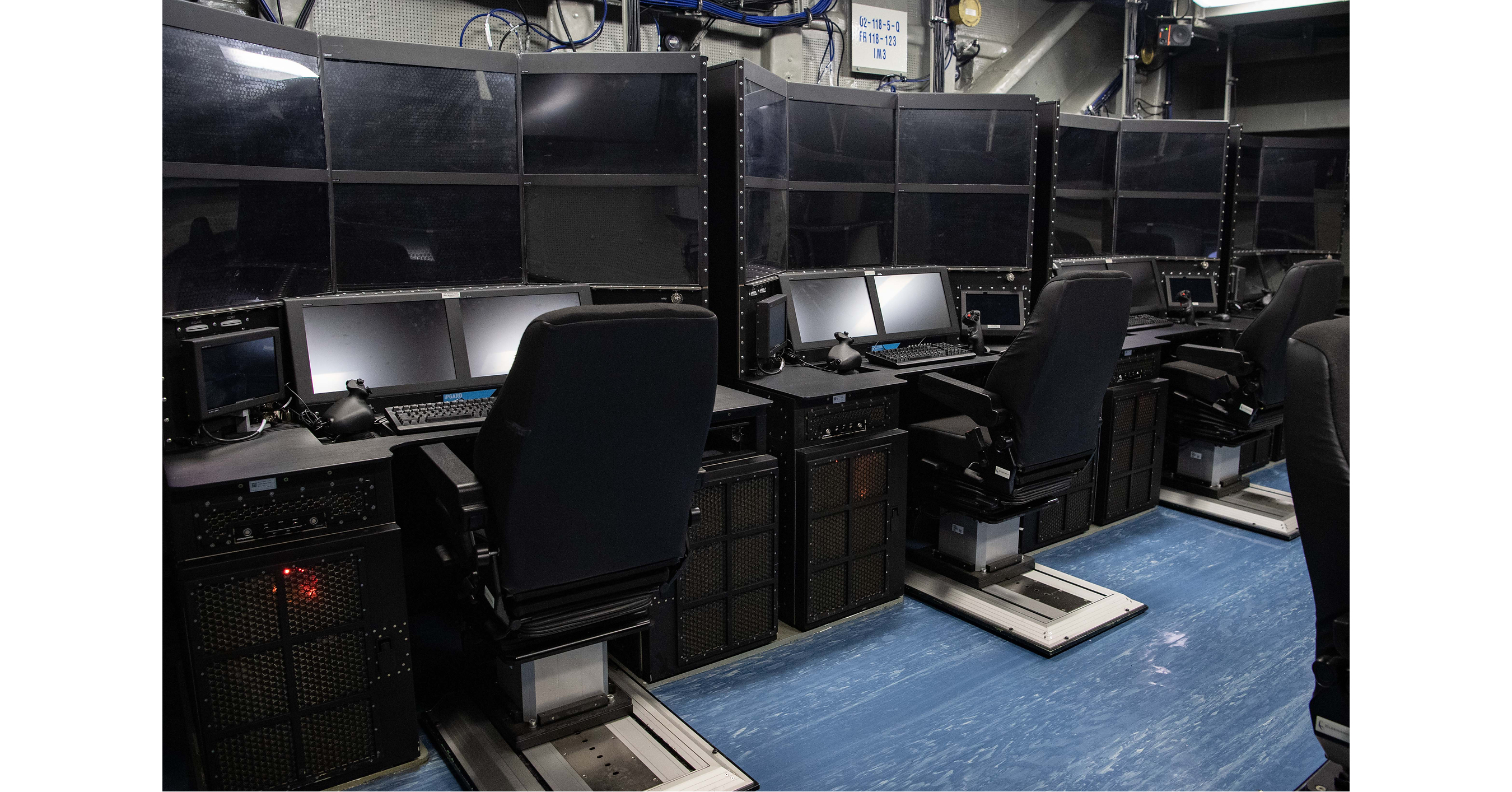
The U.S. Navy doubled the number of carriers equipped to operate the MQ-25A Stingray unmanned aircraft system within five months, deploying Lockheed Martin's MDCX-enabled MD-5C Ground Control Stations on USS Theodore Roosevelt in March 2026 and USS Ronald Reagan in August 2026. MDCX provides mission-planning and command-and-control capabilities intended to extend carrier air-wing reach and free manned aircraft for higher-priority missions. The deployment demonstrates incremental operational adoption of Lockheed Martin's autonomy platform, though the release disclosed no contract value or financial impact.
Analysis
This is strategically constructive for LMT’s naval autonomy franchise but not independently material to near-term earnings: absent contract value, recurring software economics, or a fleet-installation schedule, the market should not capitalize the announcement as a revenue catalyst. The relevant signal is execution velocity in a mission-critical integration layer, which improves LMT’s position for follow-on carrier, shore-command, and multi-platform autonomy awards over the FY27–FY29 budget cycle.
The second-order beneficiary is BA, whose MQ-25 production ramp becomes less exposed to a carrier-side operational bottleneck; however, aircraft deliveries, carrier certification, and Navy procurement quantities—not control-station availability—remain the binding variables for BA’s program economics. LMT’s capture is also structurally capped by the government-owned command-and-control network and open-architecture requirement: successful deployment validates LMT integration expertise, but may enable competitors such as NOC, RTX, or private autonomy vendors to bid adjacent software and payload layers.
Consensus should resist treating this as a standalone LMT rerating event. The upside case is that repeated deployment compresses integration risk and converts a bespoke program into a scalable fleet standard, supporting higher-margin software/sustainment mix over 6–18 months; the downside is that Navy budget pressure, MQ-25 schedule slippage, or an interoperability mandate that commoditizes the software layer prevents meaningful recurring revenue. Falsification: no disclosed follow-on fleet award or autonomy-related backlog growth by FY27 guidance, or a material reduction in Navy unmanned-carrier procurement priorities.
AllMind Terminal
AI-powered research, real-time alerts, and portfolio analytics for institutional investors.
Request TrialMarket Sentiment
Overall Sentiment
moderately positive
Sentiment Score
0.48
Ticker Sentiment
Key Decisions for Investors
- No incremental directional LMT purchase solely on this release; maintain a watch for contract value, installed-fleet targets, and recurring support content in the next earnings call. Upgrade only if management identifies a program of record with multi-year revenue visibility.
- For a 6–18 month defense-autonomy theme, prefer a modest LMT overweight versus XAR rather than an outright event trade: LMT has credible integration leverage, while XAR dilutes the thesis with airframe and commercial-aerospace exposure. Reassess if FY27 defense appropriations constrain Navy procurement.
- Monitor BA as a secondary read-through, not a paired short: carrier-side readiness modestly reduces execution risk around MQ-25 fielding, but BA upside requires evidence of production-rate improvement and Navy quantity stability. A disclosed delivery or procurement cut would negate the benefit.
- Set an alert for a Navy fleetwide deployment schedule or a competitively awarded open-architecture autonomy contract. The former supports LMT sustainment upside; the latter would indicate that deployment validation is not translating into proprietary software economics.
More News
- Boeing Adds Navy’s Sixth-Generation Fighter to Its Roster
- Why Jim Cramer isn't buying more Boeing despite its huge Navy contract win
- UK Prime Minister Burnham says Iran 'played a part' in British air base incident
- South Korea’s exports hit record high on AI boom
- RAM supply set to worsen, says Micron, as CEO celebrates ‘much higher’ prices
- Tencent leases 100,000 chips from Oracle for $7 bln- FT
From AllMind Research
- Anthropic IPO Preview: Valuation, Timing, and What to Watch
- Shein After the IPO: Venue, Valuation, and What Must Be Proved
- What AI Research Tools Should a Small Hedge Fund Buy First?
- AI Tools for CFA Charterholders: An Evidence Standard
- Weekly Update: Unstructured Data Search, Ask AI, and Advanced Futures Data