
2026 World Manufacturing Convention: From Product Displays to Integrated Manufacturing Ecosystems
Source: PR Newswire
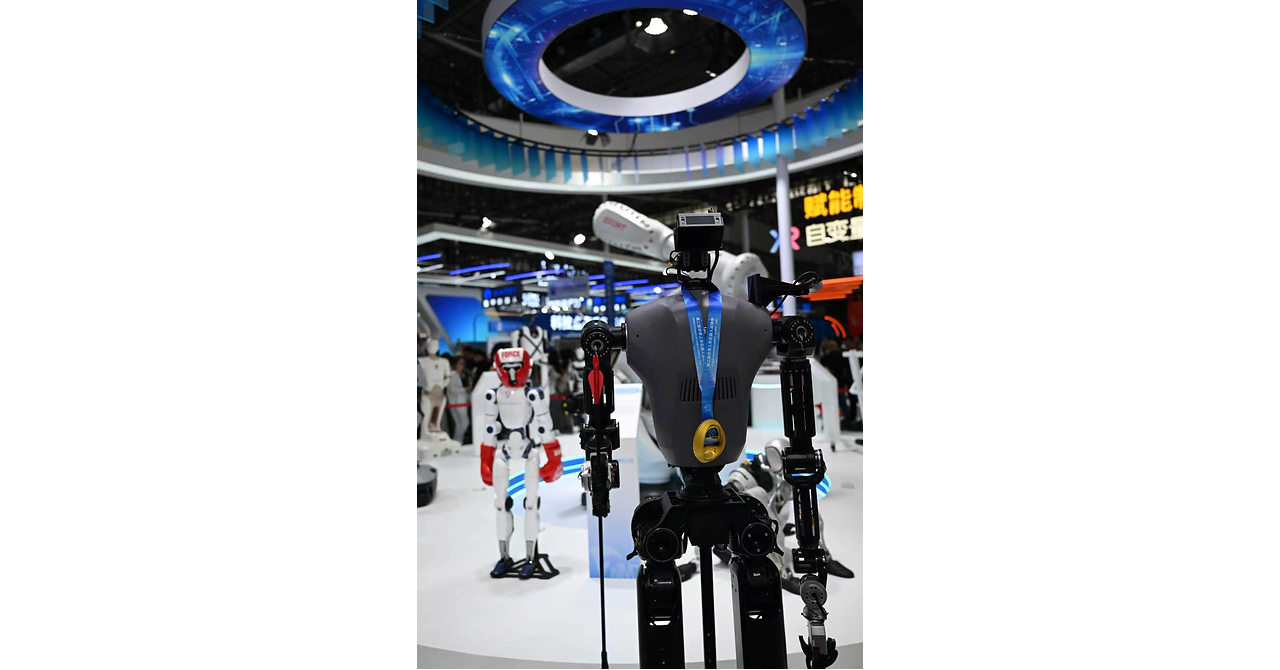
The 2026 World Manufacturing Convention showcased more than 10,000 products and technologies from over 900 companies across a 70,000-square-meter venue, emphasizing China's transition toward innovation-led smart manufacturing. Featured technologies included a 180-qubit superconducting quantum processor, fusion-energy research, embodied AI, 6G, hydrogen, advanced materials and integrated EV supply chains. Anhui produced 2.0158 million vehicles in the first seven months of 2026, including 1.0903 million EVs, and exported 1.227 million vehicles, underscoring its growing manufacturing and export scale.
Analysis
This is ecosystem signaling rather than an earnings-relevant demand indicator for GLW or Continental (CON). For GLW, Chinese display/customer localization raises a longer-duration risk that domestic glass and cover-material suppliers capture incremental capacity additions, particularly if automakers prioritize locally sourced cockpit displays; the offset is that higher-end automotive displays retain demanding optical, durability and yield requirements. For CON, China’s EV export expansion is more strategically mixed: larger vehicle production expands tire and ADAS content demand, but price-led domestic OEMs have disproportionate bargaining power and can accelerate localization toward Chinese tire, sensor and chassis suppliers.
The more investable second-order implication is margin dispersion within the EV supply chain, not broad upside for foreign exhibitors. Over the next 6-18 months, China’s integrated production clusters should lower procurement and iteration costs for EV makers, batteries, power electronics and industrial automation; this pressures global component suppliers without differentiated IP while supporting Chinese export competitiveness. Near-term, however, this is low-confidence promotional evidence rather than a catalyst: no incremental orders, capacity commitments, pricing data, or procurement awards are disclosed. Trade-policy escalation is the principal swing factor, as higher destination-market tariffs could redirect domestic oversupply into China and compress supplier margins further.
Contrarian view: investors may over-interpret smart-manufacturing demonstrations as a near-term revenue event. The relevant confirmation is not exhibition participation but quarterly evidence of automotive display volumes, China-region pricing, local-content ratios, and OEM export mix. GLW and CON could outperform if premium vehicle penetration and safety/content requirements rise faster than localization, but that requires margin resilience rather than merely higher unit production.
AllMind Terminal
AI-powered research, real-time alerts, and portfolio analytics for institutional investors.
Request TrialMarket Sentiment
Overall Sentiment
moderately positive
Sentiment Score
0.42
Ticker Sentiment
Key Decisions for Investors
- No directional trade on GLW or CON from this event alone; treat it as a 1-3 month diligence trigger. Reassess after each company reports China automotive revenue growth, regional price/mix and gross-margin commentary versus prior guidance.
- Maintain a 6-18 month watchlist short bias on undifferentiated global EV-component suppliers with high China manufacturing exposure and limited local OEM share; initiate only after confirming OEM price-down demands or negative China-margin revisions. Falsifier: sustained premium-content mix that expands segment margins despite China price pressure.
- For GLW, avoid adding long exposure solely on China automotive-display growth. A constructive entry requires evidence that Automotive Glass/China display volumes are growing while segment margin holds or expands; a margin decline of roughly 100 bps or more alongside volume growth would validate localization-driven pricing pressure.
- For CON, monitor China vehicle-export restrictions and domestic OEM tire/ADAS sourcing trends before taking a position. A long is more credible if replacement-tire pricing and Automotive segment margins offset OEM pricing pressure; a pair short CON versus a China-focused auto/industrial proxy becomes attractive if export barriers rise and China revenue guidance is cut.
More News
- Oil falls on report Asia will import highest volume of crude since start of Iran war
- America’s Asian allies want a Trump-Xi truce — but not at their expense
- OpenAI’s agent hacked Australia’s Medicare website—the latest rogue AI incident that the company didn’t know about for months
- Chinese authorities reportedly in possession of F-35 components in Hong Kong
- Meta announces new lightweight virtual reality glasses to one-up Apple’s Vision Pro
- Trump evalúa prohibir exportaciones de diésel de EE.UU.