
African Nations Explore Fresh Ways to Ease Pain at the Fuel Pump
Source: Bloomberg
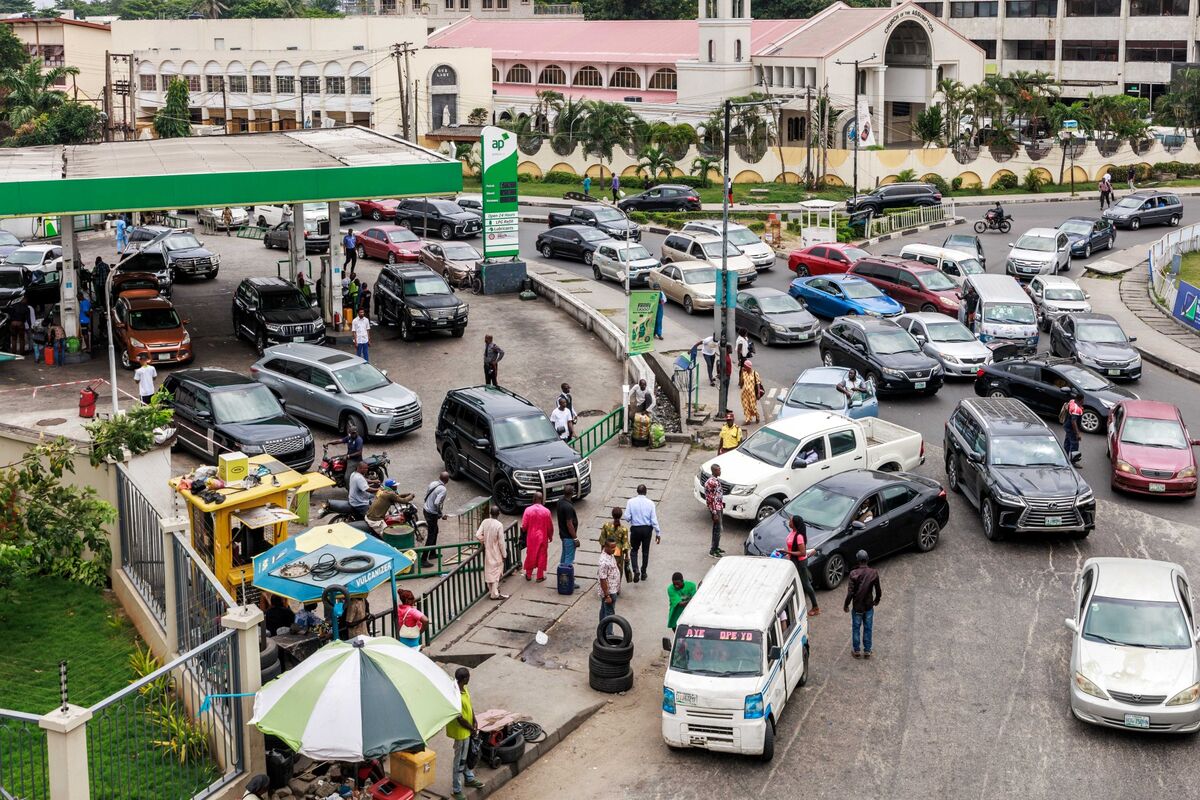
African governments, including in Nigeria and Kenya, are exploring measures to ease the impact of fuel-price increases linked to the Iran war. The conflict has helped push oil to $100 a barrel and constrained refining capacity; measures taken at the war’s start included suspending taxes and delaying upward adjustments to regulated fuel prices.
Analysis
The key market transmission is fiscal rather than simply higher crude: pump-price relief shifts the shock from households to government revenue, borrowing needs, or fuel-supply intermediaries. If relief persists, it can widen deficits and crowd out other spending; if governments instead unwind it, headline inflation and transport costs may reaccelerate. That creates a policy trap for central banks already balancing inflation against growth.
Country effects will diverge. Net importers such as Kenya face a direct terms-of-trade and FX drain, with any tax relief adding fiscal pressure. Nigeria has potential upside from higher export prices, but the offset depends on production, realized export volumes, and how domestic pricing support is funded; do not treat higher Brent as an automatic sovereign-credit positive.
Over days, oil and refined-product prices dominate. Over 1–3 months, watch subsidy duration, pump-price pass-through, FX reserves, and sovereign spreads. Over 6–18 months, prolonged intervention could weaken fiscal credibility and discourage investment in supply, while eventual price normalization would reduce the burden. The contrarian risk is assuming governments can indefinitely shield consumers: if financing or product availability tightens, abrupt pass-through or localized shortages may matter more than the headline oil price. No broad Africa trade is warranted without country-level fiscal and FX data.
AllMind Terminal
AI-powered research, real-time alerts, and portfolio analytics for institutional investors.
Request TrialMarket Sentiment
Overall Sentiment
mildly negative
Sentiment Score
-0.20
Key Decisions for Investors
- Avoid a blanket long on African energy exporters or short on African sovereigns: the oil-price benefit is conditional on export volumes and the fiscal cost of domestic relief. Compare country-level production, subsidy exposure, and budget assumptions before taking relative-value risk.
- Put Kenya and other fuel-import-dependent markets on an FX and sovereign-spread watchlist. Escalate to underweight local-currency exposure only if intervention persists alongside reserve deterioration, widening spreads, or delayed fuel-price pass-through.
- Monitor Brent and refined-product benchmarks separately. A decline in crude without a comparable easing in product costs would leave pump-price and fiscal pressure elevated; sustained product-price relief would weaken the stress case.
- Falsifiers: a durable easing in oil and refined-product prices, credible timelines for restoring price pass-through, or evidence that fiscal costs are contained. Conversely, subsidy extensions, FX-reserve losses, or fuel-supply disruption would strengthen the downside case.
More News
- Authorities said Houthi-claimed attacks on Riyadh airport killed three Saudi citizens, as airlines suspend at least 124 flights
- China and Europe agree to cut Chinese hybrid vehicle exports by half
- Ukraine pushes Russia back in Donetsk as military, civilian casualties soar
- Europe’s Tough Choices to Avert a Gas Supply Crunch This Winter
- Premarket movers: Humana rallies; SpaceX deal sends telco stocks down
- Pilot killed in attacks by Iran-backed Houthis on Riyadh airport; Saudi-led coalition vows 'firm' response
From AllMind Research
- Anthropic IPO Preview: Valuation, Timing, and What to Watch
- Shein After the IPO: Venue, Valuation, and What Must Be Proved
- What AI Research Tools Should a Small Hedge Fund Buy First?
- 2026 Global Markets Outlook: Asset Allocation After the Great Disconnect
- Fintool Alternatives After the Microsoft Acquisition