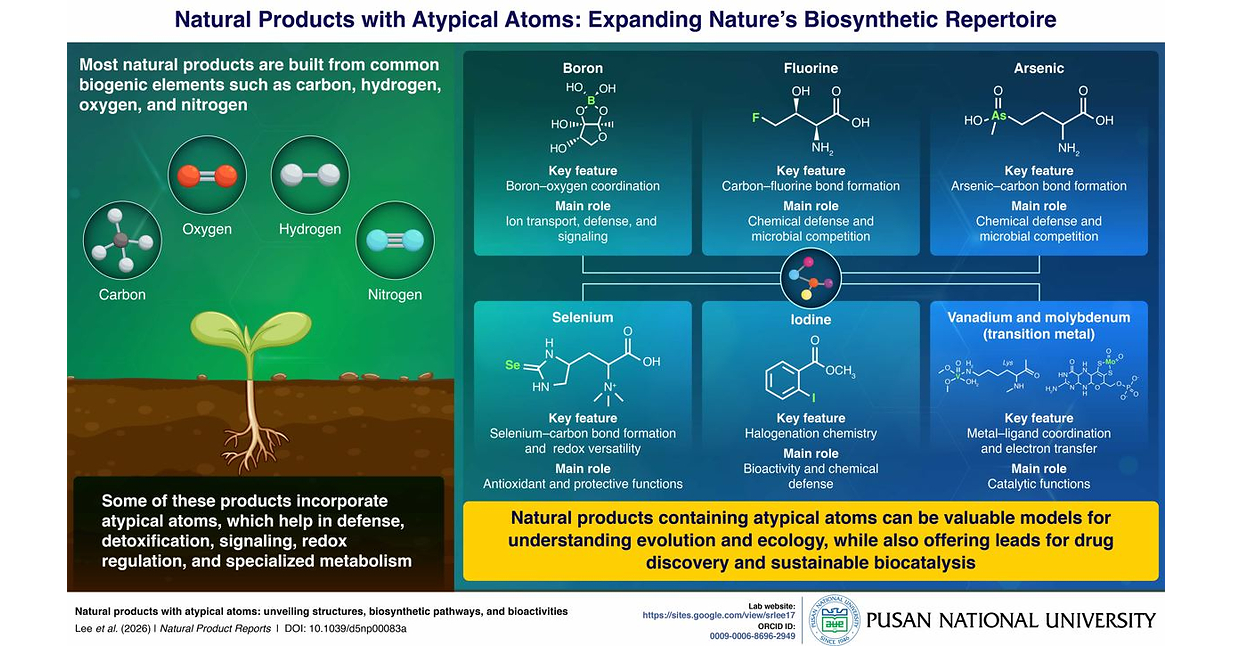
A Pusan National University-led review in Natural Product Reports (DOI: 10.1039/d5np00083a) maps rare natural products containing atypical elements (e.g., boron, fluorine, selenium, arsenic, iodine) across studies from 1944–2025, highlighting distinct biosynthetic pathways and bioactivities (antibacterial, antimicrobial, antioxidant/redox regulation, and more). The article argues that advances in genome mining, metagenomics, enzymology, and machine learning could accelerate discovery and enable sustainable biocatalysis and therapeutic innovation. No specific company financials or market-moving developments are cited.
This is more of a capability map than an investable catalyst. The public-market upside, if any, is concentrated in the enabling stack: sequence analysis, metagenomics, structure biology, and enzyme-engineering tools that help mine rare biosynthetic pathways. That argues for a 12-36 month read-through to life-science platforms, not a near-term rerating of therapeutics, because the bottleneck is not discovery intent but scalable expression, yield, and reproducibility.
The second-order winner is likely whichever platform can turn exotic chemistry into a reusable enzyme library or IP moat. That favors synthetic biology and tools companies over single-asset drug developers; it also creates a long-duration option on industrial biocatalysis if fluorination/selenation methods become commercially reliable. The key commercial question is whether these pathways can be made cheaper than conventional catalysis at scale, which is still an open engineering problem.
The contrarian takeaway is that the market may overestimate how quickly ‘novel natural products’ become revenue. Many of these compounds are biologically interesting but strategically awkward: toxic, low-yield, or hard to formulate, which limits pharmaceutical conversion rates. If the story does matter, it will show up first in patent filings, licensing deals, and platform usage metrics—not in near-term earnings prints.
AI-powered research, real-time alerts, and portfolio analytics for institutional investors.
Overall Sentiment
neutral
Sentiment Score
0.10
Ticker Sentiment
