
Turkey Regulator Will Liquidiate Some Funds Managed by 7 Firms
Source: Bloomberg
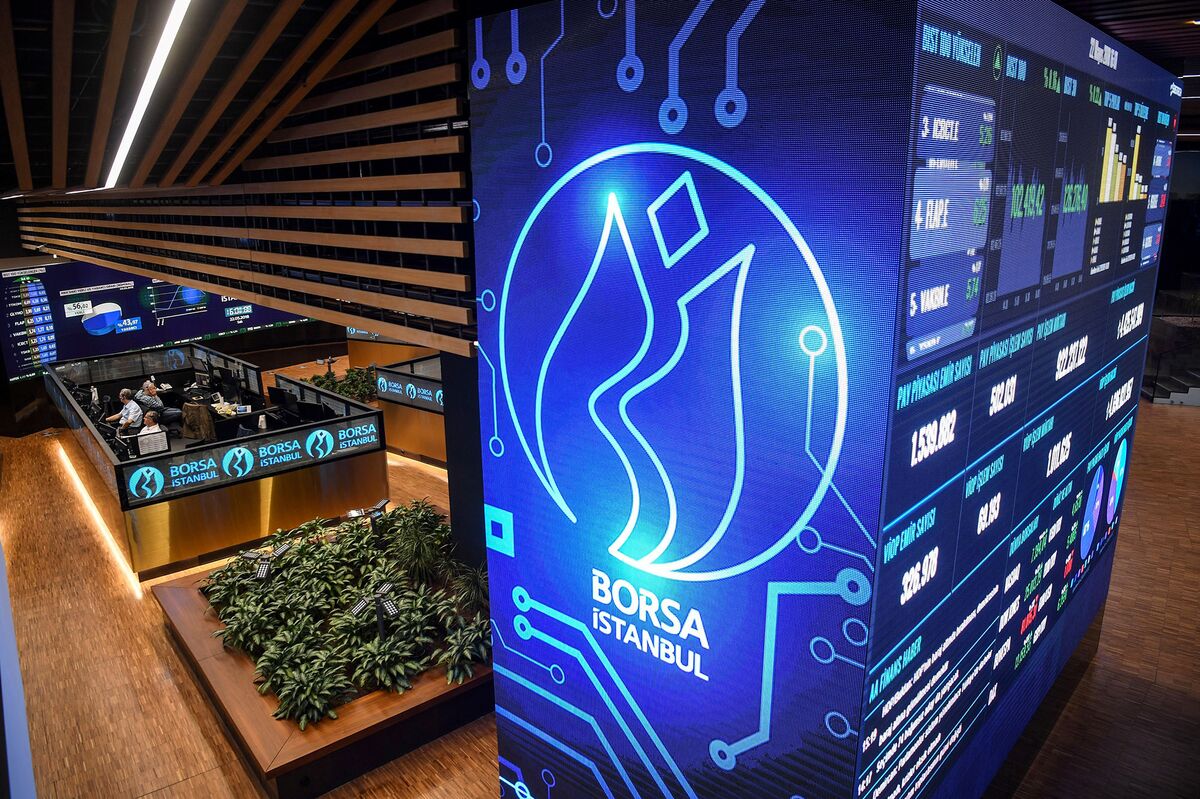
Turkey’s market regulator will liquidate certain funds managed by seven asset managers, including Tera Portfoy and Pusula Portfoy, after three managers failed to meet redemption requests. The redemption failures triggered a steep selloff in Turkish equities, underscoring liquidity stress and the risk of broader investor withdrawals from the domestic market.
Analysis
The relevant transmission is not the absolute size of the funds but the precedent: compulsory liquidation converts an isolated redemption problem into a domestic liquidity-premium shock. Turkish equities most dependent on local mutual-fund ownership, shallow free float, or broker financing can gap materially below fundamentals as managers raise cash into limited natural demand. Banks are the key read-through: a widening gap between equity prices and funding/FX stress would indicate the event is migrating from asset-management plumbing into the financial system.
Over days to weeks, forced sales may create indiscriminate pressure in BIST 30 constituents and amplify TRY weakness, raising the prospective cost of inflation stabilization and increasing the probability of restrictive policy remaining in place longer. That combination is particularly adverse for leveraged domestic-demand businesses and smaller banks; exporters with hard-currency revenues are relatively insulated operationally, although their shares will not be immune to ETF-driven outflows. The market needs disclosure of fund assets, holdings concentration, and whether redemptions are funded by asset sales versus external liquidity before treating this as contained.
The contrarian case is that liquidation creates a finite seller rather than an open-ended credit event. If the regulator provides orderly-sale terms and no additional managers suspend redemptions over the next 5-10 trading days, the initial BIST drawdown could become a tactical opportunity in liquid, FX-earning Turkish large caps. Falsification is additional fund gates, a material widening in Turkish sovereign CDS, or renewed pressure in USD/TRY alongside bank-equity underperformance; those signals would imply the forced-sale cycle is broadening rather than clearing.
For global portfolios, this is primarily a reason to avoid unhedged beta rather than a high-conviction directional short after the first liquidation-driven move. Turkey-focused vehicles can trade at discounts and face impaired creation/redemption liquidity, so position sizing and exit capacity matter more than headline valuation.
AllMind Terminal
AI-powered research, real-time alerts, and portfolio analytics for institutional investors.
Request TrialMarket Sentiment
Overall Sentiment
strongly negative
Sentiment Score
-0.62
Key Decisions for Investors
- Reduce or hedge Turkey equity beta through TUR or MSCI Turkey-linked exposure for the next 2-4 weeks; retain only liquid exporters or hard-currency earners where underlying FX revenue provides partial macro insulation. Reassess after 10 trading days without new redemption suspensions.
- Avoid Turkish banks and domestically leveraged consumer/property exposures until USD/TRY, sovereign CDS, and bank-relative performance stabilize simultaneously; a further 100bp-plus CDS widening or new fund gates is a trigger to maintain the underweight.
- Set a tactical-buy watch, not an immediate recommendation, for TUR if fund liquidation details demonstrate concentrated and finite holdings, USD/TRY remains orderly, and BIST liquidity normalizes. Missing data: assets under management, fund holdings, and redemption backlog; without these, risk/reward cannot be sized reliably.
- For EM allocations, favor a relative underweight Turkey versus diversified EM beta (EEM) over an outright EM de-risking: the near-term shock is country-specific, but a spread into broader EM would be signaled by sustained outflows and rising regional sovereign risk premiums.
More News
- Wall St futures rise as Fed rate hike lifts long-standing overhang
- Investors say this unloved market is ‘not a bad place to hide' as volatility rages on
- +111%, +84%: The Fed raised rates; see why these AI-picked stocks keep climbing
- Analysis-Fed builds credibility, but hawkish turn leaves investors edgy
- Trump Calls for Lower US Rates After Fed's Warsh Delivers Hike
- Why is Raiffeisen Bank International stock tumbling today?