
Next Africa: Kenya’s Court Decisions Are a Thorn in Ruto’s Side
Source: Bloomberg
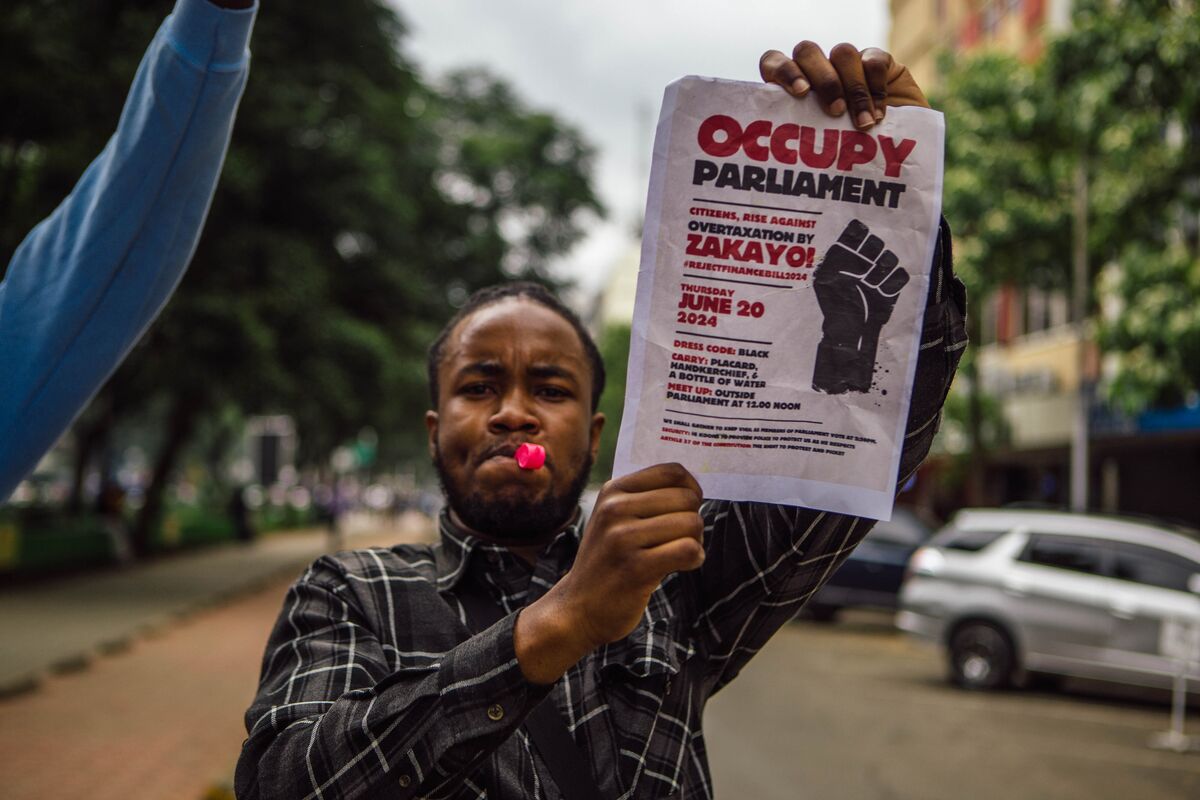
Kenyan President William Ruto’s plans for $39 billion in new infrastructure, a central plank of his campaign for a second term, face mounting legal obstacles from the country’s courts. Judicial challenges could delay project execution and complicate the government’s infrastructure and financing agenda.
Analysis
The investable transmission is primarily through Kenya's fiscal-risk premium rather than direct project contractors. Delays to revenue-raising measures or public-private-partnership execution would widen the gap between capital spending ambitions and funding capacity, pressuring KES, domestic yields and bank funding costs. The near-term equity sensitivity is therefore negative for rate-sensitive Nairobi-listed banks such as EQTY, KCB and SCBK, whose sovereign-security books and loan-growth assumptions become more vulnerable if government financing needs intensify.
Over 1-3 months, the critical catalyst is whether the government can substitute legally resilient financing structures for disputed initiatives without increasing explicit contingent liabilities. A weaker shilling and higher domestic borrowing crowd out private credit, creating a second-order headwind for construction materials, consumer discretionary credit and telecom capex; Safaricom's valuation is relatively more defensive but is not insulated from slower household spending. Over 6-18 months, a credible reset toward smaller, commercially financed projects could be constructive for bank asset quality and sovereign spreads, even if it reduces headline construction activity.
Consensus may overstate the political benefit of forcing rapid project delivery. For markets, procedural reversals can be constructive if they prevent off-balance-sheet obligations from becoming sovereign debt; the bearish case requires evidence that projects are simply re-routed into less transparent vehicles or financed through accelerated domestic issuance. This is not a high-conviction directional equity trade given limited liquidity and sparse project-level financial disclosure; sovereign-spread and FX confirmation should lead any positioning.
AllMind Terminal
AI-powered research, real-time alerts, and portfolio analytics for institutional investors.
Request TrialMarket Sentiment
Overall Sentiment
mildly negative
Sentiment Score
-0.28
Key Decisions for Investors
- Maintain an underweight bias to Kenyan financial exposure within frontier allocations for the next 1-3 months; use FM or AFK only as imperfect liquid hedges, since Kenya-specific single-name liquidity is limited.
- Set an alert on Kenya Eurobond spreads and KES performance: a sustained 75-100bp spread widening or renewed KES depreciation would validate the fiscal-crowding-out thesis and argue for reducing EQTY, KCB and SCBK exposure.
- Do not short construction-linked Nairobi names solely on project uncertainty. Reassess only if domestic issuance accelerates materially, bank loan-growth guidance is cut, or project sponsors disclose funding cancellations rather than timing changes.
- For a constructive reversal, add selectively to EQTY/KCB only after a legally durable financing plan coincides with stable KES and narrowing sovereign spreads; that combination would support lower funding-cost assumptions and reduce asset-quality tail risk over 6-18 months.
More News
- 'Hostile act': Trump threatens EU with tariffs over Canada associate-membership proposal
- US military claims Strait of Hormuz remains open amid ongoing blockade
- Congress passes sweeping US sanctions bill targeting Russia
- US official says upcoming spectrum auctions could generate more than $100 billion
- What to know about US Federal Reserve’s first interest rate hike in 3 years
- Analysis: How Trump could reignite the Fed independence fight after Warsh's rate hike