
DiDi Autonomous Driving Begins Fully Driverless Service Trials with Next-Generation Robotaxi R2
Source: PR Newswire
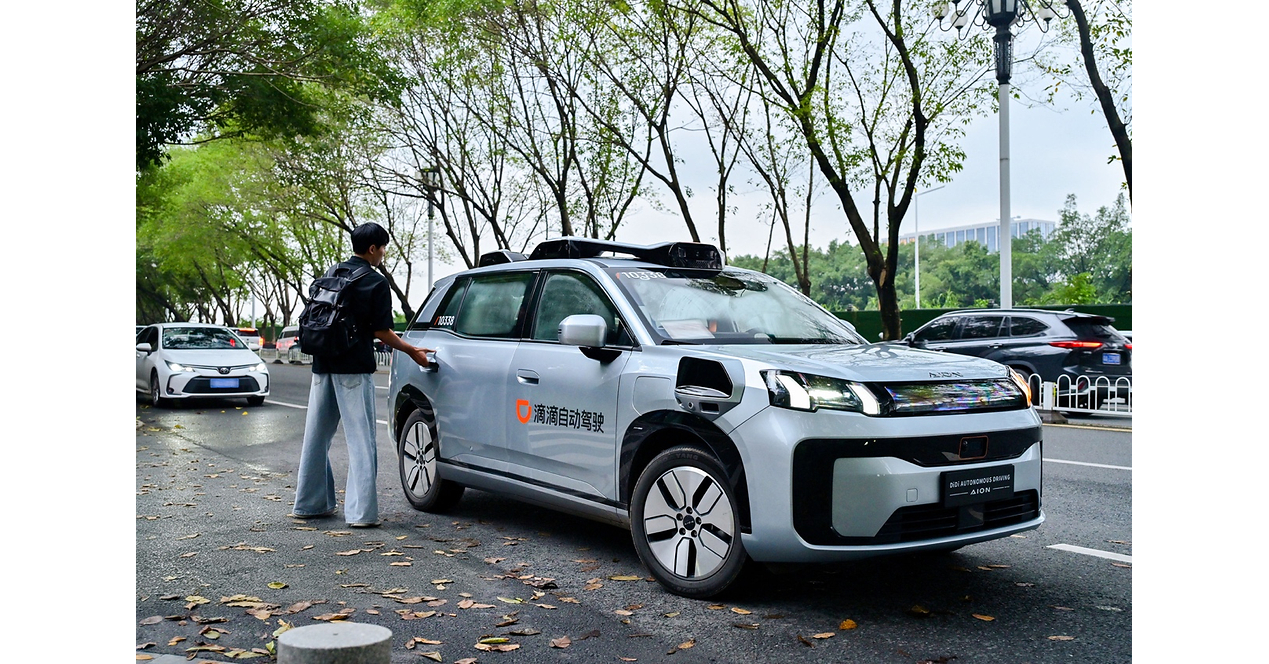
DiDi Autonomous Driving began fully driverless service trials of its next-generation Robotaxi R2, jointly developed with GAC Aion, with bookings now available in selected demo areas in Beijing and Guangzhou via the DiDi app. The R2 is Level 4 full-stack with 33 sensors, triple-domain fusion computing, and multi-layer redundancy, and it targets C-NCAP/Euro NCAP five-star safety standards. DiDi says the vehicle has been in public-road testing since delivery in January 2026 and that it has supported safe operations for more than 2,200 consecutive days, a development that modestly improves the company’s autonomous-mobility outlook.
Analysis
This is more important as a regulatory and operational signal than as an earnings event. A genuinely driverless trial tells you the company is moving from R&D to constrained commercialization, but the monetization inflection is still gated by ride density, safety statistics, and whether city regulators allow the geofence to widen. In the next 1-3 months, the market should care less about the announcement itself and more about disclosed fleet size, trips per vehicle-day, and any expansion beyond demonstration zones; without that, the valuation impact is likely modest.
The clearest second-order beneficiary is the local autonomy supply chain: vehicle integration, sensors, compute, and mapping vendors can see incremental demand if a fleet operator proves repeatable service economics. Public-market read-through is strongest for China autonomy proxies like BIDU, HSAI, PONY, and WRD, but the competitive effect is mixed because a successful pilot also raises the bar for everyone else and could intensify capital spending across the group. For ride-hailing incumbents, the long-run risk is not immediate revenue displacement but margin compression if robotaxi cost-per-mile falls enough to force subsidy competition.
The contrarian view is that investors may be overpricing the word "fully driverless." In practice, these programs often remain capital-intensive, tightly geofenced, and operationally limited for quarters before they matter to unit economics. Falsifiers are straightforward: a safety incident, no permit expansion within 1-2 quarters, or utilization data showing the fleet cannot approach breakeven after depreciation and insurance. If those metrics disappoint, the move should fade quickly; if they improve, the thesis becomes a 6-18 month structural story rather than a one-day trade.
AllMind Terminal
AI-powered research, real-time alerts, and portfolio analytics for institutional investors.
Request TrialMarket Sentiment
Overall Sentiment
mildly positive
Sentiment Score
0.20
Ticker Sentiment
Key Decisions for Investors
- Do not chase PTAUY on the headline alone; wait for hard data on trip volume, active fleet count, and permit expansion before adding risk. This is a watch item, not a conviction long, until the company proves utilization economics.
- Conditional long PTAUY on a pullback only if management discloses sustained paid rides and expansion beyond current demo areas; use a 3-6 month horizon and exit if trials remain narrowly geofenced or any safety pause hits.
- Long HSAI on any confirmation that DiDi or peer robotaxi operators are scaling sensor-rich fleets; the trade works if autonomy deployment drives repeat procurement over the next 1-3 quarters.
- Do not short UBER or LYFT on this print alone; China robotaxi trials are too localized to justify an immediate global rideshare de-rating. Revisit only if domestic AV economics start showing up in U.S. regulatory or fleet data.
- Set an alert on BIDU, PONY, and WRD: if DiDi expands service materially, expect a sympathy bid in the China autonomy basket; if a safety or regulatory setback occurs, fade the entire group rather than the single name.
More News
- CoreWeave credit default swaps hit distress levels as investors sour on AI debt
- Brian Sullivan: Why the 'real' price of oil is likely $30-$40 higher than where it is now
- Penske Automotive agrees to be taken private by Penske, Mitsui
- Supermicro promised a new CFO in December 2024. A $2.5 billion smuggling case and a co-founder’s arrest later, it has one
- Blackstone President Jon Gray Bets Big on AI Boom
- What's behind the sell-off in AI neocloud stocks like CoreWeave and Nebius