
India’s IPO Boom Powers On Despite Stock Market Weakness
Source: Bloomberg
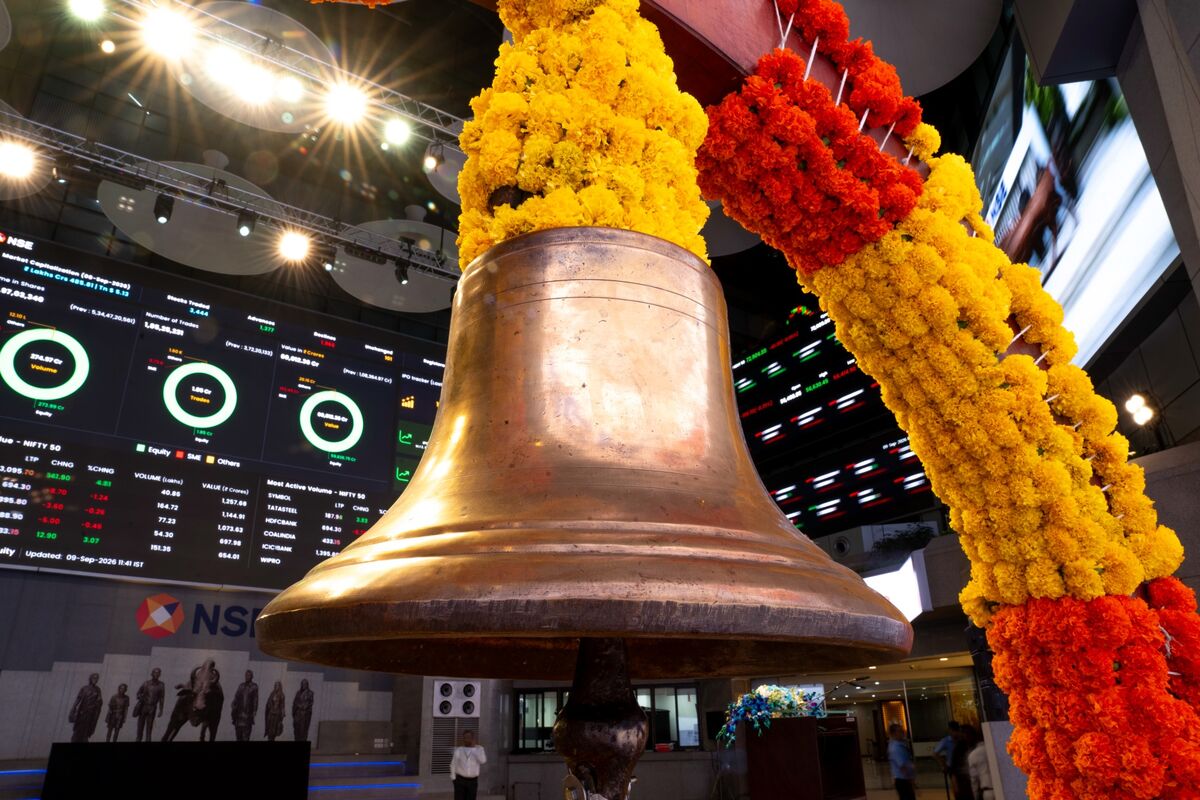
India's NSE Nifty 50 has fallen nearly 5% this quarter, closing at its lowest level since early April and heading for a potential eighth consecutive weekly decline, pressured by higher oil prices and foreign outflows. In contrast, India's IPO market remains strong on deep domestic liquidity and institutional demand, following a blockbuster July-September quarter and supported by a busy 2026 listings pipeline. The divergence highlights weakness in secondary-market risk appetite while primary-market issuance continues to attract capital.
Analysis
The relevant divergence is not a broad India-equity bullish signal; it is a capital-markets activity signal. Primary issuance can remain resilient while secondary-market multiples compress, particularly when domestic household flows are absorbing supply that foreign investors are unwilling to own. The cleaner beneficiaries are issuance infrastructure and registrars—BSE, KFINTECH and, more indirectly, CDSL—rather than Nifty-heavy banks, IT and energy companies whose earnings remain exposed to foreign flows, oil and INR pressure.
Near term, a crowded issuance calendar creates a liquidity tax: domestic funds and retail capital allocated to new deals may reduce marginal demand for existing mid- and small-cap holdings. That argues for continued relative underperformance of broad domestic-equity proxies versus fee-pool beneficiaries over the next 1-3 months, even if headline IPO subscription remains strong. The structural 6-18 month upside requires IPO proceeds to translate into sustained secondary turnover, demat-account growth and follow-on issuance; listing-day premiums alone do not materially validate that outcome.
Contrarian risk is that a weak tape eventually resets IPO pricing rather than ends issuance. If aftermarket performance deteriorates, institutional allocations can pivot sharply from oversubscribed primary deals to cash, pressuring high-multiple capital-markets stocks first because their valuations already capitalize elevated activity. A durable reversal would be signaled by consecutive weak listings, shrinking qualified-institutional-buyer participation, or a material decline in monthly exchange turnover—not simply a further Nifty drawdown.
AllMind Terminal
AI-powered research, real-time alerts, and portfolio analytics for institutional investors.
Request TrialMarket Sentiment
Overall Sentiment
mixed
Sentiment Score
0.05
Key Decisions for Investors
- Establish a 1-3 month relative-value position: long KFINTECH versus short INDA, sized beta-neutral. KFINTECH has more direct operating leverage to issuance/registrar volumes, while INDA retains oil, foreign-flow and index-level earnings exposure; exit if IPO subscription and listing performance weaken for two consecutive months.
- Use BSE as a tactical watch-to-buy rather than chase: initiate only after confirmation that cash-market turnover and new-listing activity are holding despite broader equity weakness. Target a 10-15% relative outperformance versus INDA over a quarter; stop if turnover declines materially or regulatory changes reduce exchange fee economics.
- Avoid treating a strong primary calendar as a reason to add broad India beta immediately. Retain or add INDA/EPI exposure only if oil and INR conditions stabilize alongside renewed foreign inflows; otherwise the likely near-term effect is domestic liquidity being diverted from listed mid-caps into new supply.
- Monitor CDSL and Angel One for second-order retail participation upside, but do not initiate solely on issuance headlines. The required confirmation is sustained growth in account openings and cash-equity volumes; absent that, elevated activity may be institutional and produce limited earnings pass-through.
More News
- Why Middle East Oil Risks Now Exceed US-China Tensions
- Fed rate hike bets for Oct fall sharply on soft data, dovish comments
- Tuesday Was a Bad Day for Bonds and Stocks Alike: Evening Briefing Americas
- Lithium Plunges 25% in China on Fears Over Battery Demand Growth
- Hedge funds now hold a record share of the $30 trillion Treasury market. What could go wrong?
- Robinhood just rolled out trading agents to millions—and investing may never be the same