
Lactips и SmartSolve объявляют о глобальном стратегическом партнерстве в области беспластиковой упаковки
Source: PR Newswire
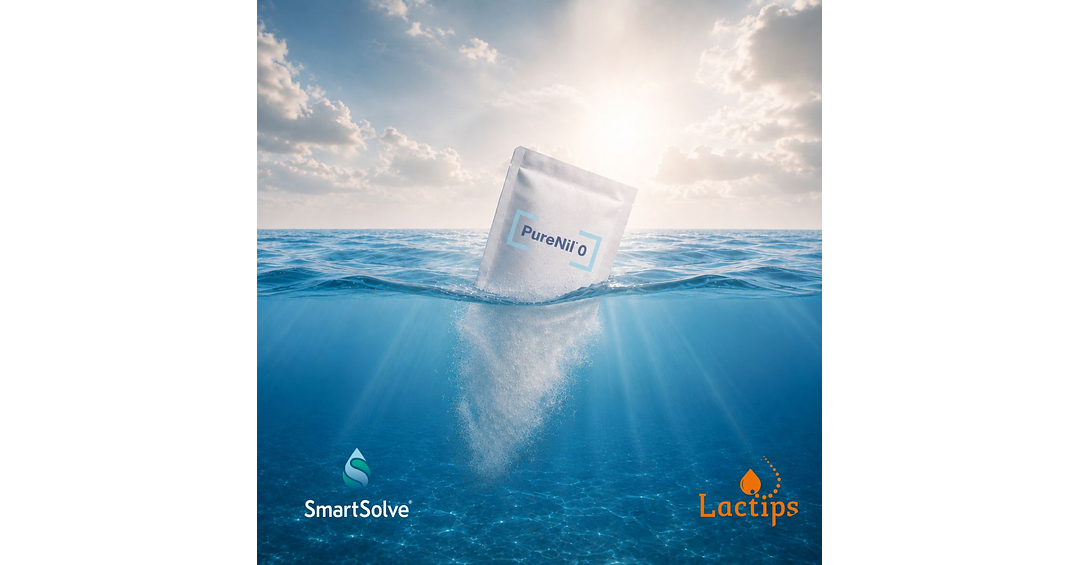
Lactips and SmartSolve formed an exclusive global strategic partnership to accelerate plastic-free packaging, commercializing PureNil™ 0 less than two years after beginning collaboration in 2024. PureNil™ 0 is a 100% plastic-free, water-dispersible and printable flexible packaging material approved for direct food contact, with applications already spanning cosmetics, personal care, food and beverages. The partners plan to develop additional generations of bio-based, plastic-free packaging, supporting Lactips' international expansion and broader adoption of biodegradable alternatives.
Analysis
This is not yet a public-equity catalyst: the parties are private, commercial volumes and unit economics are undisclosed, and a strategic partnership does not establish repeatable adoption. The relevant listed-company implication is indirect: credible plastic-free flexible-film alternatives increase the long-duration regulatory and customer-retention risk for incumbent packaging producers whose portfolios depend on conventional films, coatings, adhesives, and single-use formats.
Near term (days to 3 months), there is no clean directional trade absent evidence of a branded CPG customer converting material volume or a disclosed capacity expansion. Watch sustainability disclosures and procurement announcements from large consumer-packaging users—PG, UL, CL, KMB, EL, and food-service operators—for conversion from pilot programs to multi-year supply commitments. A successful conversion would be more material to specialty-material suppliers than to broad packaging indices because qualification cycles and food-contact specifications create supplier lock-in.
Over 6-18 months, the main second-order issue is whether water-dispersible materials solve end-of-life constraints without failing on cost, barrier performance, and wastewater compatibility. If they do, converters reliant on recyclable-but-still-plastic claims face multiple compression as regulation and retailer scorecards shift from "recyclable" toward verified elimination. The contrarian view is that water solubility can create municipal wastewater and consumer-use objections; failure to prove safe dispersal at scale would keep this confined to premium, low-volume applications rather than displacing PE/PP films.
The actionable signal is an alert, not a position: require independently disclosed throughput, per-unit cost versus incumbent film, and named customer contracts before extrapolating. Falsification of the disruption thesis would be no announced scaled consumer deployment within 12 months, or customer evidence that moisture/barrier requirements force conventional multilayer packaging back into the format.
AllMind Terminal
AI-powered research, real-time alerts, and portfolio analytics for institutional investors.
Request TrialMarket Sentiment
Overall Sentiment
strongly positive
Sentiment Score
0.58
Key Decisions for Investors
- No immediate standalone trade; treat the announcement as a private-market technology watch item rather than a catalyst for public packaging equities.
- Monitor earnings calls and sustainability reports at AMCR, SEE, BALL, AVY and IP for evidence of accelerated spending on plastic-free flexible formats; initiate relative underweights only after quantified volume loss, customer defections, or margin pressure emerges.
- Create a 1-3 month event watchlist for PG, UL, CL, KMB and EL: a named commercial rollout using water-dispersible packaging could support a modest long in the adopter only if management quantifies cost neutrality or brand-price realization.
- For a 6-18 month thematic expression, prefer selective exposure to specialty bio-based material and paper-substrate beneficiaries over a broad short of packaging incumbents; broad incumbents retain scale, recycling infrastructure and the ability to acquire emerging technologies.
- Set a diligence trigger around independent wastewater, food-contact, and lifecycle validation. Negative certification outcomes or evidence of higher total environmental cost would invalidate the substitution case and favor incumbent flexible-film suppliers.
More News
- Paramount could settle with states over Warner Bros. as soon as this weekend, sources say
- Trump says he will appoint a new AI adviser, without providing details
- Trump says he will create ‘AI Force’ with new ‘AI czar’
- Lawsuit claims Anthropic, OpenAI, SpaceXAI and Google violated antitrust laws when they coordinated AI slowdown, reducing value of subscriptions
- Mark Ruffalo leads Hollywood revolt against Paramount-Warner merger deal
- California’s billionaire tax will ‘kickstart a movement’ that spreads to more states, the federal government and other countries, Nobel laureates say